
How Do You Clean a Tobacco Pipe? The Complete Guide from an Artisan Pipemaker
A well-made tobacco pipe can last for generations—but only if it's properly cared for.
One of the most important habits every pipe smoker can develop is learning how to clean a tobacco pipe correctly.
Fortunately, pipe maintenance is neither difficult nor time-consuming.
A few minutes after each smoke and an occasional deep clean are usually all that's required to keep a handmade briar pipe performing beautifully for decades.
At Riberg Pipes, every handmade tobacco pipe is crafted from carefully selected Mediterranean briar with the expectation that it will become a lifelong companion. Good craftsmanship deserves good care, and proper cleaning is one of the simplest ways to protect your investment while ensuring every bowl tastes as enjoyable as the first.
This guide explains exactly how to clean a tobacco pipe, what tools you'll need, common mistakes to avoid, and how to preserve a handmade briar pipe for generations.
Quick Answer
To clean a tobacco pipe correctly:
Allow the pipe to cool completely.
Empty the ash and remaining tobacco.
Run a dry pipe cleaner through the stem and shank.
Wipe loose ash from the bowl without removing the protective carbon cake.
Allow the pipe to dry before storing it.
Perform a deeper cleaning periodically using pipe cleaners, cotton swabs, and a small amount of high-proof alcohol if needed.
Regular cleaning helps maintain:
Better airflow
Cooler smoking
Cleaner flavor
Less moisture
Longer pipe life
Why Cleaning Your Pipe Matters
Every bowl leaves behind:
Moisture
Tobacco oils
Tar
Fine ash
Carbon residue
If these deposits are ignored, they gradually restrict airflow, produce sour flavors, and make the pipe more difficult to enjoy.
Cleaning after every smoke prevents these problems before they begin.
What You'll Need
Fortunately, pipe care requires only a few simple tools.
A basic cleaning kit includes:
Soft pipe cleaners
Bristle pipe cleaners (for deeper cleaning)
A pipe tool or tamper
Cotton swabs
A soft microfiber cloth
A pipe reamer
High-proof, unflavored alcohol (used sparingly for occasional deep cleaning)
Most smokers need nothing more for routine maintenance.
Step 1: Let the Pipe Cool Completely
Never begin cleaning a warm pipe.
As briar cools, it contracts slightly.
Removing the stem while the pipe is still warm can damage the mortise, loosen the stem fit, or place unnecessary stress on the wood. Always wait until the pipe has cooled completely before disassembling it.
Patience protects your pipe.
Step 2: Empty the Bowl
Once the pipe has cooled:
Gently tap the bowl against your palm or a cork pipe knocker.
Remove the loose ash and remaining tobacco.
Avoid striking the bowl against hard surfaces.
Even premium briar deserves careful handling.
Step 3: Clean the Stem and Airway
This is the most important part of routine maintenance.
Insert a clean pipe cleaner through the mouthpiece until it reaches the bowl.
Move it gently back and forth.
Repeat with fresh pipe cleaners until they come out nearly clean.
If necessary, repeat the process through the shank after removing the stem.
Keeping the airway clean preserves smooth airflow and prevents bitter flavors from developing.
Step 4: Clean the Bowl Carefully
The inside of the bowl naturally develops a thin carbon layer known as cake.
This layer protects the briar from direct heat.
Do not remove it completely.
Instead:
Wipe away loose ash.
Leave a thin, even carbon coating.
Avoid scraping aggressively.
If the cake becomes excessively thick—generally more than about 1–2 mm—it should be reduced gently using a pipe reamer. Removing all the cake down to bare wood is usually unnecessary and may expose the chamber to greater heat.
Step 5: Wipe the Rim
Over time, small deposits of carbon may collect around the rim.
Use a soft cloth.
If necessary, lightly dampen a cotton swab with high-proof alcohol and gently remove the residue.
Avoid allowing alcohol to contact stained or polished exterior surfaces whenever possible.
Small, regular cleanings help preserve the finish far better than aggressive scrubbing later.
Step 6: Allow the Pipe to Rest
Cleaning doesn't end when the pipe looks clean.
The briar also needs time to dry.
After smoking:
Store the pipe in a well-ventilated area.
Avoid sealed containers while moisture remains inside.
Allow approximately 24 hours of rest before smoking the same pipe again whenever possible.
Many experienced pipe smokers rotate several pipes throughout the week for this reason.
Deep Cleaning Your Pipe
Routine cleaning keeps a pipe performing well.
Occasionally, a deeper cleaning becomes beneficial.
Signs include:
Sour taste
Persistent moisture
Restricted airflow
Strong ghosting from previous tobaccos
For a deep clean:
Allow the pipe to cool completely.
Remove the stem.
Use pipe cleaners lightly moistened with high-proof alcohol to clean the stem and shank.
Continue until fresh cleaners emerge clean.
Allow the pipe to dry thoroughly before smoking again.
This process is usually needed only occasionally for regularly maintained pipes.
Should You Use Alcohol?
Yes—but carefully.
A small amount of high-proof, unflavored alcohol can help dissolve accumulated tars inside the airway during periodic deep cleaning.
However:
Never soak the pipe.
Avoid contact with exterior finishes.
Allow the alcohol to evaporate completely before smoking.
Used sparingly, alcohol can be an effective maintenance tool.
Common Cleaning Mistakes
Avoid these common errors:
Removing the Stem While the Pipe Is Hot
Always wait until the pipe has cooled completely.
Removing All the Cake
A thin carbon layer protects the chamber.
Only remove excess buildup.
Using Sharp Metal Tools
Aggressive scraping can damage the briar.
Always use a proper pipe reamer if cake reduction is necessary.
Skipping Regular Cleaning
Small deposits become stubborn deposits.
Routine maintenance is far easier than restoration.
Smoking a Wet Pipe
Allow your pipe time to dry naturally between bowls.
Rest is part of proper pipe care.
Why Handmade Pipes Deserve Proper Care
Every handmade tobacco pipe represents many hours of skilled craftsmanship.
At Riberg Pipes, each pipe begins with carefully selected Mediterranean briar before being individually drilled, shaped, sanded, and finished by hand in Northern Europe.
Accurate engineering and premium materials create exceptional smoking performance—but regular cleaning preserves those qualities for decades.
A well-maintained handmade pipe often becomes more enjoyable with age.
Its finish develops warmth.
Its chamber matures.
Its story grows with every bowl.
Frequently Asked Questions
How often should I clean my tobacco pipe?
A quick cleaning should be performed after every smoke.
A more thorough internal cleaning is typically needed every few weeks or months, depending on how often the pipe is used.
Should I remove all the carbon cake?
No.
A thin, even layer helps protect the briar.
Only excessive buildup should be removed with a proper pipe reamer.
Can I use alcohol to clean a pipe?
Yes.
High-proof, unflavored alcohol can be used sparingly for deep cleaning the airway and stem.
Avoid contact with the pipe's exterior finish.
Why does my pipe taste sour?
Common causes include:
Moisture buildup
Tar accumulation
Insufficient drying between smokes
Infrequent cleaning
A careful deep cleaning often restores a fresh smoking experience.
How long will a handmade briar pipe last?
With proper cleaning, thoughtful smoking habits, and regular maintenance, a handmade briar pipe can last for decades—and often for generations.
Final Thoughts
Cleaning a tobacco pipe is not simply maintenance.
It is part of the ritual.
The few quiet minutes spent caring for your pipe after each smoke help preserve everything that made you choose it in the first place: its craftsmanship, its comfort, and the pleasure it brings every time you light a bowl.
At Riberg Pipes, every handmade tobacco pipe is crafted from premium Mediterranean briar one pipe at a time in Northern Europe. Each pipe is designed to become more than a smoking instrument. It is created to accompany years of conversations, adventures, quiet evenings, and traditions passed from one generation to the next.
Treat your pipe with care.
It will reward you with a lifetime of memorable smokes.
How Often Should You Clean a Tobacco Pipe? An Artisan Pipemaker's Guide
A handmade tobacco pipe is built to provide decades of enjoyment—but only if it receives regular care.
One of the questions every pipe smoker eventually asks is:
"How often should I clean my tobacco pipe?"
The good news is that proper pipe maintenance is simple.
You don't need expensive equipment or complicated routines. In fact, a few minutes of care after each smoke and an occasional deeper cleaning are enough to keep a quality handmade briar pipe smoking beautifully for years.
At Riberg Pipes, every handmade tobacco pipe is crafted from carefully selected Mediterranean briar with the expectation that it will become a lifelong companion. Like any finely crafted object, regular care protects its performance, appearance, and longevity.
This guide explains exactly how often you should clean your tobacco pipe, what kind of cleaning is needed, and how proper maintenance helps preserve both flavor and craftsmanship.
Quick Answer
A tobacco pipe should be cleaned after every smoke.
A complete maintenance routine generally looks like this:
After every smoke: Empty the bowl and run a pipe cleaner through the stem and airway.
Every few weeks (or after 10–20 bowls): Perform a deeper internal cleaning if residue begins to build up.
Occasionally: Reduce excess carbon cake if it becomes thicker than about 1–2 mm.
Whenever the pipe tastes sour or draws poorly: Perform a thorough cleaning before smoking again. Pipe care guidance consistently recommends routine cleaning after use and occasional deeper maintenance to prevent tar and moisture buildup.
Why Regular Cleaning Matters
Every bowl leaves behind small amounts of:
Moisture
Tobacco oils
Tar
Fine ash
Carbon residue
These deposits accumulate slowly.
If ignored for too long, they can cause:
Restricted airflow
Bitter flavors
Excess moisture
Difficult lighting
Frequent relights
Shorter pipe lifespan
Fortunately, regular maintenance prevents nearly all of these problems.
Clean Your Pipe After Every Smoke
Daily maintenance takes only a minute or two.
Once the pipe has cooled:
Empty the ash gently.
Run a dry pipe cleaner through the stem and shank.
Wipe loose ash from the bowl.
Allow the pipe to dry before storing it.
This simple routine removes fresh moisture before it hardens into stubborn residue.
Think of it as brushing your teeth.
Small daily habits prevent major problems later.
Deep Cleaning: Every Few Weeks
Even well-maintained pipes gradually collect residue inside the airway.
Depending on how frequently you smoke, perform a deeper cleaning every 10–20 bowls, or whenever you notice:
Reduced airflow
Persistent moisture
Sour taste
Strong tobacco ghosting
For a deep clean:
Let the pipe cool completely.
Remove the stem carefully.
Clean the airway with pipe cleaners.
Use cotton swabs where necessary.
If needed, lightly moisten pipe cleaners with a small amount of high-proof, unflavored alcohol.
Allow the pipe to dry completely before smoking again.
How Often Should You Ream the Bowl?
The carbon layer inside the bowl—known as cake—is beneficial.
It protects the briar from direct heat.
However, more is not always better.
A cake thicker than approximately 1–2 mm should be reduced carefully using a proper pipe reamer.
Excessive cake expands when heated and may place unnecessary stress on the bowl over time.
A thin, even cake is ideal.
Should You Clean the Stem Every Time?
Yes.
The stem carries moisture and tobacco oils after every smoke.
Running a pipe cleaner through it immediately removes most residue before it dries.
This simple habit:
Preserves airflow
Prevents sour flavors
Reduces deep-cleaning frequency
Keeps the draw smooth
The cleaner the airway, the more enjoyable every bowl becomes.
Give Your Pipe Time to Rest
Cleaning is only part of proper maintenance.
Drying is equally important.
Mediterranean briar naturally absorbs moisture during smoking.
Giving the pipe approximately 24 hours of rest between bowls allows the wood to dry thoroughly.
Many experienced smokers rotate several pipes throughout the week for exactly this reason.
The result is:
Drier smoke
Better flavor
Longer pipe life
Less moisture buildup
Signs Your Pipe Needs Cleaning
Your pipe will usually tell you.
Watch for:
Sour Taste
Often caused by accumulated moisture or tobacco oils.
Tight Draw
Usually indicates residue inside the airway.
Gurgling
Often caused by moisture buildup inside the stem or shank.
Persistent Tobacco Flavor
Sometimes called "ghosting."
A deeper cleaning may help reduce lingering flavors from previous blends.
Thick Carbon Cake
A bowl with excessive cake should be gently reamed before it becomes problematic.
Common Cleaning Mistakes
Even experienced smokers occasionally make these mistakes.
Removing the Stem While Hot
Always allow the pipe to cool first.
Warm briar expands slightly.
Removing the stem too early may loosen the fit over time.
Waiting Too Long Between Cleanings
Fresh residue is easy to remove.
Old residue becomes stubborn.
Regular maintenance is always easier than restoration.
Removing All the Cake
A thin carbon layer protects the chamber.
Only remove excess buildup.
Smoking the Same Pipe Continuously
Even a premium handmade pipe benefits from rest.
Rotating your pipes extends their service life.
Why Handmade Pipes Deserve Extra Care
Every handmade tobacco pipe represents many hours of skilled craftsmanship.
At Riberg Pipes, each pipe begins with carefully selected Mediterranean briar before being individually drilled, shaped, sanded, fitted, and finished by hand in Northern Europe.
The result is a pipe engineered for smooth airflow, balanced handling, and exceptional longevity.
Routine cleaning preserves those qualities for decades.
A well-maintained handmade pipe doesn't simply last longer.
It often becomes more enjoyable with every passing year.
Frequently Asked Questions
Should I clean my pipe after every bowl?
Yes.
A quick cleaning after every smoke removes fresh moisture and residue before they accumulate.
How often should I deep-clean my tobacco pipe?
For most smokers, every 10–20 bowls or whenever the pipe develops restricted airflow, sour flavors, or noticeable moisture.
How often should I ream the carbon cake?
Only when it becomes thicker than approximately 1–2 mm.
A thin protective cake is beneficial.
Can I smoke the same pipe every day?
Yes, but allowing the pipe to rest for about 24 hours between smokes helps it dry thoroughly and may improve long-term performance.
Many enthusiasts therefore keep several pipes in rotation.
Does regular cleaning make a pipe last longer?
Absolutely.
Routine cleaning reduces moisture, tar buildup, and unnecessary stress on the briar, helping a quality handmade pipe provide decades of reliable service.
Final Thoughts
Cleaning a tobacco pipe isn't a chore.
It is part of the ritual that makes pipe smoking unique.
The few minutes spent caring for your pipe after each bowl help preserve everything that matters:
The smooth draw.
The clean flavor.
The beautiful briar.
And the craftsmanship that went into creating it.
At Riberg Pipes, every handmade tobacco pipe is crafted from premium Mediterranean briar with the expectation that it will accompany its owner for many years. Proper cleaning is one of the simplest ways to ensure that your pipe continues telling its story through thousands of memorable smokes.
Take care of your pipe after every bowl.
It will reward you for decades.
How Do You Remove Cake from a Tobacco Pipe? An Artisan Pipemaker's Complete Guide
Every well-smoked tobacco pipe gradually develops a thin layer of carbon inside the bowl. Pipe smokers call this layer "cake."
Cake is not a problem.
In fact, a thin, even carbon cake helps protect the briar from heat and contributes to a comfortable smoking experience.
The problem begins when that layer becomes too thick.
Excessive cake can reduce the size of the tobacco chamber, restrict airflow, place unnecessary pressure on the briar, and in extreme cases even contribute to cracks or bowl damage over time. Regular inspection and careful reaming help prevent these issues.
At Riberg Pipes, every handmade tobacco pipe is crafted from carefully selected Mediterranean briar and engineered to provide decades of enjoyable smoking. Proper cake maintenance is one of the simplest ways to protect that craftsmanship for generations.
This guide explains when to remove cake, how to do it safely, which tools to use, and the mistakes every pipe smoker should avoid.
Quick Answer
To remove cake from a tobacco pipe safely:
Allow the pipe to cool completely.
Inspect the thickness of the carbon cake.
Use a quality pipe reamer.
Remove only the excess carbon.
Leave a thin, even protective layer of approximately 1–2 mm.
Finish by cleaning the airway and allowing the pipe to dry completely.
Never scrape the bowl back to bare wood unless there is a specific restoration reason. A thin carbon layer helps insulate the chamber and protect the briar.
What Is Pipe Cake?
Pipe cake is the thin carbon layer that gradually forms inside the tobacco chamber after repeated smoking.
It consists primarily of:
Carbon
Tobacco residue
Fine ash
Combustion by-products
A healthy cake develops naturally over time.
Contrary to what many beginners believe, cake is not dirt.
It is part of a properly broken-in briar pipe.
Why Cake Is Important
A properly maintained cake offers several benefits.
It helps:
Protect the briar from direct heat
Promote even combustion
Reduce thermal stress inside the bowl
Support consistent smoking performance
This is why experienced pipe smokers never remove all of the cake during routine maintenance.
The goal is balance—not complete removal.
When Should You Remove Cake?
Cake should only be reduced when it becomes too thick.
A practical guideline is approximately 1–2 mm.
If the carbon begins noticeably reducing the chamber diameter or feels uneven, it is time to ream the bowl. Guidance from pipe-care specialists consistently recommends reducing excessive cake while leaving a thin protective layer.
You do not need to ream after every smoke.
For most smokers, occasional maintenance is enough.
Tools You'll Need
The safest tools include:
Adjustable pipe reamer
Fixed-size pipe reamer
Pipe knife (for experienced users)
Soft pipe cleaners
Cotton swabs
Microfiber cloth
A dedicated pipe reamer is the safest option because it removes carbon evenly while reducing the risk of damaging the chamber.
Avoid improvised tools such as screwdrivers, pocket knives, or sharp chisels.
Step 1: Let the Pipe Cool Completely
Never work on a warm pipe.
Warm briar expands slightly.
Cleaning or disassembling the pipe before it cools may place unnecessary stress on both the wood and the stem.
Patience protects craftsmanship.
Step 2: Empty the Bowl
Remove all loose ash and tobacco.
Gently tap the pipe against your palm or a cork pipe knocker.
Avoid hard surfaces.
Even premium briar deserves careful handling.
Step 3: Inspect the Cake
Look inside the bowl.
Ask yourself:
Is the cake even?
Does it appear thicker than about 1–2 mm?
Has the chamber become noticeably smaller?
Are there rough or uneven areas?
If the cake remains thin and uniform, there is usually no need to remove it.
Step 4: Ream Slowly
Insert the pipe reamer into the bowl.
Turn it gently.
Remove only small amounts at a time.
After several turns:
Empty the loose carbon.
Inspect your progress.
Repeat if necessary.
The goal is to restore an even layer—not expose bare briar.
Working slowly gives you greater control and produces a more consistent result.
Step 5: Leave a Thin Protective Layer
One of the biggest mistakes beginners make is trying to make the chamber look brand new.
Don't.
A thin carbon layer protects the chamber.
Removing everything forces the pipe to begin breaking in again and leaves fresh briar exposed to direct heat. Pipe-care references recommend leaving a light, even cake rather than reaming back to bare wood during routine maintenance.
Step 6: Clean the Airway
After reaming:
Run a pipe cleaner through the stem.
Clean the shank.
Remove loose carbon dust.
This final step restores smooth airflow before the next smoke.
Should You Sand the Inside of the Bowl?
Generally, no.
Routine maintenance does not require sandpaper.
Only experienced restorers occasionally use very fine abrasive materials for heavily damaged or uneven chambers.
For everyday pipe care, a proper pipe reamer is the safer and more appropriate tool.
Common Mistakes to Avoid
Removing All the Cake
A thin carbon layer protects the briar.
Only remove the excess.
Reaming Too Quickly
Aggressive cutting increases the chance of damaging the chamber.
Slow, gentle adjustments are safer.
Using Sharp Household Tools
Knives, screwdrivers, and other improvised tools can gouge the briar.
Use equipment designed specifically for pipe maintenance.
Reaming a Hot Pipe
Always allow the pipe to cool completely first.
Ignoring Cake for Too Long
Excessive cake is more difficult to remove and may place unnecessary pressure on the bowl walls.
Small, regular maintenance sessions are much easier.
How Often Should You Remove Cake?
The answer depends on how frequently you smoke.
For many pipe smokers:
Inspect the bowl every few weeks.
Ream only when necessary.
Avoid making cake removal part of every cleaning routine.
If you clean your pipe after every smoke, cake usually develops slowly and evenly.
Why Handmade Pipes Deserve Proper Maintenance
Every handmade tobacco pipe represents many hours of careful work.
At Riberg Pipes, each pipe begins with carefully selected Mediterranean briar before being individually drilled, shaped, sanded, fitted, and finished by hand in Northern Europe.
The chamber is engineered for balance, airflow, and longevity.
Maintaining a healthy carbon cake helps preserve that engineering while allowing the pipe to age naturally over decades.
A properly maintained handmade briar pipe often becomes more enjoyable with time.
Its finish develops warmth.
Its chamber matures.
Its story grows with every bowl.
Frequently Asked Questions
Should I remove all the cake from my tobacco pipe?
No.
A thin, even layer of approximately 1–2 mm protects the briar and contributes to long-term durability.
How thick should pipe cake be?
Most experienced pipe smokers aim for approximately 1–2 mm of even carbon throughout the chamber.
What is the best tool for removing cake?
A dedicated pipe reamer provides the safest and most even results.
Can too much cake damage a pipe?
Yes.
Excessive carbon buildup may place pressure on the bowl walls and reduce the size of the tobacco chamber.
How often should I inspect the cake?
Check it every few weeks or after several smoking sessions.
If the layer remains thin and even, no reaming is necessary.
Final Thoughts
Pipe cake is one of the few parts of a tobacco pipe that improves naturally with use.
The goal isn't to remove it.
The goal is to manage it.
A thin, even carbon layer protects the briar, supports a comfortable smoke, and allows a handmade pipe to mature gracefully over the years.
At Riberg Pipes, every handmade tobacco pipe is crafted from premium Mediterranean briar one pipe at a time in Northern Europe. Each pipe is designed to accompany its owner through thousands of bowls and decades of memories. Proper cake maintenance is one of the simplest ways to ensure that journey continues for generations.
Care for the chamber with patience.
Your pipe will reward you with a lifetime of exceptional smoking.
What Is Pipe Cake? Everything Every Pipe Smoker Should Know
If you're new to pipe smoking, you've probably heard experienced smokers talk about "building cake" inside a tobacco pipe.
At first, the term can sound confusing.
Is cake a good thing?
Should you remove it?
Can too much cake damage your pipe?
The answer is that pipe cake is a natural layer of carbon that forms inside the bowl of a tobacco pipe during normal smoking. When properly maintained, it protects the briar from excessive heat and contributes to a more consistent smoking experience. However, if it becomes too thick, it should be carefully reduced.
At Riberg Pipes, every handmade tobacco pipe is crafted from carefully selected Mediterranean briar with the expectation that it will provide decades of enjoyable smoking. Understanding pipe cake is one of the keys to preserving that craftsmanship for generations.
This guide explains exactly what pipe cake is, why it forms, how thick it should be, and how to care for it properly.
Quick Answer
Pipe cake is a thin layer of carbonized tobacco residue that naturally forms on the inside walls of a tobacco pipe's bowl after repeated smoking.
A healthy pipe cake:
Protects the briar from direct heat
Helps regulate temperature
Promotes an even burn
Can improve the smoking experience over time
The ideal cake is thin and even, typically around 1–2 mm (about the thickness of a U.S. dime or slightly less). If it becomes significantly thicker, it should be carefully reamed back to a safe thickness.
What Is Pipe Cake Made Of?
Pipe cake develops naturally as tobacco burns.
It consists primarily of:
Carbon
Fine ash
Tobacco oils
Natural sugars
Combustion residue
Each bowl leaves behind microscopic deposits.
Over dozens of smoking sessions, these deposits gradually build into a thin protective lining.
This process is completely normal for briar pipes.
Why Does Pipe Cake Form?
Pipe cake forms because burning tobacco releases oils and carbon particles.
These particles settle against the chamber walls.
With repeated smoking they become compacted into a firm carbon layer.
Unlike dirt or residue that should be cleaned away, this controlled carbon layer becomes part of a properly broken-in briar pipe.
Why Is Pipe Cake Important?
A properly maintained cake offers several benefits.
It Protects the Briar
Mediterranean briar is naturally heat resistant, but repeated exposure to direct flame places stress on any wood.
A thin carbon layer acts as insulation between the burning tobacco and the chamber walls, helping reduce thermal stress.
It Promotes Even Smoking
As the cake develops evenly around the bowl, it creates a more consistent chamber.
Many experienced smokers feel this contributes to a steadier burn and a more predictable smoking experience.
It Helps Break In a New Pipe
During the first several smokes, a handmade briar pipe gradually develops its protective carbon layer.
Many modern artisan pipes even include a bowl coating to help protect the chamber while this natural cake begins to form.
How Thick Should Pipe Cake Be?
This is one of the most important questions in pipe care.
The ideal cake is:
Thin
Even
Approximately 1–2 mm thick
If the cake becomes much thicker, it can expand as it heats during smoking and place pressure on the bowl walls. Over time, excessive buildup may increase the risk of cracking or other damage.
The goal is not to create the thickest cake possible.
The goal is to maintain the healthiest one.
Can Pipe Cake Become Too Thick?
Yes.
Too much cake can create several problems.
These include:
A smaller tobacco chamber
Restricted airflow
Uneven burning
Increased pressure on the briar
Greater difficulty cleaning the bowl
Fortunately, these problems are easily prevented through occasional reaming.
Should You Remove Pipe Cake?
Not completely.
This is one of the most common mistakes beginners make.
A quality briar pipe should retain a thin protective cake.
Only the excess should be removed.
Routine maintenance involves gently reducing the cake back to its ideal thickness rather than scraping the chamber back to bare wood.
How Do You Maintain Pipe Cake?
Maintaining cake is simple.
After every smoke:
Empty the ash gently.
Run a pipe cleaner through the stem.
Allow the pipe to dry.
Every few weeks—or whenever the cake becomes noticeably thick:
Inspect the chamber.
Use a proper pipe reamer.
Remove only the excess carbon.
Small, regular maintenance is much easier than correcting years of neglect.
Does Every Pipe Need Cake?
Not always.
Briar Pipes
Yes.
A thin cake is generally considered beneficial for handmade briar pipes because it protects the chamber and supports long-term durability.
Meerschaum Pipes
No.
Meerschaum pipes are different.
Because meerschaum is a porous mineral rather than wood, carbon cake can expand and potentially crack the bowl or interfere with the material's natural properties.
For this reason, cake is generally considered undesirable in meerschaum pipes.
Does Cake Improve Flavor?
Opinions differ.
Many experienced pipe smokers believe a well-maintained cake contributes to a smoother, more settled smoking experience over time.
Others believe the greatest influences on flavor remain:
Tobacco quality
Pipe engineering
Smoking cadence
Proper cleaning
Regardless, nearly everyone agrees that a thin, even cake is healthier than an excessively thick one.
How Long Does It Take to Build Pipe Cake?
There is no fixed timetable.
It depends on:
How often you smoke
The tobacco you use
Your smoking technique
The pipe itself
A naturally formed cake develops gradually over many bowls.
There is rarely any need to rush the process.
Patience almost always produces the best results.
Why Handmade Briar Pipes Benefit from Proper Cake
At Riberg Pipes, every handmade tobacco pipe begins with carefully selected Mediterranean briar before being individually drilled, shaped, and finished in Northern Europe.
The chamber is engineered for balanced airflow, efficient combustion, and long-term durability.
A properly maintained carbon cake works together with that engineering by protecting the chamber while allowing the pipe to mature naturally through years of careful use.
Every bowl becomes part of the pipe's story.
Frequently Asked Questions
What is pipe cake?
Pipe cake is a thin layer of carbon that naturally develops inside the bowl of a briar tobacco pipe after repeated smoking.
Is pipe cake good?
Yes.
A thin, even cake helps protect the briar from direct heat and supports long-term durability.
How thick should pipe cake be?
Most experienced smokers aim for approximately 1–2 mm of even carbon inside the bowl.
Should I remove all the cake?
No.
Only excess carbon should be removed.
A thin protective layer should remain.
Does every tobacco pipe need cake?
No.
Briar pipes benefit from a thin carbon cake.
Meerschaum pipes generally should not develop cake because it may damage the bowl.
Final Thoughts
Pipe cake is often misunderstood.
It is not dirt.
It is not damage.
And it is certainly not something that should automatically be removed.
Instead, it is a natural part of the life of a handmade briar pipe.
When kept thin and even, it protects the chamber, supports years of enjoyable smoking, and becomes part of the pipe's gradual maturation.
At Riberg Pipes, every handmade tobacco pipe is crafted from premium Mediterranean briar one pipe at a time. We believe that the finest pipes are not only shaped by the artisan's hands but also by the years of careful use they receive from their owners.
Pipe cake is one small part of that journey.
Treat it with care, and your pipe can reward you with decades of exceptional smoking and lasting memories.
Should You Remove All the Cake from a Tobacco Pipe? An Artisan Pipemaker Explains
One of the biggest misconceptions in pipe smoking is that a tobacco pipe should be cleaned until the inside of the bowl looks like new.
It sounds logical.
After all, we clean almost everything else completely.
But a briar tobacco pipe is different.
In most cases, you should not remove all the cake from a briar tobacco pipe.
A thin, even layer of carbon—known as pipe cake—helps protect the chamber from heat and supports the long-term health of the pipe. Only when that layer becomes too thick should it be carefully reduced. Pipe-care references consistently recommend maintaining a thin layer rather than removing it entirely during routine maintenance.
At Riberg Pipes, every handmade tobacco pipe is crafted from carefully selected Mediterranean briar and engineered to provide decades of enjoyable smoking. Proper cake maintenance is one of the simplest ways to preserve that craftsmanship for generations.
This guide explains when to leave cake alone, when to remove it, and why balance—not perfection—is the key to caring for a handmade briar pipe.
Quick Answer
No.
For a briar tobacco pipe, you should not remove all the cake during normal maintenance.
Instead:
Keep the cake thin and even.
Aim for approximately 1–2 mm of carbon.
Remove only excess buildup.
Avoid exposing bare briar unless there is a specific restoration or repair reason.
A healthy carbon layer protects the chamber, while excessive cake should be carefully reamed back to a safe thickness.
What Is Pipe Cake?
Pipe cake is the thin layer of carbon that naturally develops inside the bowl after repeated smoking.
It forms from:
Carbon
Fine ash
Tobacco oils
Combustion residue
Unlike dirt or tar inside the airway, cake is a normal and beneficial part of a well-maintained briar pipe.
Think of it as a protective lining rather than something that needs constant removal.
Why You Should Leave Some Cake
Many beginners assume more cleaning is always better.
With briar pipes, that's not the case.
A thin carbon layer provides several important benefits.
It Protects the Briar
Although Mediterranean briar is naturally resistant to heat, it is still wood.
A controlled carbon layer acts as insulation between the burning tobacco and the chamber wall, reducing thermal stress during smoking.
It Helps the Pipe Mature Naturally
As a handmade pipe is smoked over time, it develops its own character.
A properly maintained cake becomes part of that natural aging process.
Many experienced smokers believe a mature briar pipe develops a smoother, more settled smoking experience after it has been broken in.
It Supports Long-Term Durability
Removing all the cake forces the pipe to begin building its protective layer again from bare wood.
While a pipe can certainly recover, repeatedly stripping the chamber during routine maintenance offers little benefit and removes a layer that naturally protects the briar.
When Should You Remove Cake?
You should remove excess cake, not all cake.
A practical guideline is:
Approximately 1–2 mm (about the thickness of a U.S. dime or slightly less).
Once the cake becomes significantly thicker than that, it should be gently reduced using a proper pipe reamer.
Excessive cake can:
Reduce chamber capacity
Expand when heated
Place pressure on the bowl walls
Increase the risk of cracks over time
Maintaining a consistent thickness is more important than removing everything.
Are There Times When You Should Remove All the Cake?
Occasionally, yes.
Although it is not recommended for routine maintenance, complete cake removal can be appropriate in specific situations.
Examples include:
Restoring an Estate Pipe
If you've purchased a heavily used estate pipe, removing all the old cake may be helpful to inspect the chamber for hidden burnouts, cracks, or damage before rebuilding a fresh carbon layer.
Eliminating Persistent Ghosting
If a pipe retains strong flavors or aromas from previous tobaccos despite repeated cleaning, some restorers remove the cake completely before performing a more thorough restoration.
Repair Work
Professional pipe restorers sometimes remove all cake before repairing damaged chambers or applying a new protective bowl coating.
These situations are exceptions—not part of normal care.
What Happens If You Remove All the Cake?
Usually, nothing catastrophic.
The pipe simply returns to an earlier stage of its life.
You'll need to:
Smoke gently.
Allow a new cake to develop naturally.
Avoid overheating the chamber during the break-in period.
Modern handmade briar pipes are designed to tolerate this process, but there is generally little reason to repeat it unless necessary.
What Happens If You Never Remove Cake?
The opposite extreme can also cause problems.
An overly thick cake may:
Shrink the chamber.
Burn unevenly.
Restrict airflow.
Expand as it heats.
Stress the bowl walls.
Over many years, excessive buildup may contribute to cracking if ignored.
Small, regular maintenance prevents these issues.
How to Maintain the Right Amount of Cake
Proper cake management is simple.
After every smoke:
Empty the ash gently.
Run a pipe cleaner through the stem.
Wipe loose ash from the chamber.
Every few weeks:
Inspect the cake.
If it exceeds about 1–2 mm, gently ream only the excess.
Leave an even protective layer behind.
This approach keeps the chamber healthy while preserving the briar.
Briar vs. Meerschaum: An Important Difference
This advice applies to briar pipes.
Meerschaum pipes are different.
Because meerschaum is a mineral rather than wood, carbon cake is generally considered undesirable. As cake expands during smoking, it may increase the risk of cracking or interfere with the material's natural porosity. For that reason, meerschaum owners typically remove cake rather than allowing it to build.
Knowing your pipe's material is essential before deciding how to maintain the chamber.
Why Handmade Briar Pipes Benefit from Proper Cake
At Riberg Pipes, every handmade tobacco pipe begins with carefully selected Mediterranean briar.
Each chamber is precision-drilled.
Each airway is engineered for balanced airflow.
Each pipe is designed to age gracefully through years of careful smoking.
A thin, healthy carbon cake works with that engineering—not against it.
Rather than hiding the craftsmanship, it helps protect it.
Over decades, the pipe develops not only a mature chamber but also the memories created with every bowl.
Common Myths About Pipe Cake
Myth: More Cake Is Always Better
False.
Too much cake can become harmful.
Myth: Every Cleaning Should Remove All the Cake
False.
Routine cleaning should preserve a thin protective layer.
Myth: Bare Wood Smokes Better
Not necessarily.
Fresh briar simply begins building its protective cake again.
Myth: Cake Never Needs Attention
False.
Even beneficial cake eventually becomes too thick and should be reduced.
Frequently Asked Questions
Should I remove all the cake from my briar pipe?
No.
Routine maintenance should leave a thin, even carbon layer while removing only excess buildup.
How thick should pipe cake be?
Approximately 1–2 mm is widely recommended for briar pipes.
Can too much cake damage a pipe?
Yes.
Excessive cake can expand during smoking and place unnecessary pressure on the bowl walls, potentially contributing to cracks over time.
Should I remove cake from a meerschaum pipe?
Yes.
Unlike briar, meerschaum generally should not be allowed to develop a thick carbon cake because it can damage the material.
When is complete cake removal appropriate?
Usually only during estate pipe restoration, major cleaning to remove persistent ghosting, or professional repair work.
Final Thoughts
The goal of pipe care is not to make your handmade tobacco pipe look brand new after every smoke.
The goal is to help it age well.
A thin carbon cake is one of the quiet signs that a briar pipe is being enjoyed as it was intended. It protects the chamber, supports long-term durability, and becomes part of the pipe's natural evolution.
At Riberg Pipes, every handmade tobacco pipe is crafted from premium Mediterranean briar one pipe at a time in Northern Europe. We believe the finest pipes are not those that remain untouched—they are the ones that develop character through years of thoughtful use and careful maintenance.
Don't remove every trace of the pipe's history.
Simply care for it, maintain it, and allow it to grow with you.
How Do You Clean a Tobacco Pipe Stem? The Complete Guide from an Artisan Pipemaker
The stem is one of the hardest-working parts of every tobacco pipe. Every puff of smoke passes through it, carrying moisture, tobacco oils, and fine particles that gradually build up inside the airway.
If left uncleaned, these deposits can lead to:
Restricted airflow
Bitter or sour flavors
Moisture buildup
Gurgling
Unpleasant odors
Fortunately, cleaning a pipe stem is simple.
Just a few minutes of regular maintenance will help preserve smooth airflow, improve flavor, and protect your handmade pipe for decades.
At Riberg Pipes, every handmade tobacco pipe is individually crafted from premium Mediterranean briar in Northern Europe. Each stem is carefully fitted by hand to provide effortless airflow and long-term durability. Keeping that airway clean allows the pipe to perform exactly as it was designed.
This guide explains how to clean a tobacco pipe stem correctly, how often it should be cleaned, and how to remove stubborn residue without damaging your pipe.
Quick Answer
To clean a tobacco pipe stem:
Allow the pipe to cool completely.
Run a dry pipe cleaner through the stem.
Repeat with fresh pipe cleaners until they come out clean.
For deeper cleaning, remove the stem only after the pipe has cooled and use pipe cleaners lightly moistened with high-proof, unflavored alcohol.
Let the stem dry completely before reassembling the pipe. Never remove the stem while the pipe is warm, as doing so may damage the fit between the stem and the shank.
Why Cleaning the Pipe Stem Is Important
Every bowl leaves behind tiny amounts of:
Moisture
Tobacco oils
Tar
Carbon residue
Most of this accumulates inside the stem and airway.
Over time, residue narrows the draft channel and interferes with the smooth draw that every well-made pipe should provide.
Routine cleaning keeps airflow open and helps every tobacco blend taste cleaner and more natural.
How Often Should You Clean a Pipe Stem?
The best habit is also the simplest.
After every smoke:
Run one or two dry pipe cleaners through the stem.
Remove fresh moisture before it dries.
Allow the pipe to rest.
This routine takes less than a minute and dramatically reduces the need for aggressive deep cleaning later.
What You'll Need
Fortunately, pipe stem maintenance requires only a few inexpensive tools.
A basic cleaning kit includes:
Soft pipe cleaners
Bristle pipe cleaners
Cotton swabs
Microfiber cloth
High-proof, unflavored alcohol (for occasional deep cleaning)
For most smokers, these are all the supplies required.
Step 1: Let the Pipe Cool Completely
This is the most important rule.
Never remove the stem while the pipe is warm.
As briar cools, it contracts slightly.
Twisting the stem from a warm pipe can loosen the fit or damage the mortise over time. Pipe-care references consistently recommend waiting until the pipe has completely cooled before disassembly.
Patience protects precision.
Step 2: Run a Dry Pipe Cleaner Through the Stem
Insert a clean pipe cleaner through the mouthpiece.
Push it gently until it exits into the bowl.
Withdraw it slowly.
Repeat with fresh pipe cleaners until they emerge nearly clean.
If resistance is felt, avoid forcing the cleaner.
Instead, withdraw it gently and try again.
Step 3: Clean the Airway Thoroughly
If your stem hasn't been cleaned recently, one pipe cleaner may not be enough.
Continue replacing cleaners until:
Little discoloration remains
Airflow feels unrestricted
Moisture has been removed
Many smokers are surprised by how much residue disappears during this simple step.
Step 4: Deep Clean When Necessary
Eventually every pipe benefits from a deeper cleaning.
Signs include:
Sour taste
Tight draw
Persistent moisture
Noticeable odor
For deep cleaning:
Remove the cooled stem.
Lightly moisten a pipe cleaner with high-proof, unflavored alcohol.
Run it through the airway several times.
Follow with dry pipe cleaners until they emerge clean.
Allow the stem to dry completely before smoking again.
The alcohol should clean the airway—not soak the stem.
Cleaning Acrylic vs. Vulcanite Stems
Not all stems are made from the same material.
Acrylic Stems
Acrylic is naturally resistant to oxidation.
Routine cleaning usually involves:
Pipe cleaners
Occasional alcohol cleaning inside the airway
Gentle polishing of the exterior with a microfiber cloth
Because acrylic maintains its shine well, exterior maintenance is minimal.
Vulcanite (Ebonite) Stems
Vulcanite offers a softer feel between the teeth but gradually oxidizes when exposed to oxygen and ultraviolet light.
To help preserve it:
Clean regularly.
Store away from prolonged sunlight.
Polish occasionally using products designed for vulcanite stems.
Proper care helps maintain both appearance and comfort.
Should You Use Alcohol?
Yes—but carefully.
High-proof, unflavored alcohol works well for removing:
Tar
Tobacco oils
Sticky residue
However:
Use only a small amount.
Keep alcohol inside the airway.
Avoid prolonged contact with exterior finishes or decorative accents.
Allow complete evaporation before smoking.
Used sparingly, alcohol is an effective maintenance tool.
Cleaning the Mouthpiece
The lip button is the part of the stem that receives the most contact.
It benefits from occasional wiping with:
A soft cloth
A cotton swab
Mild alcohol applied carefully to the exterior if needed
Keeping the mouthpiece clean improves both comfort and hygiene.
Common Mistakes to Avoid
Removing the Stem While Hot
Always wait until the pipe has cooled completely.
Using Excessive Force
If a pipe cleaner meets resistance, never force it through.
Gentle movement protects the airway.
Soaking the Stem
The airway needs cleaning—not immersion.
Use alcohol sparingly.
Ignoring Routine Maintenance
Fresh residue is easy to remove.
Old residue becomes stubborn.
Small, consistent cleaning sessions always outperform occasional heavy cleaning.
Why Stem Fit Matters in a Handmade Pipe
The stem is much more than a mouthpiece.
It is a critical part of the pipe's engineering.
At Riberg Pipes, every stem is individually fitted to each handmade pipe to create:
Smooth airflow
Comfortable balance
Precise alignment
Reliable long-term performance
A clean stem allows that engineering to work exactly as intended.
Every bowl becomes easier to enjoy because the airway remains open, clean, and unrestricted.
Frequently Asked Questions
How often should I clean my pipe stem?
Run a dry pipe cleaner through the stem after every smoke.
Perform a deeper cleaning whenever residue begins affecting airflow or flavor.
Can I use alcohol to clean a pipe stem?
Yes.
High-proof, unflavored alcohol applied to pipe cleaners is widely used for occasional deep cleaning of the airway. Allow the stem to dry completely before smoking again.
Why does my pipe stem taste sour?
Common causes include:
Moisture buildup
Tobacco oils
Tar accumulation
Infrequent cleaning
A thorough airway cleaning usually restores a fresh smoking experience.
Can I remove the stem while the pipe is warm?
No.
Always wait until the pipe has cooled completely to avoid damaging the stem fit or mortise.
Does cleaning the stem improve airflow?
Absolutely.
A clean airway allows smoother airflow, easier draws, and a more enjoyable smoking experience.
Final Thoughts
Cleaning a tobacco pipe stem is one of the simplest habits a pipe smoker can develop, yet it has one of the greatest effects on the quality of every smoke.
A clean airway means:
Better airflow.
Cleaner flavor.
Less moisture.
A longer-lasting pipe.
At Riberg Pipes, every handmade tobacco pipe is crafted from premium Mediterranean briar with a hand-fitted stem designed for smooth, effortless smoking. Routine stem maintenance protects that precision, allowing the pipe to continue performing beautifully through years of daily use.
The finest handmade pipe is built to last for generations.
A clean stem helps ensure it does.
How Do You Get Rid of Pipe Ghosting? An Artisan Pipemaker's Complete Guide
You've packed a favorite Virginia blend into your pipe—but instead of tasting sweet hay and citrus, you're met with lingering vanilla, cherry, or Latakia from a previous smoke.
This phenomenon is known as pipe ghosting, and every pipe smoker experiences it sooner or later.
The good news?
In most cases, ghosting can be greatly reduced—or even eliminated—with proper cleaning and maintenance.
At Riberg Pipes, every handmade tobacco pipe is crafted from carefully selected Mediterranean briar to provide decades of enjoyable smoking. With thoughtful care, a quality handmade pipe continues delivering the clean, balanced smoking experience it was designed for.
This guide explains what pipe ghosting is, why it happens, how to remove it safely, and how to prevent it from returning.
Quick Answer
To remove pipe ghosting:
Let the pipe cool completely.
Thoroughly clean the stem, shank, and airway with pipe cleaners.
Clean the chamber carefully.
If ghosting remains, perform a cotton-ball-and-alcohol treatment or another gentle deep-cleaning method.
Allow the pipe to dry completely before smoking again.
In many cases, a thorough cleaning removes mild ghosting. More persistent aromas may require a deeper treatment.
What Is Pipe Ghosting?
Pipe ghosting is the lingering flavor or aroma left behind by previously smoked tobacco.
Instead of tasting only your current blend, the pipe continues to "remember" earlier tobaccos.
Common examples include:
Vanilla aromatics
Cherry aromatics
Chocolate blends
Lakeland-style scented tobaccos
English or Balkan mixtures containing Latakia
Ghosting is especially noticeable when switching from heavily flavored blends to more delicate natural tobaccos.
Why Does Pipe Ghosting Happen?
As tobacco burns, oils and aromatic compounds travel through the pipe.
Some settle inside:
The chamber
The carbon cake
The shank
The stem
The airway
Over time, these oils oxidize and continue releasing aromas during future smoking sessions.
Many experienced smokers find that the stem and shank often hold more residual flavor than the bowl itself, making careful airway cleaning especially important.
Which Tobaccos Cause the Most Ghosting?
Some blends are far more likely to leave lasting aromas.
Common culprits include:
Aromatic Blends
Vanilla, cherry, rum, maple, chocolate, and other flavored blends often leave the strongest ghosts.
Lakeland Blends
Traditional floral essences are famous for lingering inside pipes long after smoking.
English and Balkan Blends
Latakia can also leave a noticeable aroma, although many enthusiasts dedicate specific pipes to these mixtures.
Virginia and Burley Blends
These generally leave much lighter residual flavors and are often easier to remove.
Step 1: Perform a Thorough Routine Cleaning
Always begin with the simplest solution.
Allow the pipe to cool completely.
Then:
Empty the bowl.
Run several pipe cleaners through the stem.
Clean the shank thoroughly.
Wipe the chamber gently.
Allow the pipe to dry.
Many mild ghosting problems disappear after a careful cleaning alone.
Step 2: Focus on the Stem and Shank
Many smokers immediately focus on the bowl.
However, much of the lingering aroma often remains inside the airway.
Clean:
The stem
The mortise
The draft hole
The shank
Use fresh pipe cleaners until they emerge nearly clean.
A spotless airway often produces the greatest improvement.
Step 3: Try a Cotton Ball and Alcohol Treatment
If routine cleaning isn't enough, a cotton-ball treatment is one of the gentlest and most widely used deep-cleaning methods.
After cleaning the pipe:
Fill the bowl with clean cotton balls.
Lightly saturate them with high-proof, unflavored alcohol.
Allow the pipe to stand upright overnight.
Remove the cotton.
Clean the airway again with dry pipe cleaners.
Allow the pipe to dry for at least 24 hours before smoking.
The cotton absorbs oils and residue without the abrasiveness of scraping the chamber.
What About the Salt and Alcohol Method?
The traditional salt-and-alcohol treatment has been used for decades.
It can be effective on stubborn ghosting because the salt absorbs dissolved oils while the alcohol loosens residue.
However, many modern pipe smokers prefer the cotton ball method because:
It is less messy.
There is no risk of salt crystals remaining behind.
It is generally considered gentler on the pipe.
Whichever method you choose, avoid spilling alcohol onto the pipe's exterior finish.
Should You Remove the Cake?
Not automatically.
A healthy carbon cake protects the briar.
Only remove cake if it has become excessively thick or if you're restoring a heavily ghosted estate pipe.
Routine ghost removal should focus first on cleaning the airway and shank rather than stripping the chamber completely.
Can Ghosting Be Prevented?
Yes.
Good habits make an enormous difference.
Clean After Every Smoke
Run a pipe cleaner through the stem while the pipe is cool.
Remove fresh residue before it hardens.
Rotate Your Pipes
Allow your pipe to rest and dry thoroughly between smoking sessions.
Dedicate Pipes to Certain Blends
Many experienced smokers maintain separate pipes for:
Aromatics
English/Balkan blends
Virginia blends
Burley blends
This greatly reduces cross-contamination of flavors.
Avoid Excess Moisture
Wet tobacco leaves more residue inside the airway and chamber.
Proper tobacco moisture helps keep the pipe cleaner.
Does Every Ghost Need to Be Removed?
Not necessarily.
Some smokers intentionally dedicate a pipe to one favorite blend.
Others enjoy the subtle character that develops over years of smoking similar tobaccos.
Ghosting becomes a problem only when it interferes with the flavors you want to enjoy.
Why Handmade Pipes Benefit from Proper Maintenance
At Riberg Pipes, every handmade tobacco pipe begins with carefully selected Mediterranean briar before being individually drilled, shaped, and finished by hand in Northern Europe.
Smooth airflow, precise engineering, and premium briar allow each pipe to develop naturally over decades.
Regular maintenance helps preserve that craftsmanship while ensuring every blend expresses its intended character.
A clean pipe allows the tobacco—and the artisan's work—to speak for itself.
Common Mistakes to Avoid
Avoid these common errors:
Removing the stem while the pipe is still warm.
Soaking the pipe in alcohol.
Scraping away all the carbon cake unnecessarily.
Ignoring the shank and stem during cleaning.
Smoking heavily flavored aromatics in every pipe without rotation.
Most ghosting problems develop gradually—and are easiest to solve with consistent care.
Frequently Asked Questions
What causes pipe ghosting?
Ghosting occurs when tobacco oils and aromatic compounds remain inside the bowl, airway, stem, and shank after smoking.
Can ghosting be completely removed?
Often, yes.
Mild ghosting usually disappears with thorough cleaning, while stubborn cases may require a cotton-ball-and-alcohol treatment or similar deep-cleaning method.
Is the cotton ball method better than salt?
Many pipe smokers prefer cotton because it is cleaner, easier to remove, and gentler, while still being highly effective for most ghosting problems.
Should I dedicate pipes to different tobaccos?
If you frequently smoke strongly flavored aromatics or Latakia blends, keeping separate pipes for different tobacco styles is an excellent way to minimize ghosting.
Does a handmade briar pipe ghost less?
Ghosting is influenced primarily by tobacco choice and maintenance rather than whether a pipe is handmade or factory-made. However, a well-engineered handmade pipe with smooth airflow is easier to clean thoroughly, making long-term maintenance simpler.
Final Thoughts
Pipe ghosting is not a flaw.
It is simply a sign that a pipe has been enjoyed.
With thoughtful cleaning, proper maintenance, and a little patience, most lingering flavors can be greatly reduced or eliminated.
At Riberg Pipes, every handmade tobacco pipe is crafted from premium Mediterranean briar one pipe at a time. Designed for decades of use, each pipe rewards careful ownership with clean flavor, dependable performance, and the quiet satisfaction that only true craftsmanship can provide.
Care for your pipe after every bowl.
Keep the airway clean.
Respect the briar.
And every new tobacco will have the opportunity to tell its own story.
Can You Wash a Tobacco Pipe with Water? An Artisan Pipemaker Explains
If you've just finished smoking your pipe, it's natural to wonder whether you can simply rinse it under the tap like a coffee mug.
After all, water cleans almost everything else.
But does the same apply to a handmade briar tobacco pipe?
The short answer is:
Yes—but with important limitations.
While brief contact with water will not automatically ruin a quality briar pipe, washing it under running water or soaking it is not recommended as part of regular maintenance. Good pipe care relies on routine cleaning with pipe cleaners, proper drying, and occasional deep cleaning when needed—not washing the pipe like ordinary kitchenware.
At Riberg Pipes, every handmade tobacco pipe is crafted from carefully selected Mediterranean briar and designed to last for decades. Proper care protects not only the briar but also the precision engineering, finish, and craftsmanship that make every handmade pipe unique.
This guide explains when water is acceptable, when it should be avoided, and the best way to keep a handmade tobacco pipe clean.
Quick Answer
Should you wash a tobacco pipe with water?
Generally, no.
For everyday care:
Do not soak the pipe.
Do not leave it submerged in water.
Do not wash it with soap or detergents.
Do clean it with pipe cleaners after every smoke.
Do allow it to dry naturally between uses.
A quick rinse is unlikely to harm a quality briar pipe if it is dried immediately, but it is not the preferred cleaning method for routine maintenance.
Why Briar and Water Don't Mix Well
A handmade tobacco pipe is not made from ordinary wood.
Premium pipes are crafted from Mediterranean briar, the dense root burl of Erica arborea.
Briar is naturally:
Heat resistant
Durable
Stable
Able to manage moisture created during smoking
However, that doesn't mean it should be saturated with water.
Repeated exposure to excessive moisture may:
Swell the wood slightly
Affect the stem fit
Damage stains or wax finishes
Increase drying time
Encourage unpleasant odors if the pipe is stored before fully drying
Good maintenance aims to minimize unnecessary moisture rather than introduce more of it.
Can You Rinse the Inside of a Pipe?
Some experienced pipe smokers occasionally rinse the chamber and airway with warm water as part of their personal maintenance routine.
When done carefully:
The rinse is brief.
The pipe is dried immediately.
Pipe cleaners are used afterward.
The pipe is allowed to dry thoroughly before being smoked again.
While some enthusiasts report good long-term results with this method, it is not considered the standard approach and is generally unnecessary if the pipe is cleaned regularly with pipe cleaners.
Should You Soak a Tobacco Pipe?
No.
Never soak a briar tobacco pipe in:
Water
Soapy water
Detergent
Household cleaners
Soaking exposes the wood to prolonged moisture and may affect the finish, stem fit, or overall condition of the pipe.
A quality handmade pipe is designed to breathe.
It should not remain waterlogged.
What About Soap?
Soap is also unnecessary.
Household soaps may:
Leave unwanted residue
Affect flavor
Penetrate the wood
Damage wax or stain on the exterior
Routine pipe maintenance requires only:
Pipe cleaners
Soft cloth
Cotton swabs
Occasional high-proof, unflavored alcohol for deep cleaning of the airway
Nothing more is usually needed.
The Best Way to Clean a Tobacco Pipe
Instead of washing it with water, follow this simple routine.
After Every Smoke
Allow the pipe to cool completely.
Empty the ash.
Run a dry pipe cleaner through the stem.
Clean the shank if necessary.
Wipe loose ash from the bowl.
Let the pipe rest and dry.
This routine removes moisture before it becomes a problem.
Occasionally
When residue begins affecting flavor:
Remove the cooled stem.
Use pipe cleaners lightly moistened with high-proof, unflavored alcohol.
Clean the airway.
Allow the pipe to dry completely before smoking again.
This approach removes tar and oils more effectively than washing with water alone.
What If Water Gets on the Pipe?
Don't panic.
Accidental exposure to a small amount of water rarely damages a quality briar pipe.
Simply:
Wipe it dry immediately.
Run pipe cleaners through the airway.
Allow the pipe to air-dry thoroughly.
Wait until completely dry before smoking again.
The real risk comes from prolonged moisture—not a few drops of water.
What About the Exterior Finish?
The outside of a handmade pipe deserves special care.
Water may:
Dull wax finishes
Affect certain stains
Reduce surface shine if exposure is repeated
Instead:
Wipe the exterior with a soft microfiber cloth after smoking.
Polish occasionally using products intended for briar pipes.
Simple care preserves the beauty of the wood for many years.
Are Water and Meerschaum Pipes Different?
Yes.
This advice primarily applies to briar pipes.
Meerschaum pipes require even greater care around moisture.
Because meerschaum is a porous mineral rather than wood, excessive water can interfere with its natural properties and appearance. Manufacturers generally recommend avoiding washing the bowl with water.
Always follow care recommendations for the specific material your pipe is made from.
Why Handmade Pipes Deserve Thoughtful Care
Every handmade tobacco pipe represents many hours of skilled craftsmanship.
At Riberg Pipes, each pipe begins with carefully selected Mediterranean briar before being individually drilled, shaped, fitted, sanded, and finished by hand in Northern Europe.
The goal is not simply to create a beautiful pipe.
It is to create one that will accompany its owner for decades.
Routine cleaning with proper tools preserves:
Smooth airflow
Comfortable draw
Clean flavor
Beautiful finish
Long-term durability
A handmade pipe rewards thoughtful maintenance far more than aggressive cleaning.
Common Mistakes to Avoid
Avoid these habits:
Soaking the pipe in water.
Washing with dish soap.
Putting the pipe in a dishwasher.
Removing the stem while the pipe is still warm.
Smoking the pipe before it has dried completely.
Storing a damp pipe in a closed case.
Small habits have a lasting impact on the life of your pipe.
Frequently Asked Questions
Can I rinse my tobacco pipe with water?
A brief rinse is unlikely to damage a quality briar pipe if it is dried immediately, but routine cleaning with pipe cleaners is the preferred method.
Can I soak a tobacco pipe in water?
No.
Soaking is not recommended because prolonged moisture may affect the wood, finish, and stem fit.
Should I use soap to clean my pipe?
No.
Soap may leave residue and affect both flavor and the pipe's finish.
What is the safest way to clean a handmade briar pipe?
Allow the pipe to cool, clean the airway with dry pipe cleaners after every smoke, and perform occasional deep cleaning with pipe cleaners lightly moistened with high-proof, unflavored alcohol when necessary.
What should I do if my pipe accidentally gets wet?
Dry it immediately, clean the airway with pipe cleaners, and allow it to air-dry completely before smoking again.
Final Thoughts
A handmade tobacco pipe is not meant to be washed like a household utensil.
It is meant to be cared for.
Regular cleaning, patient drying, and simple maintenance preserve everything that matters: the smooth draw, the rich flavor, the beauty of the briar, and the craftsmanship that went into creating it.
At Riberg Pipes, every handmade tobacco pipe is crafted from premium Mediterranean briar one pipe at a time in Northern Europe. Built to last for generations, each pipe rewards thoughtful ownership rather than aggressive cleaning.
Treat your pipe with care.
Keep it clean.
Let it dry naturally.
And it will continue delivering memorable smoking experiences for many years to come.
How Do You Restore an Old Tobacco Pipe? A Complete Guide from an Artisan Pipemaker
An old tobacco pipe is more than a smoking instrument. It is often a piece of history.
Whether it belonged to a grandfather, was discovered in an antique shop, or purchased as an estate pipe, an old briar pipe often carries decades of memories—and with proper restoration, it may have decades of life still ahead.
The good news is that many old tobacco pipes can be safely restored to excellent smoking condition.
Some need only a careful cleaning.
Others require deeper restoration, including reaming the bowl, polishing the stem, removing old tobacco residue, and restoring the finish.
At Riberg Pipes, we believe that quality craftsmanship deserves a long life. Every handmade tobacco pipe is individually crafted from premium Mediterranean briar with the intention that it can be enjoyed, cared for, and eventually passed on to the next generation.
This guide explains how to restore an old tobacco pipe safely, what to inspect before smoking it, and when restoration should be left to an experienced professional.
Quick Answer
To restore an old tobacco pipe:
Inspect the pipe for structural damage.
Remove loose ash and old tobacco.
Clean the stem, shank, and airway thoroughly.
Reduce excessive carbon cake if necessary.
Polish the stem.
Refresh the exterior finish.
Allow the pipe to dry completely before smoking.
Most estate pipes can be restored successfully unless they have serious structural damage such as burnouts, major cracks, or severely compromised drilling.
What Is an Estate Pipe?
An estate pipe is simply a pre-owned tobacco pipe.
Some have been lightly used.
Others may have spent decades in daily service before being stored away.
Many estate pipes are handmade briar pipes that deserve a second life.
Because premium briar is exceptionally durable, a well-made pipe can often perform beautifully after careful restoration.
Step 1: Inspect the Pipe Carefully
Before cleaning anything, examine the pipe closely.
Look for:
Cracks in the bowl
Burnouts inside the chamber
Loose stems
Damaged tenons
Heavy oxidation
Missing fills
Damaged rim edges
Blocked airway
A cosmetic problem is usually repairable.
A structural problem deserves closer evaluation before the pipe is smoked.
Step 2: Remove Old Carbon Cake
Many estate pipes contain years of accumulated carbon.
A thin carbon cake protects the briar.
An excessively thick one does not.
Using a proper pipe reamer:
Remove only the excess carbon.
Leave approximately 1–2 mm of even cake if the chamber is healthy.
If you're restoring an unknown estate pipe, some restorers carefully remove all cake to inspect the chamber for hidden cracks or burnouts before allowing a fresh cake to develop.
Work slowly.
Removing too much too quickly may damage the chamber.
Step 3: Clean the Airway Thoroughly
Years of smoking often leave tar and oils inside:
The stem
The shank
The mortise
The draft hole
Use:
Soft pipe cleaners
Bristle pipe cleaners
Cotton swabs
For stubborn residue, pipe cleaners lightly moistened with high-proof, unflavored alcohol can dissolve accumulated oils.
Continue cleaning until fresh pipe cleaners emerge nearly clean.
A clear airway restores smooth airflow and greatly improves the smoking experience.
Step 4: Eliminate Old Odors and Ghosting
Older pipes sometimes retain the aroma of previous tobaccos.
This is called pipe ghosting.
If routine cleaning isn't enough:
Fill the bowl loosely with clean cotton balls.
Lightly saturate them with high-proof, unflavored alcohol.
Leave the pipe upright overnight.
Remove the cotton.
Clean the airway again.
Allow the pipe to dry completely for at least 24 hours.
This method often removes years of accumulated tobacco oils without aggressive scraping.
Step 5: Restore the Stem
The stem is often the part showing the greatest wear.
Acrylic Stems
Usually require:
Interior cleaning
Gentle polishing
Microfiber cloth
Acrylic rarely oxidizes.
Vulcanite (Ebonite) Stems
Older vulcanite stems often develop:
Brown discoloration
Green oxidation
Surface dullness
After thoroughly cleaning the airway:
Polish the stem using products designed specifically for vulcanite.
Restore the shine gradually.
Avoid aggressive sanding unless necessary.
A restored stem dramatically improves both appearance and comfort.
Step 6: Refresh the Exterior
Many older briar pipes lose some of their original warmth after years of handling.
After the pipe is thoroughly cleaned:
Wipe the exterior with a soft cloth.
Apply a pipe-safe wax if appropriate.
Buff gently.
Avoid household furniture polish, silicone sprays, or harsh chemicals.
A quality briar pipe should develop character—not artificial shine.
Step 7: Inspect Before Smoking
Once restoration is complete, inspect the pipe again.
Check:
Stem alignment
Airflow
Chamber condition
Draft hole
Bowl integrity
If everything appears sound, the pipe is ready for a gentle return to service.
For the first few bowls:
Smoke slowly.
Allow the pipe to cool naturally.
Let a healthy carbon cake develop if the chamber was reamed back significantly.
Patience helps the pipe settle into its renewed life.
What Should Never Be Done?
Avoid these common mistakes:
Don't Soak the Pipe
Never immerse a briar pipe in water or household cleaners.
Don't Use Bleach or Strong Chemicals
These may damage both the wood and the finish.
Don't Remove the Stem While Hot
Always allow the pipe to cool completely before disassembly.
Don't Use Sharp Household Tools
Screwdrivers, knives, and chisels can easily damage the chamber.
Don't Rush
The finest restorations happen gradually.
Patience always produces better results than force.
When Should You Leave Restoration to a Professional?
Some problems require specialist repair.
Examples include:
Burned-through chambers
Large bowl cracks
Broken tenons
Severely warped stems
Major rim rebuilding
Internal structural damage
Attempting these repairs without proper tools may reduce both the value and the lifespan of the pipe.
Why Handmade Briar Pipes Are Worth Restoring
Many factory-made pipes can provide years of enjoyable smoking.
A well-crafted handmade briar pipe offers something even more valuable.
It reflects:
Individual craftsmanship
Careful engineering
Precision drilling
Premium Mediterranean briar
Unique grain
Personal history
At Riberg Pipes, every handmade tobacco pipe begins with carefully selected Mediterranean briar before being individually drilled, shaped, sanded, fitted, and polished in Northern Europe. Every pipe is created to become more than a functional object—it is designed to mature gracefully through decades of careful use.
Restoration is not about making an old pipe look brand new.
It is about preparing it for the next chapter of its story.
Frequently Asked Questions
Can an old tobacco pipe be restored?
Yes.
Most old briar pipes can be successfully restored through careful cleaning, stem restoration, cake management, and airway maintenance.
Is an estate pipe safe to smoke?
Usually, yes—provided it has been properly inspected, cleaned, and restored before use.
Should I remove all the old cake?
Not during routine maintenance.
However, when restoring an unknown estate pipe, complete cake removal may be appropriate so the chamber can be inspected for hidden damage before a new protective layer develops.
Can old pipe ghosting be removed?
Often, yes.
Thorough cleaning and a cotton-ball-and-alcohol treatment frequently eliminate lingering aromas from previous tobaccos.
Is an old handmade briar pipe worth restoring?
In many cases, absolutely.
A well-made handmade briar pipe can provide decades of additional enjoyment after careful restoration, especially when crafted from premium Mediterranean briar and maintained properly.
Final Thoughts
Restoring an old tobacco pipe is about more than cleaning wood and polishing a stem.
It is about preserving craftsmanship.
Every restored pipe carries traces of the people who held it before, the conversations it witnessed, and the quiet moments it accompanied.
With thoughtful restoration, those stories don't end.
They simply continue with a new owner.
At Riberg Pipes, every handmade tobacco pipe is individually crafted from premium Mediterranean briar in Northern Europe. We believe that the finest pipes are not defined by their age but by the care they receive and the memories they help create.
A restored pipe is more than an old pipe made usable again.
It is craftsmanship given a second life.
How Do You Polish a Briar Pipe? An Artisan Pipemaker's Complete Guide
A beautifully polished briar pipe is one of the defining signs of quality craftsmanship.
The rich grain catches the light.
The finish develops warmth.
The wood feels smooth and alive in your hand.
Over time, however, even the finest handmade tobacco pipe begins to lose some of its original luster. Fingerprints, skin oils, dust, and years of careful use gradually dull the surface.
The good news is that polishing a briar pipe is simple—and when done correctly, it helps preserve both its beauty and its longevity.
At Riberg Pipes, every handmade tobacco pipe is individually crafted from premium Mediterranean briar in Northern Europe. Each block of briar is carefully selected for its grain, shaped by hand, and finished to highlight the natural beauty of the wood. Proper polishing protects that finish while allowing the pipe to develop the rich character that only years of use can create. (ribergpipes.com)
This guide explains how to polish a briar pipe safely, which products to use, what to avoid, and how artisan pipe makers maintain the timeless appearance of handmade briar pipes.
Quick Answer
To polish a briar pipe safely:
Allow the pipe to cool completely.
Wipe the bowl with a clean microfiber cloth.
Remove fingerprints and light residue.
If needed, apply a pipe-safe wax designed for briar.
Buff gently with a soft cotton cloth.
Reserve machine buffing with carnauba wax for experienced users or professional restoration.
For routine care, a soft cloth is usually all that's needed. Heavy polishing should be performed only occasionally to preserve the finish.
Why Polish a Briar Pipe?
Polishing isn't just about appearance.
A properly maintained finish helps:
Highlight the natural grain
Protect the exterior surface
Reduce fingerprint buildup
Preserve wax finishes
Maintain the pipe's value
Keep the briar looking its best for decades
Like a fine leather briefcase or a handcrafted wooden instrument, a briar pipe develops character through careful maintenance rather than aggressive restoration.
What Makes Briar So Beautiful?
Premium handmade tobacco pipes are made from Mediterranean briar, the root burl of Erica arborea.
Every block displays its own unique grain.
Common grain patterns include:
Straight grain
Flame grain
Birdseye
Cross grain
Mixed grain
A quality polish doesn't hide this beauty.
It reveals it.
At Riberg Pipes, each piece of Mediterranean briar is individually selected before shaping begins. Rather than forcing identical finishes, the final polish is chosen to complement the natural character of the wood itself.
Daily Polishing: The Best Habit
The simplest polishing method is also the safest.
After each smoke:
Allow the pipe to cool completely.
Wipe the bowl gently with a clean microfiber or soft cotton cloth.
Remove fingerprints and dust.
Buff lightly until the surface regains its natural sheen.
Many experienced pipe smokers find that this small routine keeps their pipes looking excellent with very little additional work.
When Does a Pipe Need More Than a Cloth?
Over time, the finish may begin to look:
Slightly dull
Dry
Cloudy
Less reflective than before
When this happens, a light application of a pipe-safe wax can restore much of the original luster.
This is usually needed only occasionally—not after every smoke.
Choosing the Right Wax
For smooth briar pipes, experienced restorers commonly use:
Carnauba wax
Pipe-specific waxes designed for smooth finishes
Carnauba wax has long been the traditional finish used by artisan pipe makers because it provides a durable, high-gloss protective layer without obscuring the grain.
Avoid products not intended for fine wood finishes unless the manufacturer specifically recommends them for pipes.
How to Hand Polish a Briar Pipe
If your pipe simply needs refreshing:
Step 1
Make sure the pipe is cool and clean.
Step 2
Apply a very small amount of pipe-safe wax if desired.
Less is better.
Step 3
Buff gently using a clean cotton or microfiber cloth.
Use light pressure.
Allow the cloth—not force—to create the shine.
Step 4
Continue until the finish appears even and the grain becomes more vibrant.
A little patience produces far better results than aggressive rubbing.
Machine Buffing: Leave It to Experienced Hands
Professional pipe makers often finish pipes using:
Cotton buffing wheels
Low-speed polishers
Carnauba wax
These tools create the deep, mirror-like finish seen on many high-end artisan pipes. However, buffing wheels can easily catch a pipe, damage crisp edges, blur stampings, or throw the pipe across the workshop if used incorrectly.
Unless you have experience with polishing equipment, hand polishing is usually the safer choice.
What About Sandblasted or Rusticated Pipes?
Textured finishes require a different approach.
Avoid heavy buffing that fills the texture with excess wax.
Instead:
Dust the surface gently.
Use a soft brush if necessary.
Apply only products suitable for textured finishes.
Buff lightly without forcing wax into deep grooves.
The goal is to preserve the natural texture—not flatten it.
Common Polishing Mistakes
Avoid these common errors.
Using Furniture Polish
Many household polishes contain silicone or additives that are unsuitable for handmade briar.
Over-Polishing
More polishing is not always better.
Excessive buffing gradually wears away the finish.
Using Abrasive Compounds
Compounds intended for metal or automotive paint can remove stain and alter the pipe's appearance if used incorrectly.
Polishing a Dirty Pipe
Always clean the pipe first.
Dust and grit can act like fine sandpaper during buffing.
Using Excessive Wax
Thin, even applications produce the best results.
Heavy wax buildup dulls the finish instead of enhancing it.
Does Polishing Improve Smoking Performance?
Not directly.
Polishing improves:
Appearance
Protection
Surface feel
Smoking performance depends far more on:
Briar quality
Airway engineering
Proper cleaning
Smoking cadence
Tobacco moisture
A polished pipe is more beautiful.
A clean pipe smokes better.
The two work together.
Why Handmade Briar Pipes Deserve Careful Polishing
Every handmade tobacco pipe represents many hours of careful craftsmanship.
At Riberg Pipes, each pipe begins with carefully selected Mediterranean briar before being individually drilled, shaped, sanded, stained, and finished by hand.
The final polish is not simply cosmetic.
It highlights the grain that nature spent decades creating.
Routine hand polishing preserves that finish while allowing the pipe to develop a warm patina unique to its owner.
The finest handmade pipe doesn't remain unchanged.
It becomes more beautiful through thoughtful care.
Frequently Asked Questions
How often should I polish a briar pipe?
A gentle wipe with a soft cloth after every smoke is ideal.
Waxing or more thorough polishing is usually needed only occasionally, depending on use and the condition of the finish.
What is the best wax for a briar pipe?
Carnauba wax is widely regarded as the traditional finish for smooth briar pipes because it provides durable protection and a high-quality shine.
Can I use olive oil or furniture polish?
It is generally better to avoid household oils and furniture polishes.
Use products specifically intended for tobacco pipes or fine wood finishes to avoid residue or damage.
Can polishing remove scratches?
Very light surface marks may become less noticeable after careful polishing.
Deeper scratches usually require professional restoration rather than routine polishing.
Does polishing damage a pipe?
Not when done correctly.
Gentle hand polishing with appropriate products helps protect the finish.
Aggressive machine buffing or abrasive compounds can damage the surface if used improperly.
Final Thoughts
Polishing a briar pipe is not about making it look new.
It is about helping it age beautifully.
Every careful wipe removes the fingerprints of yesterday while preserving the grain that has taken decades to grow.
Every light buff protects the finish without hiding the character that makes each handmade pipe unique.
At Riberg Pipes, every handmade tobacco pipe is crafted from premium Mediterranean briar one pipe at a time in Northern Europe. Each finish is designed to celebrate the natural beauty of the wood, and with thoughtful care, that beauty will continue to deepen year after year.
The finest shine is never achieved in a single afternoon.
It is earned through years of careful use, quiet rituals, and respect for true craftsmanship.
Why Does My Tobacco Pipe Gurgle? An Artisan Pipemaker Explains
Few things interrupt a relaxing pipe smoke faster than the unmistakable sound of a pipe gurgling.
One moment your tobacco is burning beautifully.
The next, you hear bubbling inside the stem, notice excess moisture, or even experience the unpleasant taste of what many smokers call "pipe juice."
The good news is that pipe gurgling is usually easy to prevent.
In most cases, it is caused by excess moisture—not by a defective pipe.
At Riberg Pipes, every handmade tobacco pipe is individually crafted from carefully selected Mediterranean briar with precision-engineered airflow. Good engineering creates the foundation for a dry, enjoyable smoke, but smoking technique, tobacco preparation, and regular maintenance are equally important.
This guide explains exactly why pipes gurgle, how to stop it immediately, and how to prevent it from happening again.
Quick Answer
A tobacco pipe gurgles because moisture collects inside the airway, stem, or shank during smoking.
The most common causes are:
Tobacco that is too moist
Smoking too fast
Excess moisture condensing inside the airway
A dirty pipe
Saliva entering the stem
Poor airflow or engineering in lower-quality pipes
Fortunately, most cases can be solved by drying the tobacco, slowing your smoking pace, and keeping the pipe clean.
What Causes a Pipe to Gurgle?
A gurgling pipe is simply a pipe containing more moisture than it can comfortably handle.
As hot smoke cools while traveling through the stem, water vapor condenses into liquid.
When enough moisture collects, you begin hearing the familiar bubbling sound.
Cause #1: Your Tobacco Is Too Wet
This is the single most common cause.
Freshly opened tobacco—especially aromatic blends—often contains more moisture than ideal.
When smoked immediately:
Water inside the tobacco becomes steam.
The steam cools inside the airway.
The moisture condenses.
The pipe begins to gurgle.
Many experienced smokers allow tobacco to dry for 15–60 minutes before packing the pipe, depending on the blend and ambient humidity. Aromatic blends often benefit from longer drying times than Virginia or Burley blends.
Cause #2: Smoking Too Fast
Pipe smoking is different from cigarettes.
Fast puffing produces:
Hotter combustion
More steam
Greater condensation
More moisture inside the stem
Ironically, trying to keep the pipe constantly lit often creates the very conditions that make it harder to smoke.
Instead:
Sip the pipe gently.
Let it cool naturally.
Relight when necessary.
A slower cadence almost always produces a drier, cooler smoke.
Cause #3: Moisture in the Stem
Not all moisture comes from tobacco.
During smoking, small amounts of condensation naturally collect inside:
The stem
The mortise
The shank
Eventually this moisture begins bubbling as air passes through it.
Fortunately, the solution is simple.
Insert a pipe cleaner through the stem while smoking.
Most well-engineered handmade pipes allow this without disassembly.
The cleaner absorbs moisture almost immediately and often stops the gurgle within seconds.
Cause #4: A Dirty Pipe
Over time, the airway accumulates:
Tobacco oils
Tar
Carbon residue
These deposits reduce airflow and create places where moisture collects more easily.
Cleaning your pipe after every smoke dramatically reduces the likelihood of future gurgling.
A clean airway is one of the simplest ways to improve smoking performance.
Cause #5: Saliva
Although discussed less often, saliva can contribute.
Talking with the pipe in your mouth or clenching it tightly for long periods may allow small amounts of saliva to travel down the stem.
Most experienced smokers naturally develop habits that minimize this over time.
Cause #6: Pipe Engineering
Sometimes the problem is the pipe itself.
Well-made artisan pipes are carefully engineered so that:
The airway is properly aligned.
The draft hole enters the chamber correctly.
Airflow remains smooth.
Condensation is minimized.
Poorly drilled factory pipes may have:
Restricted airflow
Misaligned draft holes
Abrupt internal transitions
These design issues can encourage moisture to collect more quickly. Community experience consistently suggests that while technique is the primary cause of gurgling, poorly engineered airways can make some pipes more prone to it.
At Riberg Pipes, every airway is precision-drilled and every stem is individually fitted to promote smooth airflow and an enjoyable smoking experience.
How to Stop a Pipe from Gurgling Immediately
If your pipe begins to gurgle during a smoke:
1. Slow Down
Take gentler, slower puffs.
Allow the ember to settle.
2. Insert a Pipe Cleaner
Pass a pipe cleaner through the stem.
It quickly absorbs accumulated moisture.
3. Dry the Tobacco Next Time
If the tobacco feels damp, let it air-dry before packing your next bowl.
4. Empty Excess Moisture
If necessary, gently remove the remaining tobacco after the pipe has cooled and clean it thoroughly before the next smoke.
Can Bent Pipes Gurgle More Than Straight Pipes?
Sometimes.
Because bent pipes change the direction of airflow, condensation may collect differently than in straight pipes.
However, a well-engineered bent pipe should smoke every bit as well as a straight pipe.
Shape alone is rarely the deciding factor.
Engineering matters far more than curvature.
Can Gurgling Damage a Pipe?
Usually not.
Gurgling is primarily an indication of excess moisture.
However, consistently smoking wet tobacco or allowing moisture to remain inside the pipe after smoking may eventually contribute to:
Sour flavors
Ghosting
Faster residue buildup
Less enjoyable smoking
Cleaning and drying the pipe after every smoke prevents most long-term issues.
How to Prevent Pipe Gurgling
Simple habits make the biggest difference.
Dry Your Tobacco
Allow moist blends to air-dry before smoking.
Smoke Slowly
Sip rather than puff.
Pipe smoking rewards patience.
Clean After Every Smoke
Run a pipe cleaner through the stem while the pipe is cool.
Rotate Your Pipes
Allow approximately 24 hours of rest between bowls whenever possible.
Mediterranean briar naturally absorbs moisture during smoking and benefits from time to dry.
Choose a Well-Made Pipe
Good engineering cannot eliminate every gurgle, but it provides the best foundation for a consistently dry smoke.
Why Handmade Pipes Deliver a Better Smoking Experience
At Riberg Pipes, every handmade tobacco pipe begins with carefully selected Mediterranean briar before being individually drilled, shaped, fitted, and finished by hand in Northern Europe.
Each airway is engineered for:
Smooth airflow
Balanced draw
Comfortable smoking cadence
Long-term durability
While no pipe is completely immune to moisture if smoked too aggressively, quality engineering gives the smoker every possible advantage.
The result is a pipe that rewards patience with a cool, dry, enjoyable smoke.
Frequently Asked Questions
Why is my tobacco pipe making a bubbling sound?
The bubbling sound is usually caused by moisture collecting inside the airway or stem during smoking.
Is pipe gurgling caused by wet tobacco?
Very often, yes.
Tobacco with excessive moisture is the most common cause of pipe gurgling.
Can I fix a gurgling pipe while smoking?
Yes.
Running a pipe cleaner through the stem usually removes enough moisture to continue smoking comfortably.
Does a better-quality pipe gurgle less?
A well-engineered handmade pipe with accurate drilling and smooth airflow is generally less prone to moisture problems, although smoking technique and tobacco preparation remain the biggest factors.
Should I stop smoking if my pipe gurgles?
Not necessarily.
Slow your cadence, use a pipe cleaner to absorb moisture, and continue once the airway is clear.
Final Thoughts
A gurgling pipe is not a sign that something is wrong.
More often, it is simply your pipe telling you that too much moisture has accumulated.
Fortunately, the solution is usually simple:
Dry the tobacco.
Smoke more slowly.
Keep the airway clean.
Allow the pipe to rest.
At Riberg Pipes, every handmade tobacco pipe is crafted from premium Mediterranean briar one pipe at a time in Northern Europe. Careful engineering provides the foundation for a cool, dry smoke, while thoughtful smoking habits allow that craftsmanship to perform at its best.
The quiet ritual of pipe smoking is meant to be calm and unhurried.
When you slow down, your pipe often does the same.
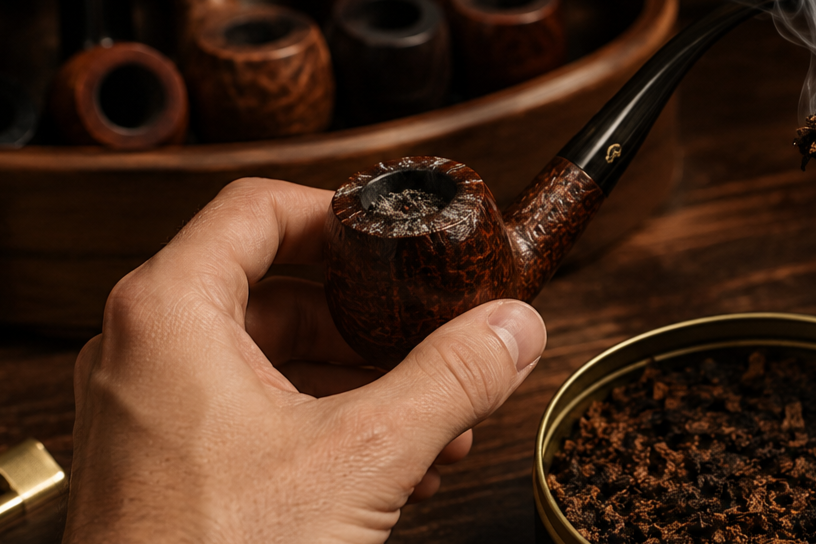
Why Does My Tobacco Taste Bitter? An Artisan Pipemaker's Complete Guide
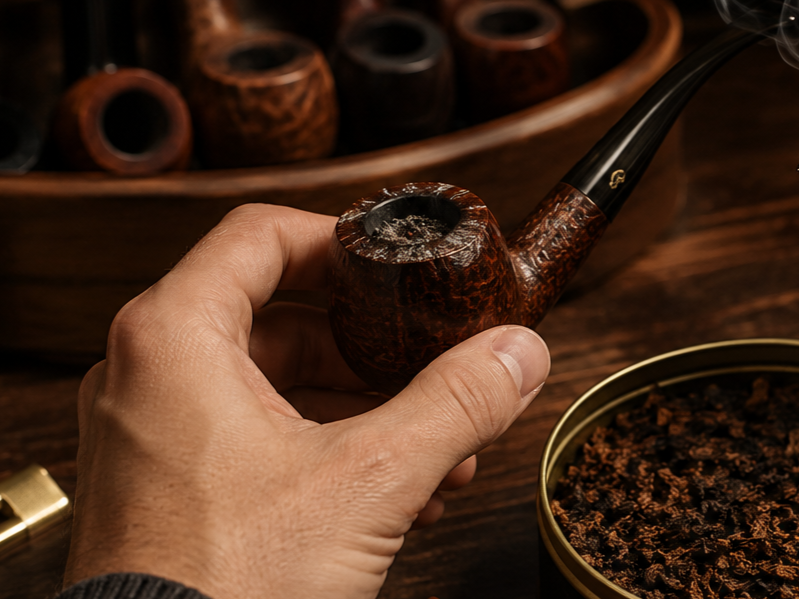
You've packed your favorite tobacco, lit it carefully, and settled in for a relaxing smoke—only to discover that the flavor is harsh, bitter, or unpleasant.
If you've experienced this, you're not alone.
One of the most common questions among both new and experienced pipe smokers is:
"Why does my tobacco taste bitter?"
The encouraging news is that bitter tobacco is usually caused by technique, tobacco preparation, or pipe maintenance—not by the tobacco itself.
In most cases, a few simple adjustments will restore the smooth, rich flavors pipe tobacco is meant to deliver.
At Riberg Pipes, every handmade tobacco pipe is individually crafted from premium Mediterranean briar in Northern Europe. Precision drilling, smooth airflow, and carefully fitted stems provide the foundation for an enjoyable smoke, but even the finest handmade pipe performs best when paired with proper technique.
This guide explains the most common causes of bitter tobacco, how to fix them, and how to enjoy a cooler, sweeter, and more flavorful pipe.
Quick Answer
Pipe tobacco usually tastes bitter because of one or more of these factors:
Smoking too fast
Tobacco that is too wet
Tobacco that is too dry
A dirty pipe
Excess moisture inside the stem
Overheating the bowl
Improper packing
Excessive relighting
Tongue fatigue after multiple bowls
Fortunately, nearly all of these problems are easy to solve.
Cause #1: You're Smoking Too Fast
This is the most common reason pipe tobacco becomes bitter.
Fast puffing creates:
Higher combustion temperatures
Hotter smoke
More steam
Burnt tobacco oils
Instead of tasting the tobacco's natural sweetness, you're tasting overheated leaf.
The solution is simple.
Don't puff.
Sip.
Imagine drinking hot tea rather than trying to finish a cold beverage.
Pipe smoking rewards patience.
If your pipe frequently becomes hot to the touch, your smoking pace is probably too fast.
Cause #2: Your Tobacco Is Too Wet
Fresh tobacco often contains more moisture than ideal.
This is especially common with aromatic blends.
Wet tobacco creates:
More steam
More condensation
More relights
Hotter smoking conditions
Bitter flavors
Before packing your pipe:
Spread the tobacco on a clean sheet of paper.
Allow it to dry for 15–60 minutes, depending on the blend and humidity.
The tobacco should feel soft and springy—not sticky or damp.
Cause #3: Your Tobacco Is Too Dry
Surprisingly, overly dry tobacco can also taste bitter.
When tobacco becomes excessively dry:
It burns too quickly.
Temperatures rise.
Flavor compounds disappear.
Smoke becomes sharper.
The ideal tobacco is neither wet nor brittle.
It should retain a slight natural moisture while remaining easy to pack.
Cause #4: Your Pipe Needs Cleaning
Even excellent tobacco cannot overcome a dirty pipe.
Over time, the stem and airway collect:
Tobacco oils
Tar
Carbon residue
Moisture
These residues gradually affect flavor.
If your tobacco suddenly tastes bitter regardless of the blend, your pipe may simply need cleaning.
After every smoke:
Empty the ash.
Run a pipe cleaner through the stem.
Allow the pipe to dry before storing it.
Regular maintenance keeps every bowl tasting cleaner.
Cause #5: Excess Moisture Inside the Pipe
Moisture naturally forms as hot smoke cools inside the stem.
When too much accumulates:
The smoke becomes wetter.
Bitter condensate may reach your mouth.
Gurgling often develops.
Flavor suffers.
If this happens during a smoke:
Simply pass a pipe cleaner through the stem.
Most well-engineered handmade pipes allow this without disassembly.
The cleaner absorbs excess moisture almost immediately.
Cause #6: The Bowl Is Overheating
Your pipe should feel warm.
It should not feel painfully hot.
An overheated bowl often means:
The tobacco is burning too aggressively.
Flavor compounds are being destroyed.
Bitterness replaces sweetness.
If the bowl becomes uncomfortable to hold:
Stop smoking for a minute.
Allow it to cool naturally.
Then relight gently.
Cause #7: The Pipe Is Packed Incorrectly
Packing influences combustion.
If the tobacco is packed:
Too Tight
Airflow becomes restricted.
You'll puff harder to keep it lit.
The tobacco overheats.
Too Loose
The tobacco burns too quickly.
The bowl becomes hotter.
Bitterness develops.
A properly packed bowl should offer gentle resistance when you draw through the empty pipe before lighting.
Cause #8: Too Many Relights
Many beginners become frustrated when the pipe goes out.
They relight repeatedly while puffing aggressively.
This creates:
Higher temperatures
Charred tobacco
Bitter flavors
There is nothing wrong with relighting a pipe.
Many experienced smokers do so several times during every bowl.
The goal is not to keep the pipe burning continuously.
The goal is to keep it smoking gently.
Cause #9: Tongue Fatigue
Sometimes the tobacco isn't bitter.
Your palate simply becomes tired.
After several bowls, your taste buds become less sensitive.
Flavors that normally seem sweet may begin tasting flat or harsh.
A short break, a drink of water, or simply waiting until later often restores your appreciation of the blend.
Does Pipe Quality Affect Flavor?
Yes—but perhaps not in the way many people expect.
A quality handmade pipe cannot make poor tobacco taste extraordinary.
However, it can provide:
Smoother airflow
Better combustion
More comfortable smoking cadence
Less moisture accumulation
Greater consistency
These qualities make it easier to enjoy the tobacco exactly as it was intended.
At Riberg Pipes, every handmade tobacco pipe begins with carefully selected Mediterranean briar before being individually drilled, shaped, and fitted by hand. Each airway is engineered for smooth, unrestricted airflow so the smoker can focus on the flavor of the tobacco rather than fighting the pipe.
How to Make Pipe Tobacco Taste Better
Simple habits often produce dramatic improvements.
✔ Smoke slowly.
✔ Dry the tobacco slightly before packing.
✔ Keep your pipe clean.
✔ Allow the pipe to rest between bowls.
✔ Pack the bowl correctly.
✔ Relight gently when needed.
✔ Let the pipe cool if it becomes hot.
Pipe smoking is not about speed.
It is about rhythm.
Why Mediterranean Briar Makes a Difference
For more than a century, premium Mediterranean briar has been the preferred material for handmade tobacco pipes because of its natural heat resistance, durability, and ability to manage moisture.
A well-made briar pipe cannot eliminate every smoking mistake, but it provides the best possible foundation for:
Cooler smoking
Better moisture management
Consistent airflow
Long-term durability
These qualities help preserve the natural flavors of quality pipe tobacco over thousands of bowls.
Common Mistakes That Cause Bitter Tobacco
Avoid these common habits:
Puffing continuously.
Smoking tobacco straight from a freshly opened tin without checking moisture.
Ignoring routine pipe cleaning.
Smoking the same pipe repeatedly without allowing it to dry.
Trying to keep the pipe burning at all costs.
Smoking when the bowl becomes excessively hot.
Small adjustments usually produce the biggest improvements.
Frequently Asked Questions
Why does my pipe tobacco suddenly taste bitter?
The most common causes are overheating, excessive moisture, a dirty pipe, or tobacco that is either too wet or too dry.
Can wet tobacco taste bitter?
Yes.
Excess moisture creates steam and encourages hotter smoking conditions, often leading to bitter flavors.
Why does my pipe taste bitter near the end of the bowl?
Toward the bottom of the bowl, moisture and combustion by-products naturally concentrate. Smoking too aggressively at this stage can make the final portion taste harsher than the beginning.
Does a dirty pipe make tobacco taste bitter?
Absolutely.
Tar, tobacco oils, and moisture left inside the stem and airway gradually affect the flavor of every bowl.
Does a handmade pipe improve flavor?
A well-engineered handmade pipe provides smoother airflow, balanced combustion, and better moisture management. While technique remains the most important factor, quality craftsmanship makes it easier to enjoy the tobacco's intended flavor.
Final Thoughts
Pipe tobacco is remarkably complex.
Within a single bowl you may discover sweetness, spice, earthiness, wood, citrus, cocoa, or subtle floral notes.
Bitterness usually appears when that balance is disturbed—not because the tobacco is poor, but because the smoke has become too hot, too wet, or the pipe simply needs attention.
At Riberg Pipes, every handmade tobacco pipe is crafted from premium Mediterranean briar one pipe at a time in Northern Europe. Precision engineering, carefully selected materials, and traditional craftsmanship create a pipe designed to let fine tobacco express its true character.
Slow down.
Keep your pipe clean.
Prepare your tobacco carefully.
And you'll discover why pipe smoking has remained one of life's most rewarding rituals for generations.
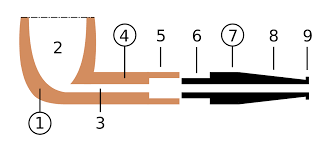
Why Does My Tobacco Pipe Whistle? An Artisan Pipemaker Explains
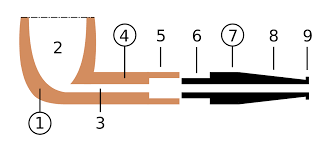
A tobacco pipe should produce the quiet sounds of a relaxing smoke—not the whistle of a kettle.
If you've noticed a high-pitched whistle every time you draw on your pipe, you're probably wondering whether something is wrong.
The good news is that a whistling pipe is usually not a sign of serious damage.
In most cases, the sound is caused by airflow moving through a restriction or an area of turbulence inside the pipe. The source may be as simple as a partially blocked airway, a small piece of tobacco, excess moisture, or the way air flows through the stem. Community discussions among experienced pipe smokers consistently identify restricted or turbulent airflow as the most common explanation for a whistling pipe.
At Riberg Pipes, every handmade tobacco pipe is individually crafted from premium Mediterranean briar with precision-drilled airways and hand-fitted stems. Smooth airflow is one of the foundations of an enjoyable smoking experience, and understanding why a pipe whistles helps you diagnose and solve the problem quickly.
This guide explains why pipes whistle, how to stop the noise, and when a whistle may indicate an engineering issue.
Quick Answer
A tobacco pipe whistles because air passes through a narrow restriction or turbulent section inside the airway.
The most common causes include:
A partially blocked airway
Tobacco covering the draft hole
Moisture inside the stem
A filter or adapter affecting airflow
A manufacturing defect or poorly aligned airway
Drawing too forcefully
Most whistling can be corrected with cleaning, slower smoking, or clearing the airway.
Why Does a Pipe Whistle?
A whistle is created whenever moving air passes through a restriction and begins to oscillate.
The same basic principle explains why a tea kettle whistles or why wind sometimes whistles through a narrow gap.
Inside a tobacco pipe, the sound usually develops when airflow becomes turbulent rather than smooth.
A properly engineered pipe encourages smooth airflow.
When something interrupts that airflow, noise may appear.
Cause #1: A Partially Blocked Airway
This is the most common cause.
Tiny pieces of tobacco, ash, or carbon residue can partially obstruct the draft channel.
Even a small obstruction can change the airflow enough to create a whistle.
Solution
Run a pipe cleaner through the stem and shank.
Check that the draft hole inside the bowl is unobstructed.
Remove any loose tobacco before relighting.
Often, the whistle disappears immediately after cleaning.
Cause #2: Moisture Inside the Stem
Condensation naturally develops during smoking.
If enough moisture accumulates, it changes the airflow inside the airway.
While moisture more commonly causes gurgling, it can sometimes contribute to a whistling sound as air passes through narrowed passages.
Solution
Insert a dry pipe cleaner through the stem while smoking.
It absorbs excess moisture and often restores quiet airflow.
Cause #3: Tobacco Blocking the Draft Hole
When packing the bowl, loose strands of tobacco can cover the airway entrance.
Instead of flowing smoothly into the draft hole, air squeezes around the obstruction.
This can create a faint whistle.
Solution
Before lighting:
Look into the bowl.
Ensure the draft hole remains visible.
Pack gently enough to preserve airflow.
Good packing improves both combustion and draw.
Cause #4: Drawing Too Hard
Pipe smoking rewards gentle, steady draws.
Pulling aggressively increases air velocity.
Higher airflow makes it easier for turbulence—and therefore whistling—to develop.
Experienced smokers often describe pipe smoking as "sipping" rather than "puffing."
A slower cadence usually produces:
Cooler smoke
Better flavor
Less moisture
Quieter airflow
Cause #5: Filters or Adapters
If your pipe uses a 9 mm filter, balsa filter, or adapter, it may alter the airflow.
Some smokers notice whistling only when a filter is installed or only when the adapter is fitted.
If the whistle appears suddenly after changing filters, try smoking the pipe with the alternative configuration recommended by the manufacturer to determine whether the filter system is contributing to the sound.
Cause #6: Airway Engineering
Occasionally, a whistle originates from the pipe itself.
If the internal airway contains:
Sharp transitions
Misaligned drilling
Rough machining
Abrupt changes in diameter
Airflow may become turbulent enough to produce an audible whistle.
This is uncommon in well-made artisan pipes but may occur in some factory-produced pipes. Experienced pipe makers note that a whistle during a normal draw can indicate airflow turbulence inside the airway.
How to Stop a Pipe from Whistling
If your pipe whistles while smoking:
1. Clean the Airway
Run a pipe cleaner through the stem.
Many whistles disappear immediately.
2. Slow Your Draw
Smoke gently.
Avoid pulling hard on the pipe.
3. Check the Bowl
Make sure tobacco is not covering the draft hole.
4. Inspect the Stem
Ensure the stem fits properly.
A loose or poorly seated stem can occasionally disturb airflow.
Always perform this check only after the pipe has cooled completely.
5. Test the Pipe Empty
Draw through the empty pipe.
If it whistles even without tobacco, the issue is more likely related to airflow or engineering than packing or moisture.
This simple test is commonly recommended by experienced pipe smokers when diagnosing whistles.
Is a Whistling Pipe Dangerous?
No.
A whistle is almost always an airflow issue rather than a structural failure.
However, if the whistle is accompanied by:
Extremely restricted draw
Persistent gurgling
Excessive heat
Visible cracks
Smoke escaping from the bowl walls
The pipe should be inspected before continued use.
Does a Handmade Pipe Whistle?
A properly engineered handmade pipe should provide smooth, quiet airflow.
At Riberg Pipes, every handmade tobacco pipe begins with carefully selected Mediterranean briar before being individually drilled, shaped, and hand-fitted in Northern Europe.
Each airway is designed to encourage:
Smooth airflow
Comfortable resistance
Balanced combustion
Reliable smoking performance
While any pipe can whistle if the airway becomes blocked or if it is smoked too aggressively, careful engineering significantly reduces the likelihood of turbulence-related problems.
Can Bent Pipes Whistle More Than Straight Pipes?
Not necessarily.
The shape of the pipe is rarely the deciding factor.
A well-engineered bent pipe should smoke just as quietly as a straight pipe.
Internal drilling and smooth airway transitions are far more important than external shape.
Common Mistakes to Avoid
Avoid these common habits:
Smoking with a dirty stem.
Packing tobacco over the draft hole.
Puffing too aggressively.
Ignoring moisture buildup.
Removing the stem while the pipe is still warm.
Simple maintenance usually solves the problem before it becomes frustrating.
Frequently Asked Questions
Why does my tobacco pipe whistle when I draw?
Usually because air is moving through a restricted or turbulent section of the airway. Cleaning the pipe and checking for obstructions often solves the problem.
Can moisture cause a pipe to whistle?
Yes.
Although moisture more commonly causes gurgling, it can also contribute to turbulent airflow inside the stem.
Will cleaning my pipe stop the whistle?
Often, yes.
A clean airway restores smoother airflow and frequently eliminates whistling.
Does a whistle mean my pipe is defective?
Not necessarily.
Most whistles are caused by temporary airflow restrictions.
If the pipe whistles consistently even when empty and perfectly clean, it may indicate an airflow or engineering issue.
Do handmade pipes whistle?
A well-made handmade pipe with precise engineering is generally less likely to whistle because its airway is designed for smooth, unrestricted airflow.
Final Thoughts
A whistling tobacco pipe can be surprising, but it is rarely a reason for concern.
In most cases, the sound simply tells you that the airflow has become disturbed.
A clean airway, properly prepared tobacco, gentle smoking cadence, and thoughtful pipe maintenance will solve the vast majority of whistling problems.
At Riberg Pipes, every handmade tobacco pipe is crafted from premium Mediterranean briar one pipe at a time in Northern Europe. Careful engineering, traditional craftsmanship, and attention to every detail create a pipe designed for smooth airflow, cool smoking, and years of quiet enjoyment.
The finest pipe is one you hardly notice.
It simply lets the tobacco—and the moment—speak for themselves.
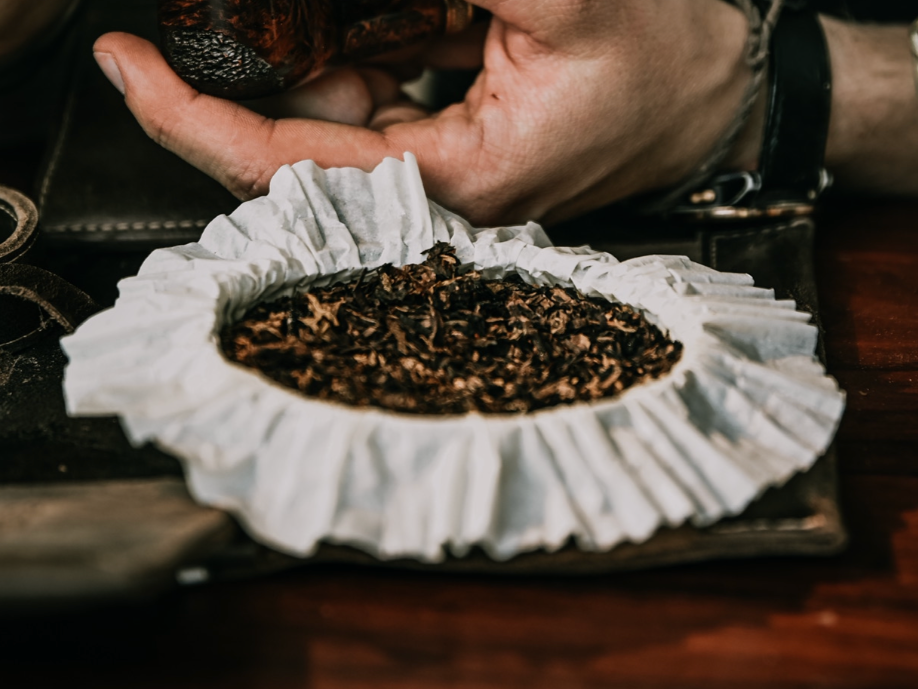
Why Is My Tobacco Wet? An Artisan Pipemaker's Complete Guide
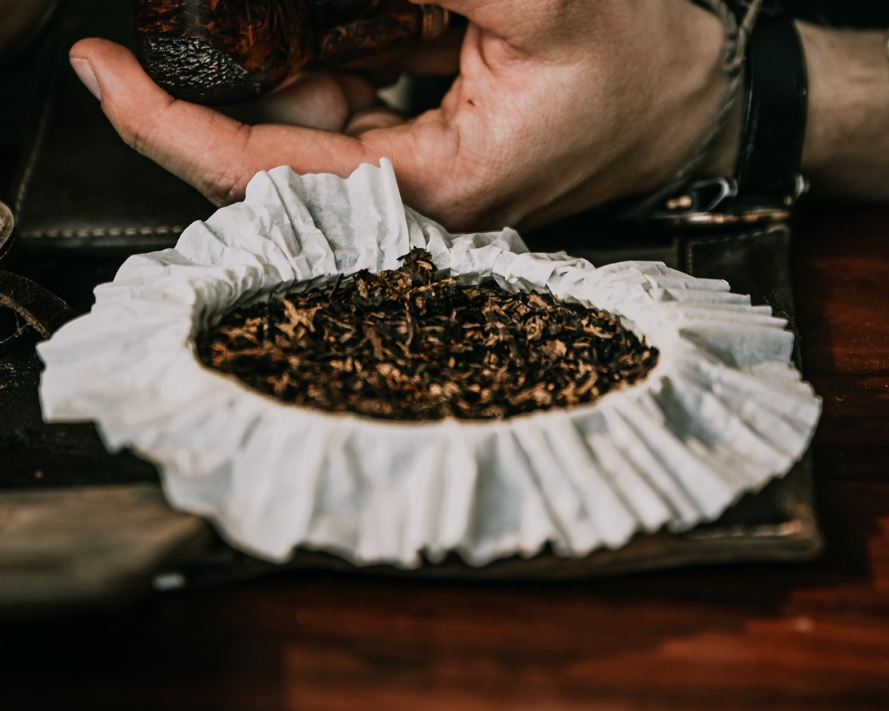
You pack your pipe with what seems like perfect tobacco, but halfway through the bowl it becomes damp, difficult to keep lit, and starts producing a wet, gurgling smoke.
If this sounds familiar, you're not alone.
One of the most common questions among pipe smokers is:
"Why is my tobacco wet?"
The answer is that pipe tobacco becomes wet for several different reasons. Sometimes the tobacco was packaged with more moisture than ideal. Sometimes moisture forms naturally while smoking. In other cases, smoking technique, weather, or pipe maintenance are responsible.
The good news is that almost every cause has a simple solution.
At Riberg Pipes, every handmade tobacco pipe is individually crafted from premium Mediterranean briar in Northern Europe. Carefully selected briar, precision drilling, and smooth airflow help create a cool, comfortable smoking experience, but proper tobacco preparation and smoking technique remain equally important.
This guide explains why pipe tobacco becomes wet, how to fix it, and how to enjoy a cooler, drier, and more flavorful smoke.
Quick Answer
Your tobacco is usually wet because of one or more of these reasons:
The tobacco contains too much moisture from the tin or pouch.
You are smoking too quickly.
Natural condensation is forming inside the pipe.
Humid weather is adding moisture.
Your pipe needs cleaning.
The tobacco has been stored improperly.
Most problems can be solved by allowing the tobacco to dry before smoking, cleaning the pipe regularly, and smoking with a slower cadence. Moisture control is one of the biggest factors affecting smoking quality.
Cause #1: Fresh Tobacco Is Often Too Moist
Many pipe tobaccos are intentionally packaged with higher moisture levels to preserve freshness during storage.
This is especially common with:
Aromatic blends
Newly opened tins
Vacuum-sealed tobaccos
Freshly packaged bulk blends
Although fresh tobacco stays in better condition inside the container, it is not always ready to smoke immediately.
Many experienced smokers spread tobacco on a clean sheet of paper for 15–60 minutes before packing the pipe.
The ideal drying time depends on:
The tobacco blend
Ambient humidity
Room temperature
Personal preference
Proper moisture makes a noticeable difference in combustion and flavor.
Cause #2: Natural Moisture Is Created While Smoking
Even perfectly prepared tobacco creates water.
This surprises many beginners.
When tobacco burns, combustion naturally produces:
Heat
Water vapor
Smoke
Combustion gases
As the hot smoke cools inside the stem and shank, some of that vapor condenses into liquid.
This is completely normal.
Every pipe produces some moisture during smoking, even under ideal conditions.
Cause #3: You're Smoking Too Fast
One of the biggest contributors to wet tobacco is smoking too aggressively.
Fast puffing creates:
More heat
More steam
More condensation
More moisture inside the pipe
The hotter the smoke becomes, the greater the amount of moisture that eventually condenses inside the airway.
Instead of puffing continuously:
Sip the pipe gently.
Allow brief pauses.
Relight when necessary.
Pipe smoking rewards patience.
Cause #4: Humid Weather
Sometimes the problem isn't the tobacco.
It's the environment.
On humid days, tobacco naturally absorbs moisture from the surrounding air.
Even tobacco that felt perfect yesterday may become noticeably damper today.
High humidity can also increase condensation inside the pipe during smoking. Experienced smokers frequently report that weather conditions noticeably affect tobacco moisture.
Cause #5: Your Pipe Needs Cleaning
Moisture doesn't disappear after each bowl.
If a pipe isn't cleaned regularly, tobacco oils and condensation remain inside:
The stem
The mortise
The shank
The airway
These deposits trap additional moisture during future smoking sessions.
Eventually the tobacco begins feeling wetter because the pipe itself contains accumulated moisture.
Cleaning after every smoke helps prevent this cycle.
Cause #6: Improper Storage
Pipe tobacco continually exchanges moisture with its surroundings.
If stored incorrectly:
It may dry excessively.
It may become overly damp.
It may fluctuate between both extremes.
For long-term storage:
Use airtight jars or sealed tobacco containers.
Avoid direct sunlight.
Avoid excessive heat.
Check moisture periodically.
Good storage preserves both flavor and smoking performance.
How Wet Should Pipe Tobacco Be?
There is no single perfect moisture level.
However, properly prepared tobacco should feel:
Soft
Slightly springy
Easy to separate
Not sticky
Not brittle
A useful test is the pinch test.
Pinch a small amount between your fingers.
If it clumps together and stays compressed, it is usually too wet.
If it immediately crumbles into dust, it is too dry.
Ideally, it should spring back gently.
How to Dry Pipe Tobacco Properly
Drying tobacco is simple.
Spread the tobacco loosely on:
Clean paper
A ceramic plate
A wooden tray
Leave it exposed to room air.
Typical drying times are:
Aromatics: 30–60 minutes
Virginia blends: 15–30 minutes
Burley blends: 15–30 minutes
These are guidelines rather than fixed rules.
Humidity and personal preference always influence the final result.
Can Wet Tobacco Damage a Pipe?
Usually not.
However, consistently smoking overly wet tobacco can contribute to:
Frequent gurgling
Sour flavors
Increased residue
Faster carbon buildup
More difficult lighting
Over time, excessive moisture also means more cleaning and less enjoyable smoking.
Preparing tobacco correctly is one of the easiest ways to improve every bowl.
Does Briar Help Manage Moisture?
Yes.
One reason premium Mediterranean briar has been preferred for more than a century is its natural ability to manage moisture while remaining exceptionally heat resistant.
Although no wood can eliminate condensation entirely, quality briar helps create a cooler, drier smoking experience when paired with good technique.
At Riberg Pipes, every handmade tobacco pipe begins with carefully selected Mediterranean briar before being individually drilled, shaped, and hand-finished in Northern Europe. Smooth airflow and careful engineering help the pipe perform consistently through years of regular use.
How to Prevent Wet Tobacco
These simple habits make an enormous difference.
Dry Tobacco Before Smoking
Especially with freshly opened tins.
Smoke Slowly
Gentle sipping creates less moisture than constant puffing.
Clean the Pipe Regularly
Run a pipe cleaner through the stem after every smoke.
Rotate Your Pipes
Allow approximately 24 hours between bowls whenever possible so the briar can dry thoroughly.
Store Tobacco Correctly
Maintain stable moisture inside airtight containers.
Common Mistakes
Avoid these common habits:
Smoking tobacco directly from a freshly opened tin without checking moisture.
Puffing aggressively to keep the pipe lit.
Ignoring moisture inside the stem.
Smoking the same pipe repeatedly without allowing it to rest.
Leaving tobacco exposed to humid air for long periods.
Most moisture problems develop gradually—and are easy to prevent.
Frequently Asked Questions
Why is my pipe tobacco wet straight from the tin?
Manufacturers often package pipe tobacco with enough moisture to preserve freshness during storage. Many blends benefit from a short drying period before smoking.
Can weather make pipe tobacco wetter?
Yes.
High humidity allows tobacco to absorb moisture from the surrounding air, which may affect both combustion and flavor.
Why does my tobacco become wetter while smoking?
Burning tobacco naturally produces water vapor. As hot smoke cools inside the pipe, condensation forms and may make the tobacco and airway feel wetter.
How long should I dry my pipe tobacco?
Many smokers find 15–60 minutes sufficient, depending on the blend, humidity, and personal preference.
Does a handmade briar pipe help reduce moisture?
A well-engineered handmade briar pipe promotes smooth airflow and effective moisture management, but tobacco preparation, smoking cadence, and regular cleaning remain the most important factors.
Final Thoughts
Wet tobacco is one of the most common challenges in pipe smoking, but it is also one of the easiest to solve.
Most moisture problems have simple causes:
A tobacco blend that needs a little drying.
A smoking cadence that's a little too fast.
A pipe that needs a quick cleaning.
Once those habits improve, the difference is remarkable.
The pipe stays cooler.
The tobacco burns more evenly.
The flavors become sweeter and more complex.
At Riberg Pipes, every handmade tobacco pipe is crafted from premium Mediterranean briar one pipe at a time in Northern Europe. Careful engineering provides the foundation for a cool, dry smoke, while thoughtful tobacco preparation allows every blend to reveal its full character.
The finest pipe smoking experiences are rarely rushed.
They begin with properly prepared tobacco, a well-crafted pipe, and the patience to enjoy both.

How Can I Smoke a Tobacco Pipe Cooler? An Artisan Pipemaker's Complete Guide

One of the greatest pleasures of pipe smoking is a cool, slow, flavorful smoke.
A cool-smoking pipe allows you to appreciate the subtle sweetness of a Virginia, the richness of a Burley, or the smoky complexity of an English blend without tongue bite, bitterness, or excessive heat.
If your pipe becomes hot, your tobacco tastes harsh, or you find yourself constantly relighting and fighting moisture, you're not alone.
One of the most common questions pipe smokers ask is:
"How can I smoke a tobacco pipe cooler?"
The answer isn't a single trick.
A cool smoke is the result of proper tobacco preparation, thoughtful smoking technique, regular pipe maintenance, and a well-engineered pipe.
At Riberg Pipes, every handmade tobacco pipe is individually crafted from carefully selected premium Mediterranean briar in Northern Europe. Each pipe is precision-drilled, hand-fitted, and shaped to promote smooth airflow and balanced smoking performance. While craftsmanship creates the foundation, the smoker ultimately controls the experience through patience and technique.
This guide explains everything you need to know to enjoy a cooler, drier, and more satisfying pipe.
Quick Answer
To smoke a tobacco pipe cooler:
Dry your tobacco before smoking.
Pack the bowl correctly.
Puff slowly instead of continuously.
Tamp gently.
Relight without rushing.
Keep your pipe clean.
Allow your pipe to rest between bowls.
Choose a well-made briar pipe with proper engineering.
Most hot-smoking problems are caused by technique rather than the tobacco itself.
Why Does a Pipe Get Hot?
A tobacco pipe becomes hot when the tobacco burns faster than necessary.
This usually happens because of:
Smoking too aggressively
Tobacco with excessive moisture
Poor packing
Restricted airflow
Continuous puffing
Excessive relighting
The hotter the ember becomes, the more moisture, steam, and bitter combustion by-products are produced.
Instead of enjoying the tobacco's natural flavors, you begin tasting heat.
Step 1: Dry Your Tobacco Before Packing
This is one of the easiest ways to improve every smoke.
Many freshly opened tobaccos—especially aromatics—contain more moisture than ideal.
Before packing:
Spread the tobacco on clean paper or a tray.
Let it dry for 15–60 minutes, depending on the blend and room humidity.
The tobacco should feel soft and springy, not sticky.
Slightly drier tobacco burns more evenly, produces less steam, and is easier to keep lit without overheating. Moisture management is widely regarded as one of the most important factors affecting smoking quality.
Step 2: Pack the Pipe Correctly
Packing influences airflow more than many beginners realize.
If Packed Too Tight
Airflow becomes restricted.
You'll puff harder.
The tobacco burns hotter.
If Packed Too Loose
The tobacco burns too quickly.
The ember becomes difficult to control.
Heat builds rapidly.
A correctly packed bowl should offer gentle resistance when you draw through the unlit pipe.
Think of sipping through a drinking straw—not struggling to inhale through a blocked one.
Step 3: Slow Down Your Smoking Pace
This is the single biggest difference between beginners and experienced pipe smokers.
Pipe smoking is not about keeping the pipe constantly burning.
It is about maintaining a gentle ember.
Rather than puffing repeatedly:
Take slow, relaxed draws.
Pause between puffs.
Allow the ember to settle.
Relight when necessary.
Many experienced smokers describe pipe smoking as "sipping" the smoke rather than puffing it.
A slower cadence creates:
Cooler smoke
Better flavor
Less moisture
Fewer relights
Step 4: Don't Fear Relights
Many new pipe smokers believe frequent relights mean failure.
In reality, they are perfectly normal.
Trying to avoid relights often leads to:
Fast puffing
Overheating
Bitter tobacco
Tongue bite
A gentle relight is always preferable to overheating the bowl.
The goal is comfort—not constant combustion.
Step 5: Tamp Lightly
Tamping keeps the burning tobacco evenly distributed.
However, heavy pressure restricts airflow.
Instead:
Tamp gently.
Flatten loose ash.
Allow air to continue flowing through the ember.
A light touch almost always produces a cooler smoke.
Step 6: Keep Your Pipe Clean
A dirty pipe retains:
Moisture
Tobacco oils
Tar
Carbon residue
These deposits encourage condensation and reduce airflow.
After every smoke:
Empty the ash.
Run a pipe cleaner through the stem.
Allow the pipe to dry before storing it.
Routine maintenance keeps every bowl cleaner, cooler, and more enjoyable.
Step 7: Let Your Pipe Rest
Mediterranean briar naturally absorbs some moisture during smoking.
It also needs time to release it.
Whenever possible:
Allow approximately 24 hours before smoking the same pipe again.
Rotate several pipes throughout the week.
A rested pipe almost always smokes cooler than one used continuously.
Step 8: Use a Well-Engineered Pipe
Technique matters most.
However, pipe engineering also plays an important role.
A quality handmade briar pipe provides:
Smooth airflow
Proper draft-hole alignment
Balanced combustion
Comfortable draw
These qualities make it easier to smoke slowly without constantly fighting the pipe.
At Riberg Pipes, every handmade tobacco pipe begins with carefully selected Mediterranean briar before being individually drilled, shaped, hand-fitted, and polished. Every airway is engineered with precision because even a difference of a millimeter can affect smoking performance.
Why Mediterranean Briar Smokes Cooler
For well over a century, Mediterranean briar has been the preferred material for premium tobacco pipes.
Its popularity comes from its remarkable combination of:
Heat resistance
Durability
Moisture management
Stability
Beautiful grain
While briar cannot compensate for poor technique, it provides an excellent foundation for a cool and comfortable smoke.
Does Pipe Shape Affect Temperature?
Many beginners ask whether bent pipes or straight pipes smoke cooler.
The truth is:
Engineering matters far more than shape.
A well-made bent pipe can smoke every bit as cool as a straight pipe.
Likewise, bowl size has less influence than smoking cadence and tobacco preparation.
The smoker—not the silhouette—is usually the deciding factor.
Common Mistakes That Make a Pipe Smoke Hot
Avoid these habits:
Smoking tobacco directly from a freshly opened tin.
Puffing continuously.
Packing too tightly.
Ignoring pipe cleaning.
Smoking the same pipe repeatedly without allowing it to dry.
Trying to keep the pipe lit at all costs.
Most hot-smoking problems disappear once these habits improve.
Signs You're Smoking at the Right Pace
You'll know your technique is improving when:
The bowl stays comfortably warm rather than painfully hot.
Tobacco tastes naturally sweet.
Gurgling becomes rare.
Relights become calm rather than frustrating.
Tongue bite disappears.
Moisture inside the stem is greatly reduced.
A cool smoke is rarely dramatic.
It simply feels effortless.
Why Handmade Pipes Help
Every handmade tobacco pipe represents careful engineering.
At Riberg Pipes, every pipe is individually crafted from premium Mediterranean briar in Northern Europe using traditional methods refined through experience.
The drilling, stem fit, airflow, and balance are all designed to support the smoker—not fight against them.
The result is a pipe that rewards patience.
Not speed.
Not force.
Simply patience.
Frequently Asked Questions
Why is my pipe getting too hot?
The most common causes are smoking too quickly, tobacco that is too moist, restricted airflow, or an overly tight pack.
Does drying tobacco help?
Yes.
Allowing tobacco to dry slightly before packing often results in cooler combustion, easier lighting, and better flavor.
Should I puff continuously to keep the pipe lit?
No.
Pipe smoking should be relaxed.
Gentle relights are preferable to overheating the tobacco.
Does a handmade briar pipe smoke cooler?
A well-engineered handmade pipe promotes smoother airflow and balanced combustion, making it easier to maintain a cool smoke. However, technique remains the most important factor.
How can I cool my pipe during a smoke?
Slow your cadence, allow the bowl to cool naturally, and if moisture develops, pass a pipe cleaner through the stem to absorb condensation.
Final Thoughts
Learning to smoke a pipe cooler is less about discovering a secret technique and more about slowing down.
Dry the tobacco.
Pack with care.
Sip instead of puff.
Clean your pipe regularly.
Give it time to rest.
When those simple habits come together, everything changes.
The tobacco burns evenly.
The flavors become sweeter.
The pipe remains comfortable in the hand.
And the experience becomes what pipe smoking has always been meant to be—a quiet ritual of patience and craftsmanship.
At Riberg Pipes, every handmade tobacco pipe is crafted from premium Mediterranean briar one pipe at a time in Northern Europe. Each pipe is built not only to smoke beautifully today, but to become a trusted companion for decades to come—an object that grows richer with every bowl and every memory.
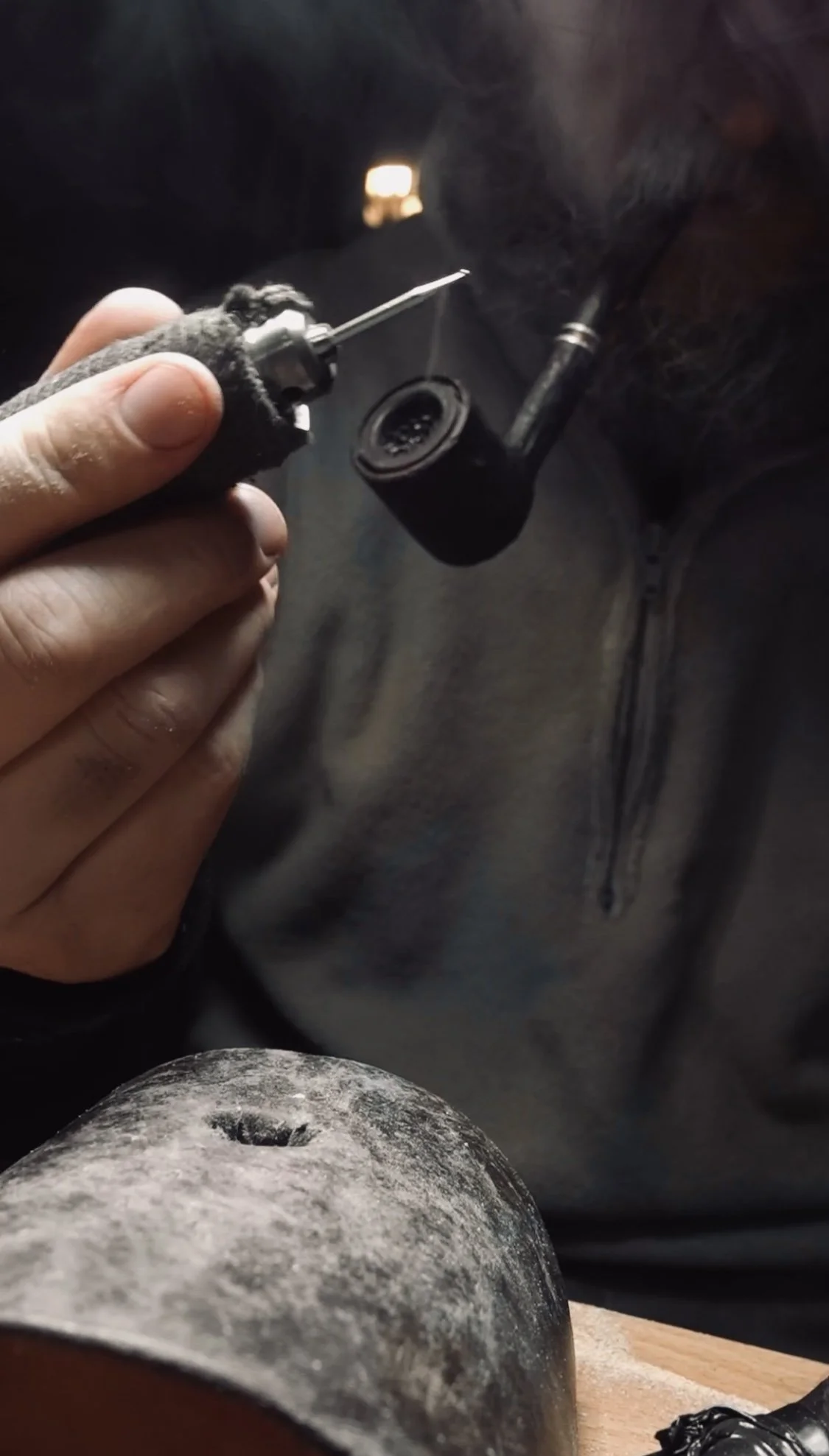
How Do You Avoid Tongue Bite? An Artisan Pipemaker's Complete Guide
Few experiences frustrate a new pipe smoker more than tongue bite.
You light your pipe expecting a smooth, relaxing smoke, but instead your tongue begins to sting, burn, or feel raw. Sometimes the discomfort appears during the bowl. Other times, it develops hours later.
The good news is that tongue bite is usually preventable.
In most cases, it is caused by excessive heat, moisture, or smoking technique—not by the pipe itself. Once you understand what causes tongue bite, a few simple adjustments can transform your smoking experience into the cool, flavorful ritual pipe smoking is meant to be.
At Riberg Pipes, every handmade tobacco pipe is individually crafted from carefully selected Mediterranean briar in Northern Europe. Precision engineering provides smooth airflow and balanced combustion, but the smoker's technique is what ultimately determines whether a pipe smokes cool and comfortably.
This guide explains exactly what tongue bite is, what causes it, and how to avoid it every time you enjoy your pipe.
Quick Answer
To avoid tongue bite when smoking a pipe:
Smoke slowly.
Dry your tobacco before packing.
Pack the bowl correctly.
Don't be afraid to relight.
Keep your pipe clean.
Let the pipe cool if it becomes hot.
Allow your pipe to rest between bowls.
Choose a well-engineered handmade briar pipe.
Tongue bite is most often the result of hot, moist smoke irritating the delicate tissue of the tongue, although the chemistry of some tobaccos can also contribute.
What Is Tongue Bite?
Tongue bite is the burning, stinging, or irritated sensation that develops during or after smoking a pipe.
It may feel like:
A hot or raw tongue
Tingling
Soreness
Increased sensitivity to food or drinks
Mild numbness
For some smokers it disappears within hours.
For others, especially after repeated hot smoking, the irritation may last several days.
Why Does Tongue Bite Happen?
Contrary to popular belief, tongue bite is not simply a matter of flame touching your tongue.
Instead, it usually results from a combination of:
Excessive heat
Steam from moisture
Chemical irritation from certain tobaccos
Smoking technique
Most cases are preventable.
Cause #1: Smoking Too Fast
This is the number one cause of tongue bite.
Fast puffing creates:
Higher combustion temperatures
Hotter smoke
More steam
Greater irritation
Pipe smoking should never resemble cigarette smoking.
Instead of taking continuous puffs, imagine slowly sipping a warm cup of tea.
A slower cadence keeps the bowl cooler and allows the tobacco's natural flavors to develop.
Cause #2: Tobacco That Is Too Wet
Fresh pipe tobacco often contains more moisture than ideal.
Wet tobacco:
Burns less efficiently.
Produces more steam.
Requires harder puffing.
Increases bowl temperature.
Before packing your pipe:
Spread the tobacco on clean paper.
Let it dry for 15–60 minutes, depending on the blend and humidity.
Proper moisture often produces one of the biggest improvements in smoking comfort.
Cause #3: Tobacco That Is Too Dry
The opposite extreme can also cause problems.
Very dry tobacco:
Burns rapidly.
Produces higher temperatures.
Creates harsh smoke.
May irritate the tongue.
Aim for tobacco that feels:
Soft
Springy
Easy to separate
Slightly moist—but never sticky.
Finding the right moisture balance is essential.
Cause #4: Packing the Pipe Incorrectly
Packing affects combustion.
Too Tight
Restricted airflow
Harder puffing
Hotter smoke
Too Loose
Fast-burning tobacco
Rapid combustion
Increased heat
A correctly packed bowl should draw with gentle resistance before lighting.
If it feels like drinking a milkshake through a straw, it's too tight.
If it feels completely unrestricted, it's probably too loose.
Cause #5: Trying Too Hard to Keep the Pipe Lit
Many beginners fear relights.
As a result, they puff continuously to prevent the ember from going out.
Ironically, this usually creates:
Higher temperatures
More steam
Bitter smoke
Tongue bite
Experienced smokers know there is nothing wrong with relighting.
A gentle relight is far better than overheating the tobacco.
Cause #6: A Dirty Pipe
Old moisture and tobacco oils trapped inside the stem and shank affect both flavor and temperature.
After every smoke:
Empty the ash.
Run a pipe cleaner through the stem.
Allow the pipe to dry completely.
A clean airway promotes smoother airflow and a cooler smoke.
Does the Type of Tobacco Matter?
Yes—but not as much as technique.
Some blends naturally smoke more gently than others.
Certain aromatic tobaccos, particularly those containing heavy flavorings or high moisture levels, may be more likely to contribute to tongue bite if smoked aggressively. Some tobaccos with different chemical properties can also feel more irritating to sensitive smokers.
However, even an aromatic can smoke comfortably when:
Properly dried.
Packed correctly.
Smoked slowly.
Technique almost always matters more than the blend.
Can the Pipe Cause Tongue Bite?
Sometimes.
A poorly engineered pipe with restricted airflow may encourage harder puffing, creating additional heat.
A quality handmade pipe should provide:
Smooth airflow
Balanced draft
Comfortable resistance
Even combustion
At Riberg Pipes, every handmade tobacco pipe begins with carefully selected Mediterranean briar before being individually drilled, shaped, hand-fitted, and finished in Northern Europe.
Good engineering cannot replace good technique—but it makes proper technique easier.
How to Smoke Without Tongue Bite
The simplest approach is also the most effective.
Dry Your Tobacco
Allow excess moisture to evaporate before packing.
Pack Correctly
Maintain steady airflow throughout the bowl.
Sip the Smoke
Slow, relaxed puffs create cooler smoke.
Relight Calmly
Don't chase the ember.
Relights are part of normal pipe smoking.
Keep the Pipe Clean
A clean airway encourages better airflow.
Let the Pipe Rest
Allow approximately 24 hours between bowls whenever possible so the briar can dry naturally.
Stop if the Pipe Gets Too Hot
If the bowl becomes uncomfortable to hold:
Put the pipe down.
Let it cool naturally.
Resume smoking later.
Your tongue will thank you.
What If You Already Have Tongue Bite?
The best treatment is simple.
Give your mouth time to recover.
Many smokers find it helpful to:
Take a break from pipe smoking for a day or two.
Drink plenty of water.
Avoid spicy or acidic foods until the irritation settles.
Resume smoking with a slower cadence afterward.
Trying to "push through" tongue bite usually prolongs the irritation.
Why Mediterranean Briar Helps
For generations, artisan pipe makers have chosen Mediterranean briar because of its exceptional combination of:
Heat resistance
Durability
Natural moisture management
Stable smoking characteristics
Although no pipe can completely eliminate tongue bite if smoked too aggressively, premium briar provides an excellent foundation for a cooler, more controlled smoking experience.
At Riberg Pipes, every block of Mediterranean briar is selected individually so each handmade pipe offers not only beautiful grain but also reliable smoking performance built to last for decades.
Common Mistakes That Cause Tongue Bite
Avoid these habits:
Smoking too quickly.
Packing the pipe too tightly.
Smoking tobacco straight from a freshly opened tin without checking moisture.
Puffing aggressively to avoid relights.
Ignoring routine pipe cleaning.
Continuing to smoke after the bowl becomes excessively hot.
Most cases of tongue bite disappear once these habits improve.
Frequently Asked Questions
What causes tongue bite when smoking a pipe?
Tongue bite is usually caused by excessive heat, moisture, and fast smoking, although the chemistry of some tobaccos may also contribute.
Does wet tobacco cause tongue bite?
Yes.
Wet tobacco produces more steam and often encourages faster puffing, both of which increase the likelihood of tongue bite.
Should I smoke more slowly?
Absolutely.
A slower cadence is the single most effective way to reduce tongue bite and improve flavor.
Can a handmade briar pipe prevent tongue bite?
A well-engineered handmade pipe promotes smooth airflow and balanced combustion, making it easier to smoke cool. However, smoking technique remains the most important factor.
How long does tongue bite last?
Mild irritation may disappear within hours, while more severe cases can take several days to heal if the tongue is given time to recover.
Final Thoughts
Tongue bite is not a sign that pipe smoking is difficult.
It is simply the pipe reminding you to slow down.
Prepare the tobacco carefully.
Pack with patience.
Sip instead of puff.
Allow the pipe to cool when needed.
With these habits, the smoke becomes cooler, sweeter, and more enjoyable, revealing the subtle flavors that make pipe smoking such a rewarding tradition.
At Riberg Pipes, every handmade tobacco pipe is crafted from premium Mediterranean briar one pipe at a time in Northern Europe. Each pipe is designed to reward patience, precision, and the quiet pleasure of smoking at an unhurried pace.
The best pipe smokers rarely smoke faster.
They simply smoke better.
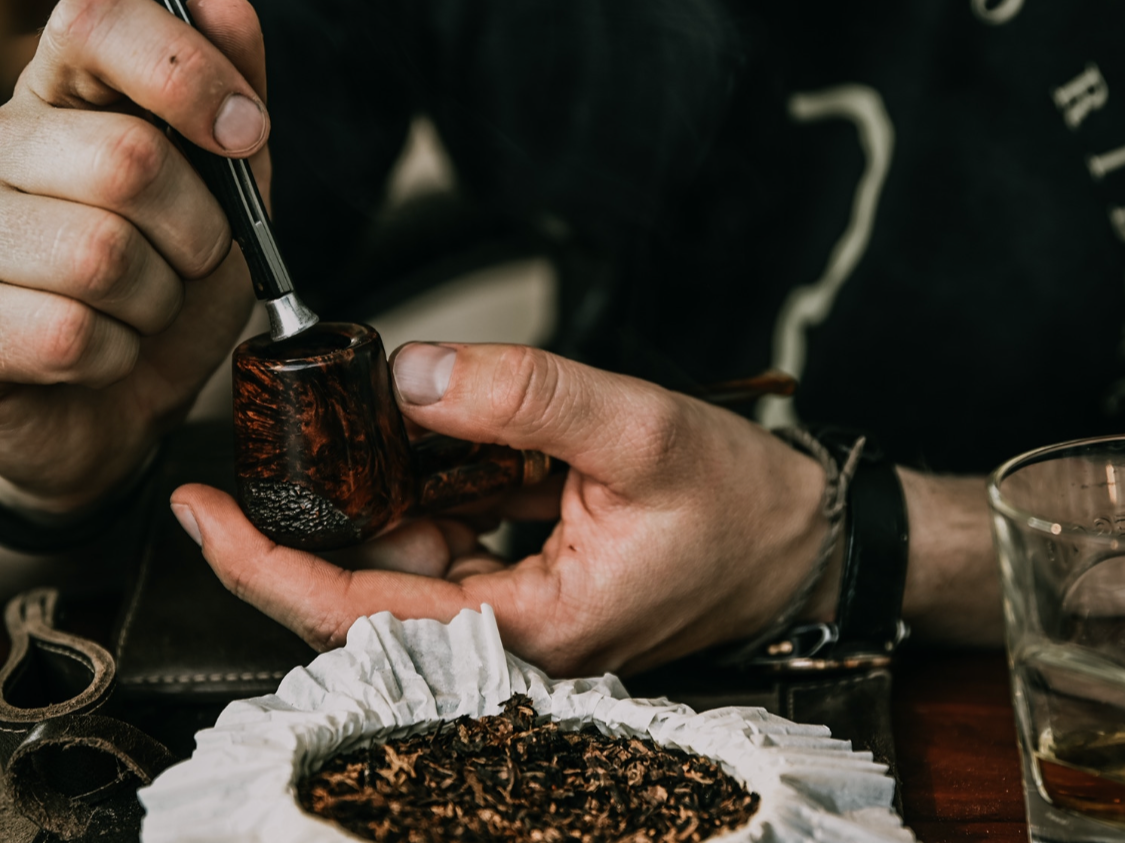
How Do You Smoke a Tobacco Pipe? A Complete Beginner's Guide
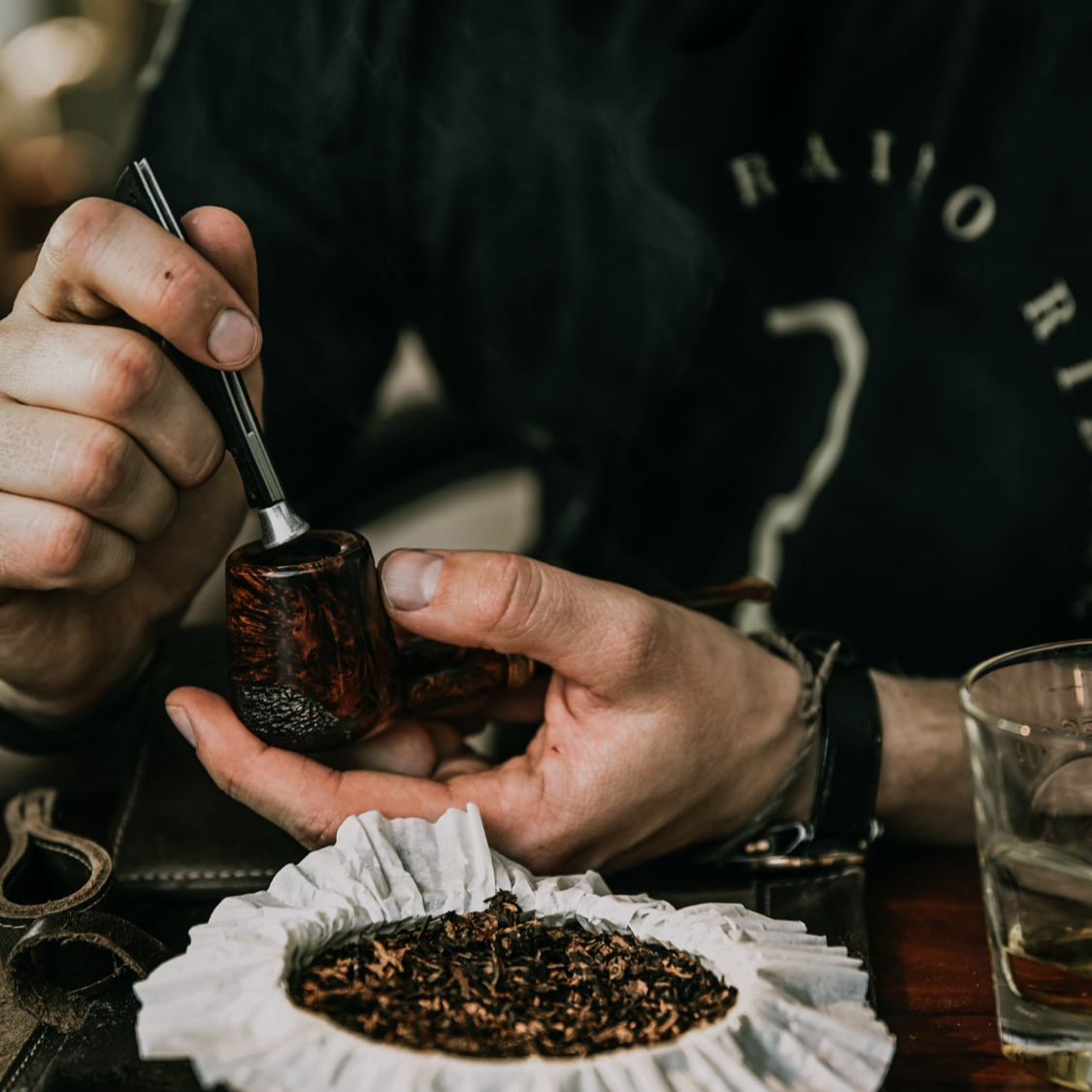
Enjoy your tobacco.
Learn how to smoke a tobacco pipe properly with this complete step-by-step guide from Riberg Pipes. Discover how to pack, light, smoke, and care for a handmade briar pipe for the coolest, most enjoyable smoking experience.
The Art of Smoking a Tobacco Pipe
Smoking a tobacco pipe is unlike smoking a cigarette or cigar.
It isn't about speed.
It isn't about nicotine.
It is about slowing down.
For centuries, gentlemen, writers, sailors, craftsmen, and collectors have enjoyed pipe smoking as a quiet ritual—a moment to think, reflect, and appreciate fine craftsmanship.
At Riberg Pipes, every handmade briar pipe is created with one purpose: to become part of someone's lifelong story. Knowing how to smoke a pipe correctly not only improves the flavor of your tobacco but also protects your handcrafted pipe for decades to come.
If you're new to pipe smoking, don't worry.
Anyone can learn.
Quick Answer
To smoke a tobacco pipe properly:
Choose quality pipe tobacco.
Fill the bowl loosely.
Tamp lightly.
Perform a charring light.
Relight for the true light.
Smoke slowly with gentle sips.
Never inhale the smoke.
Let the pipe cool naturally.
Clean it after every smoke.
Simple in theory.
Masterful in practice.
Step 1: Choose Good Pipe Tobacco
A quality smoking experience starts with quality tobacco.
The tobacco should feel slightly moist—not wet and not crispy dry.
If it feels overly wet, leave it out for 15–30 minutes before smoking.
Dry tobacco burns cooler, lights easier, and produces cleaner flavors.
Step 2: Pack the Pipe Properly
One of the biggest beginner mistakes is packing the tobacco too tightly.
Air must flow freely through the bowl.
A simple rule is:
First layer: very loose
Second layer: gently compressed
Final layer: slightly firmer
Before lighting, take a draw.
It should feel similar to sipping through a drinking straw.
If the draw feels difficult, empty the bowl and try again.
Good packing makes everything easier.
Step 3: Perform the Charring Light
The first light is called the charring light.
While gently puffing:
Move the flame around the surface
Light the entire top evenly
Allow the tobacco to expand
Let it go out naturally
Then gently tamp the ash flat.
This creates an even surface for the real light.
Step 4: Apply the True Light
Relight the tobacco.
Again, move the flame slowly across the surface while taking gentle puffs.
Now the pipe should begin burning evenly.
Don't worry if it goes out.
Even experienced pipe smokers relight their pipes several times during a smoke.
Relighting is completely normal.
Step 5: Smoke Slowly
This is the secret.
Smoke your pipe as though you're sipping a fine whisky—not drinking water after a marathon.
Gentle sips.
Long pauses.
Relaxed breathing.
Pipe smoking should never feel rushed.
If the bowl becomes too hot to comfortably hold, you're smoking too fast.
Simply stop for a minute.
The pipe will thank you.
Should You Inhale Pipe Smoke?
No.
Traditional pipe smoking is not inhaled.
Instead:
Draw smoke gently into your mouth
Taste the tobacco
Appreciate the aromas
Exhale slowly
Most of the enjoyment comes from flavor rather than inhalation.
Use a Pipe Tamper
Throughout the smoke, the tobacco naturally expands.
A pipe tamper helps:
keep the ember alive
create an even burn
reduce relights
improve airflow
Always tamp gently.
Too much pressure can extinguish the ember.
What If the Pipe Goes Out?
It happens to everyone.
Simply:
Tamp lightly
Relight
Continue smoking
A pipe going out occasionally is actually better than smoking too aggressively.
Slow smoking produces cooler smoke and richer flavor.
Avoid Tongue Bite
Tongue bite is the burning sensation beginners often experience.
The usual causes are:
Puffing too quickly
Wet tobacco
Excessive relighting
Overheated pipe
The cure is simple:
Slow down.
Pipe smoking rewards patience.
Let the Pipe Rest
After finishing:
Allow the pipe to cool completely.
Never remove the stem while the pipe is hot.
Empty the ash gently.
Run a pipe cleaner through the stem and shank.
A quality briar pipe should rest at least 24 hours before being smoked again.
This allows the wood to dry naturally and helps preserve excellent smoking characteristics for many years.
Breaking In a New Briar Pipe
Every handmade briar pipe develops its own character.
During the first several smokes:
Smoke slowly.
Avoid overheating.
Allow a thin carbon layer (cake) to build naturally.
Don't scrape the chamber aggressively.
This protective layer helps ensure a cool, dry smoke for years to come.
Common Beginner Mistakes
Packing Too Tight
A restricted draw causes constant relights.
Smoking Too Fast
Fast smoking overheats both tobacco and briar.
Using Wet Tobacco
Wet tobacco creates steam, moisture, and gurgling.
Chasing the Ember
Don't puff aggressively just to keep it lit.
It's perfectly acceptable to relight.
Neglecting Cleaning
A clean pipe always smokes better.
Why Briar Matters
Not every pipe smokes the same.
Premium Mediterranean briar has become the preferred material for artisan pipe makers because it combines heat resistance, durability, and natural beauty. Properly cured briar delivers a cool, dry smoke and can last for generations when cared for correctly.
At Riberg Pipes, every block of Mediterranean briar is individually selected and hand-shaped in Northern Europe.
No two pipes are identical.
Each one develops its own personality through years of use.
The more memories you create with it, the more meaningful it becomes.
Pipe Smoking Is a Ritual
The finest pipe smokers rarely rush.
They enjoy:
preparing the tobacco
lighting carefully
smoking slowly
reflecting quietly
A handmade pipe becomes more than a smoking instrument.
It becomes part of your daily ritual.
Something you reach for after completing a project.
After returning from a hunt.
After sailing home.
Or simply while watching the evening sun disappear beyond the horizon.
That is the philosophy behind every Riberg Pipe.
Crafted for generations.
Frequently Asked Questions
Is pipe smoking difficult?
Not at all. Like any craft, it becomes enjoyable with practice. Most beginners become comfortable after just a few bowls.
How long should a bowl last?
Most pipe smokers enjoy a bowl for approximately 30–90 minutes, depending on the pipe size, tobacco, and smoking cadence.
Why does my pipe keep going out?
Usually because:
the tobacco was packed too tightly,
it is too moist,
or you're smoking slowly enough that an occasional relight is simply part of the experience.
Can beginners use expensive handmade pipes?
Absolutely.
A well-made artisan pipe often provides better engineering, smoother airflow, and a more enjoyable smoking experience than many inexpensive factory-made pipes.
How often should I clean my pipe?
A pipe cleaner should be used after every smoke.
A deeper cleaning can be performed periodically depending on how often the pipe is used.
Final Thoughts
Learning how to smoke a tobacco pipe is not about mastering a complicated technique.
It is about learning patience.
Take your time.
Smoke gently.
Care for your pipe.
A handmade briar pipe is built to last for generations, and with every bowl it becomes a little more yours.
At Riberg Pipes, we believe the finest pipes are not simply smoked—they are lived with, remembered, and eventually passed on, carrying stories from one generation to the next.
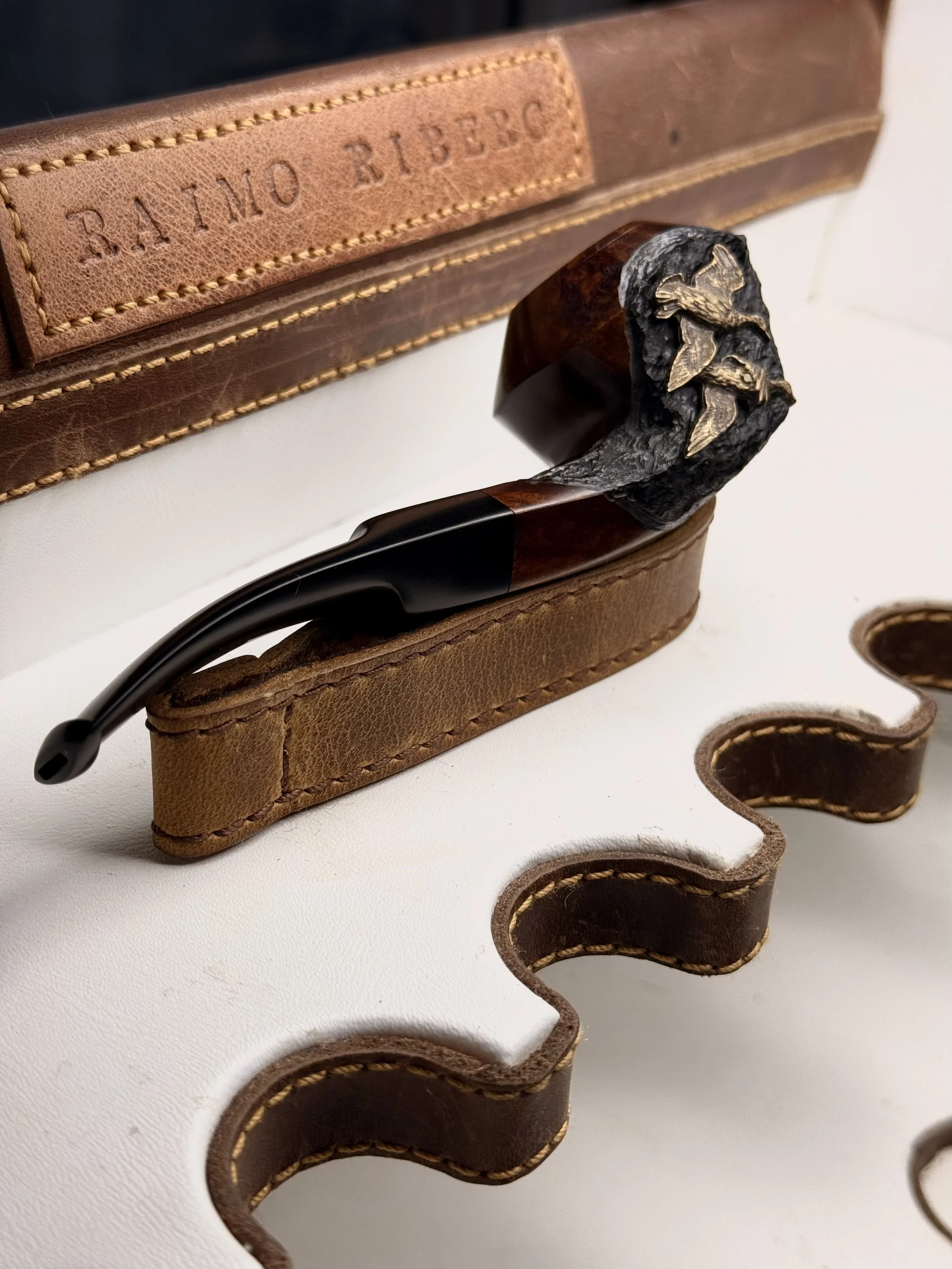
MP Wildlife Series: Handmade Tobacco Pipes Inspired by the Wild
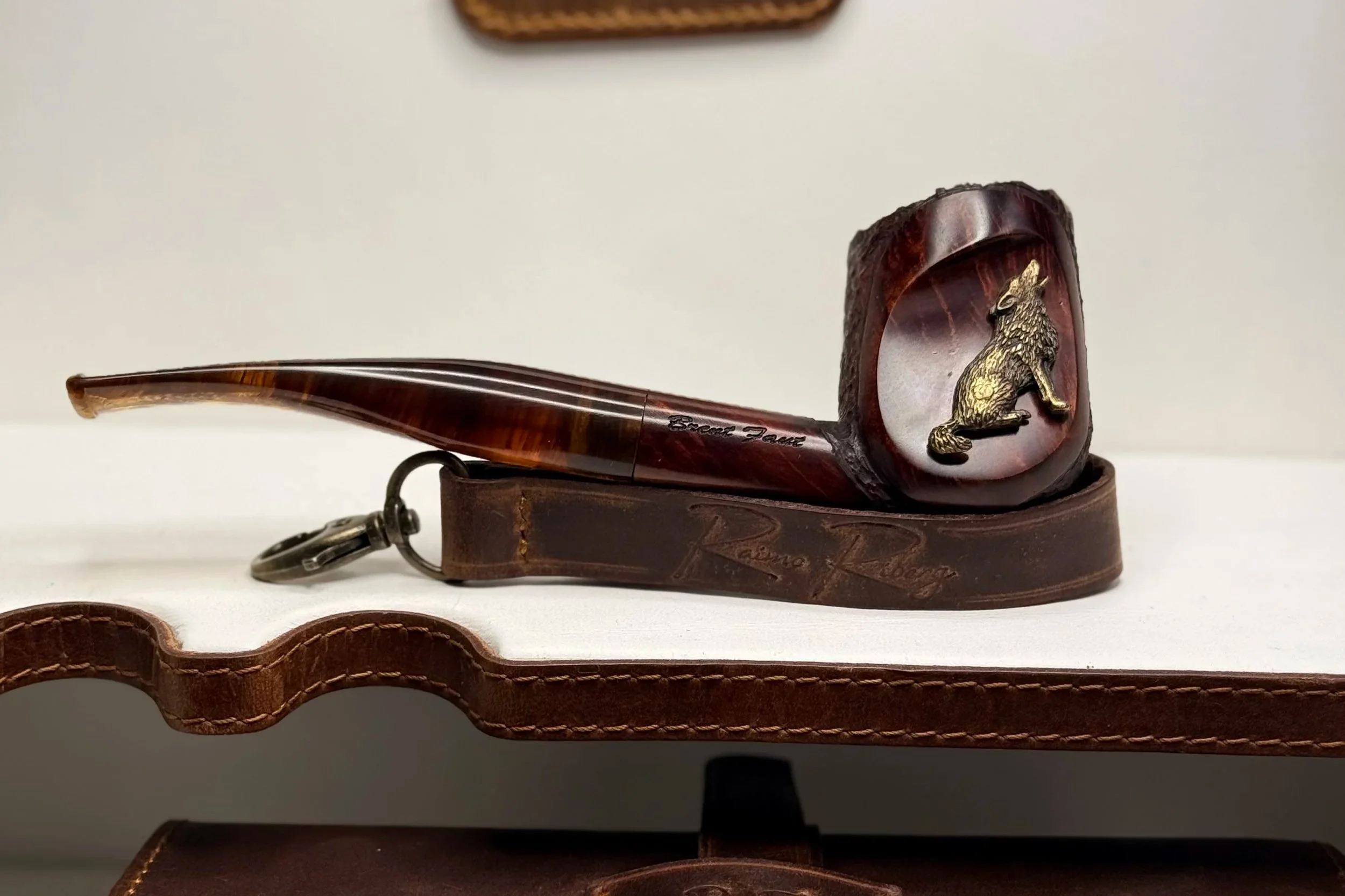
The finest craftsmanship often begins with inspiration.
For some, it's found in architecture.
For others, history.
For the MP Wildlife Series, inspiration comes from the forests, mountains, rivers, and wildlife that remind us why nature continues to capture our imagination.
Every animal has its own character.
Every landscape tells its own story.
The MP Wildlife Series transforms that appreciation into handmade briar tobacco pipes that celebrate the beauty of the natural world.
Whether you're a hunter who respects the land, a wildlife enthusiast, a conservation-minded outdoorsman, or simply someone who enjoys quiet mornings surrounded by nature, this collection is created for those who understand that true craftsmanship shares many of the same values as the wilderness itself.
Inspired by Wildlife, Not Fashion
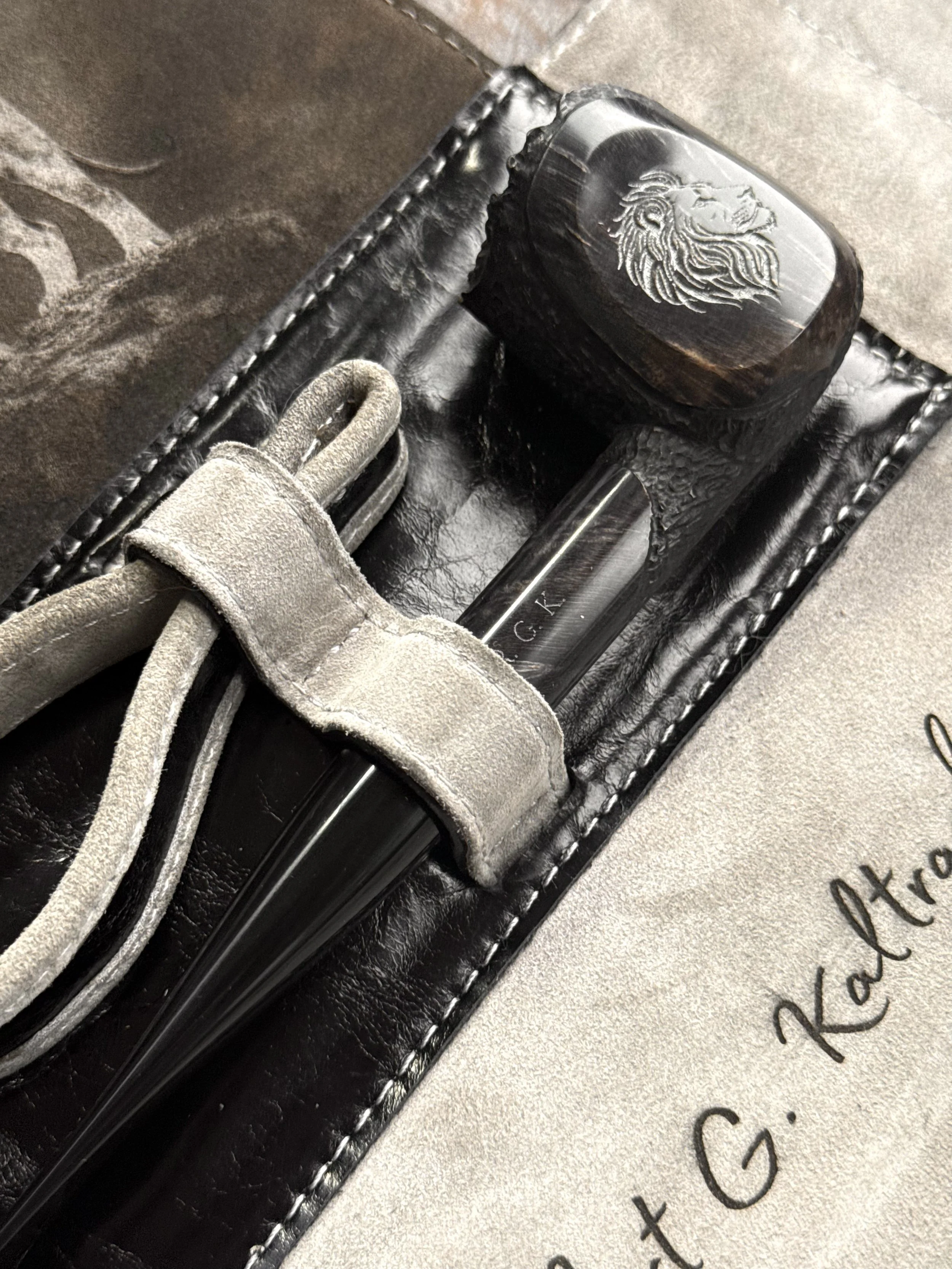
Nature never follows trends.
A centuries-old oak.
Fresh tracks after snowfall.
The call of an elk at sunrise.
These moments remain timeless.
The MP Wildlife Series is designed with the same philosophy.
Rather than chasing temporary styles, each handmade pipe reflects enduring craftsmanship inspired by wildlife and the landscapes where these animals live.
Every Animal Has a Story
The collection celebrates animals admired for their strength, resilience, intelligence, and beauty.
Depending on the design, inspiration may come from species such as:
These animals are not merely decorative motifs.
They represent the patience, awareness, and respect that connect people with the outdoors.
Handmade One Pipe at a Time
Just as no two trees grow alike, no two handmade pipes are ever identical.
Every MP Wildlife Series pipe begins as a carefully selected block of premium Mediterranean briar.
The grain determines the shape.
The shape influences the balance.
The balance affects the smoking experience.
Each stage is completed entirely by hand:
Selecting the briar
Precision drilling
Shaping the bowl
Hand-cutting the stem
Sanding and polishing
Final finishing
The result is a pipe that carries both the character of the wood and the signature of its maker.
Designed for Those Who Love the Outdoors
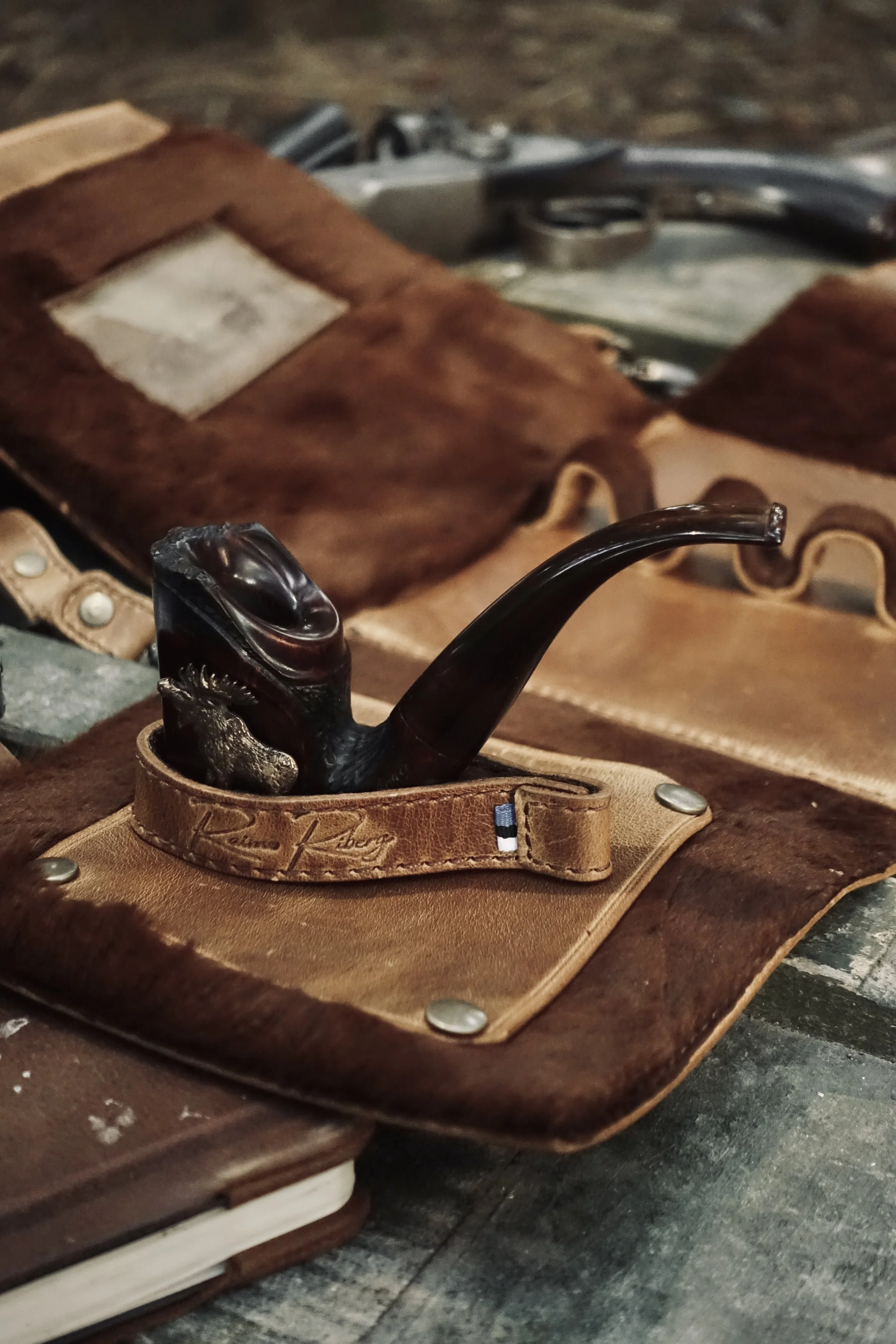
Many owners of the MP Wildlife Series spend their free time outside.
Some hunt.
Some photograph wildlife.
Others hike through forests or explore remote lakes by canoe.
What they often share is an appreciation for craftsmanship that feels honest and enduring.
A handmade pipe belongs naturally beside:
A mountain cabin
A hunting lodge
A campfire
A quiet lake
A forest trail
A riverside campsite
These are places where conversations slow down and time is measured by the changing light rather than the clock.
A Pipe That Ages with You
The outdoors teaches patience.
So does briar.
Over years of use, the pipe develops a richer colour and subtle patina.
Small marks become reminders of memorable journeys.
Just as a favourite hunting knife or well-used walking stick gains character through experience, so does a handmade tobacco pipe.
It becomes more personal with every season.
More Than Decoration
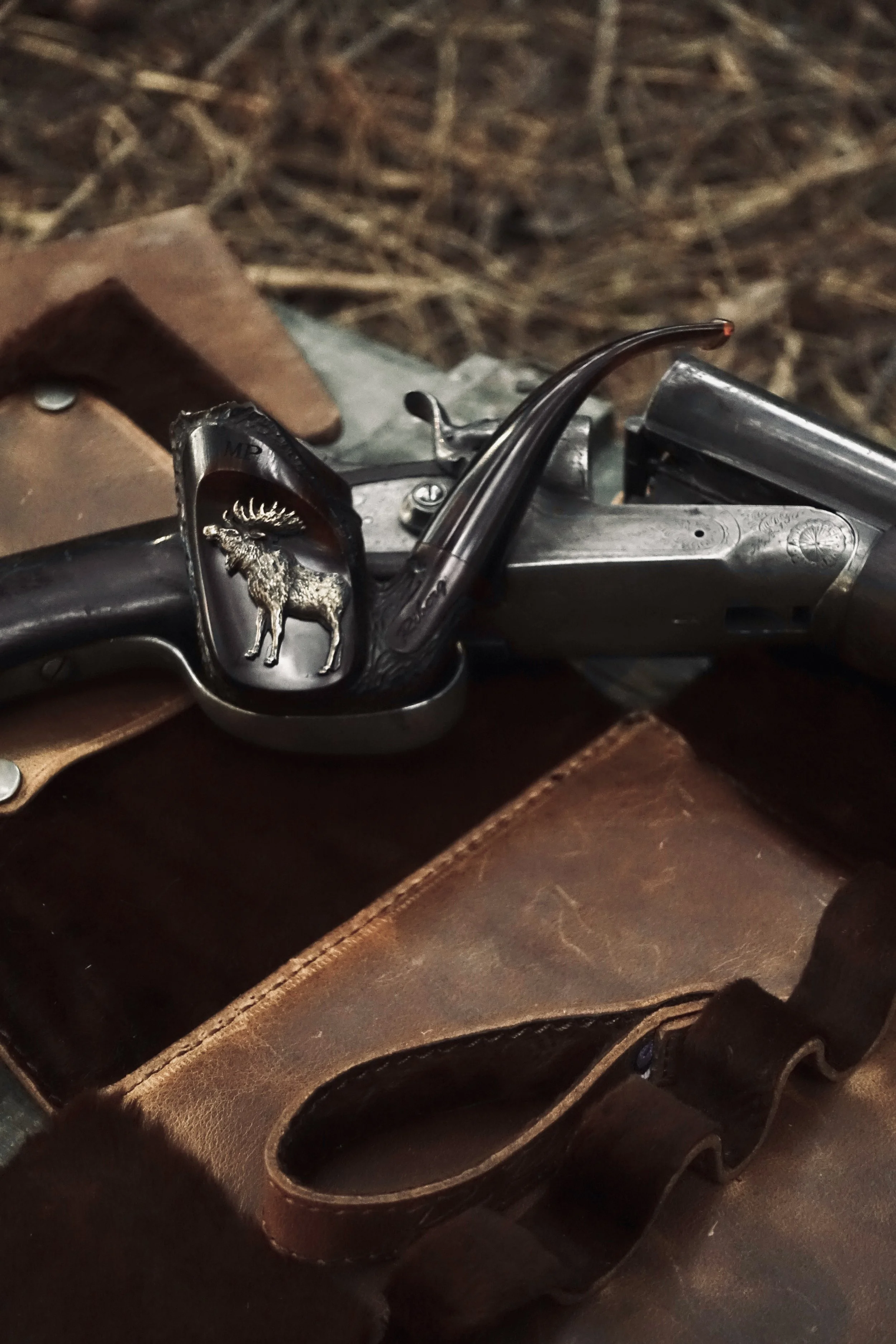
The wildlife inspiration extends beyond appearance.
The collection reflects values often associated with life outdoors:
Patience
Respect
Observation
Independence
Quiet confidence
Appreciation for craftsmanship
These qualities shape not only the design of the pipes but also the philosophy behind making them.
A Meaningful Gift for Outdoor Enthusiasts
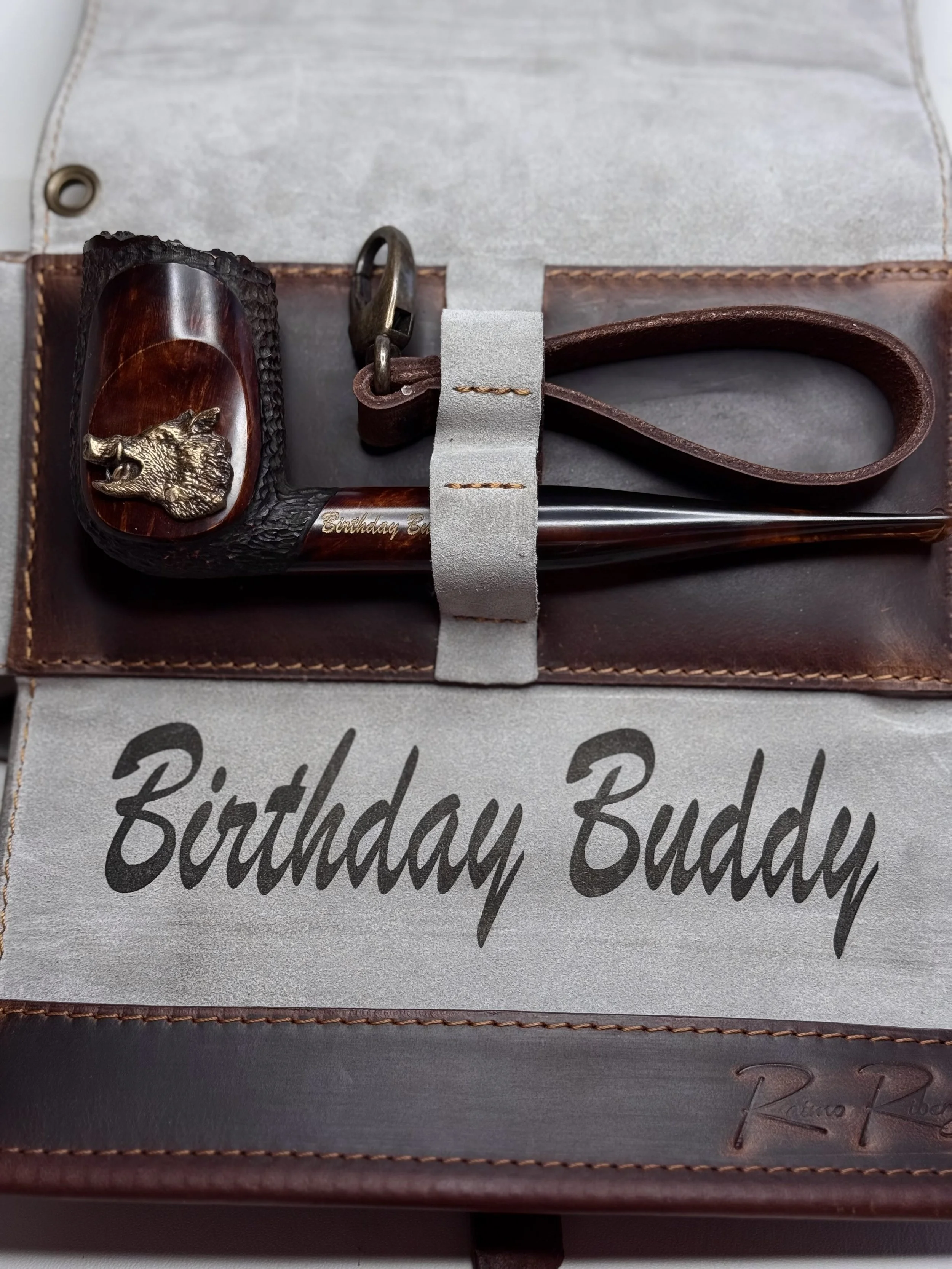
Finding a gift for someone who loves nature can be difficult.
The MP Wildlife Series offers something lasting.
Perfect for:
Hunters
Wildlife photographers
Nature lovers
Forestry professionals
Park rangers
Birdwatchers
Cabin owners
Outdoor adventurers
Collectors of handmade pipes
Unlike mass-produced gifts, every pipe carries its own natural grain and individual character.
No two are exactly alike.
Frequently Asked Questions
Is every MP Wildlife Series pipe unique?
Yes. Every pipe is individually handcrafted from premium briar, ensuring unique grain patterns and subtle differences in shape and character.
Are these pipes designed only for hunters?
Not at all. The collection is inspired by wildlife and the natural world, making it equally appealing to hikers, photographers, conservationists, foresters, and anyone who enjoys spending time outdoors.
Can I request a specific animal?
Custom commissions may be available depending on the design and current commission schedule.
Are the pipes made for collecting or smoking?
Both. Each pipe is engineered for an excellent smoking experience while also serving as a handcrafted work of functional art.
Crafted for Those Who Feel at Home Outdoors
The MP Wildlife Series isn't simply about wildlife.
It's about the moments spent among it.
The early morning silence before sunrise.
The sound of wind moving through pine trees.
The reflection of mountains across still water.
These experiences remind us that the finest things often require patience.
Every MP Wildlife Series pipe is created with that same philosophy.
Not hurried.
Not mass-produced.
Simply crafted—one piece at a time—for those who appreciate nature as much as craftsmanship.
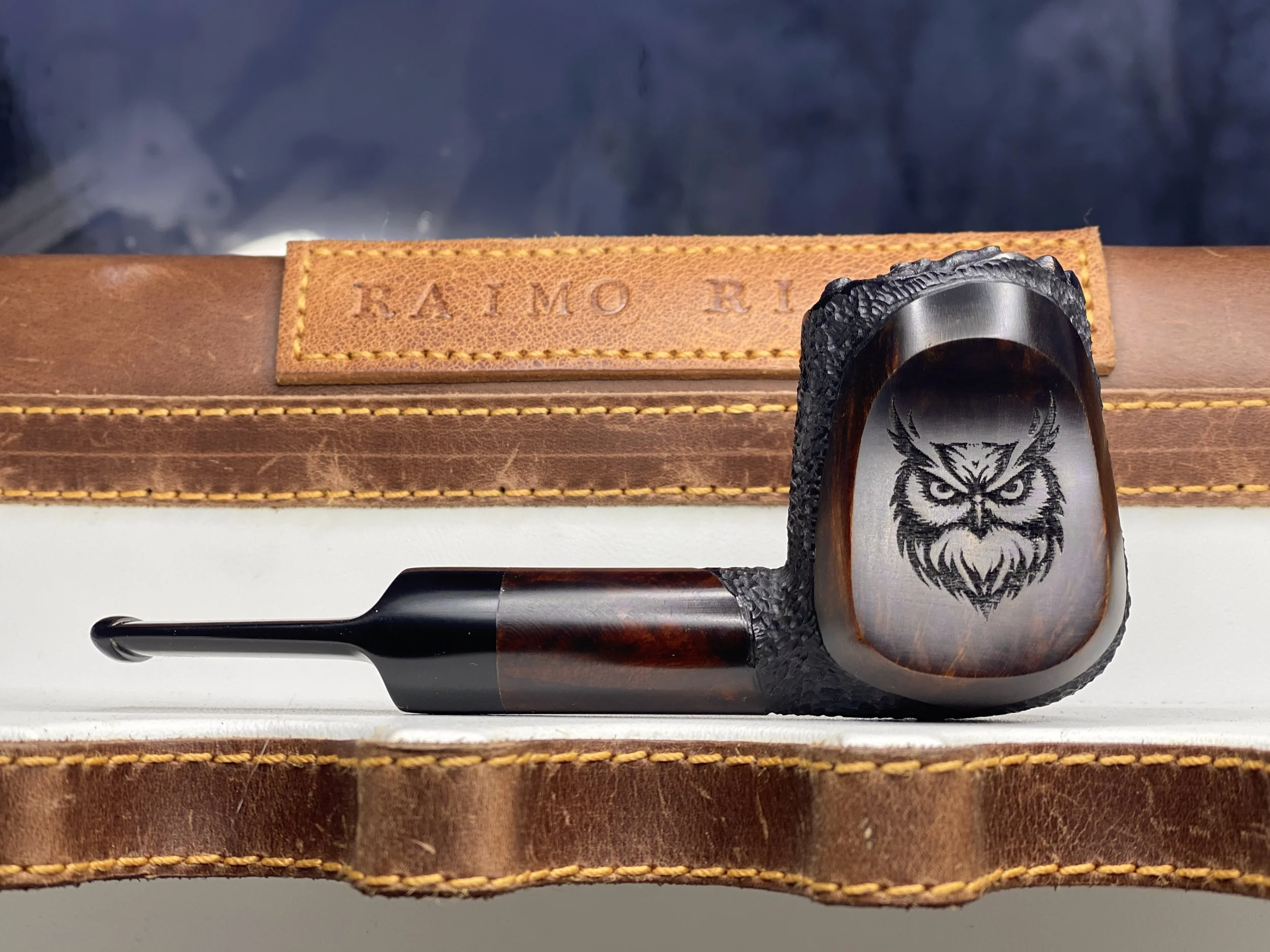
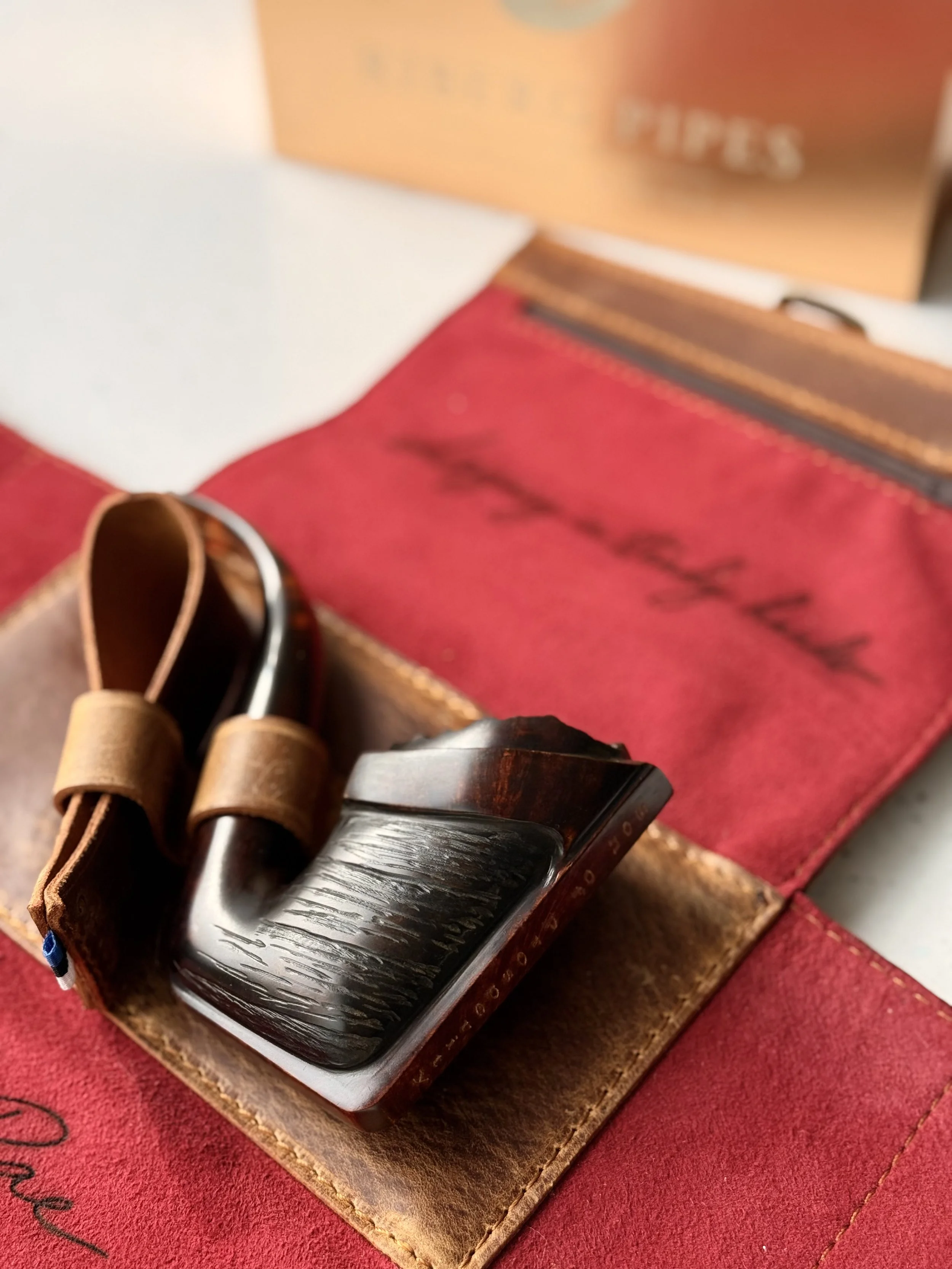
The Captain Series: A Handmade Tobacco Pipe Inspired by the Sea
Captain Series
Life at Sea
Some traditions never lose their appeal.
The quiet confidence of a seasoned captain. The polished wood of a well-kept yacht. The steady rhythm of waves against the hull. These moments remind us that craftsmanship, patience, and experience still matter.
The Captain Series by Riberg Pipes was created with that spirit in mind—a collection of handmade briar tobacco pipes inspired by those who find freedom on the water.
Whether you're a professional captain, sailor, yacht owner, or simply someone who appreciates the maritime way of life, the Captain Series celebrates timeless craftsmanship both on land and at sea.
Inspired by the Sea
The sea has always demanded respect.
It rewards preparation, skill, and patience. Every experienced captain understands that details matter. The smallest decision can influence the entire journey.
Building a handmade tobacco pipe follows much the same philosophy.
Every block of briar is carefully selected. Every line is refined. Every stem is shaped by hand to create a pipe that feels balanced, comfortable, and built to last.
Nothing is rushed.
Because true craftsmanship never is.
A Pipe Worth Taking Aboard
A captain values equipment they can trust.
From navigation instruments to the wheel beneath their hands, reliability becomes second nature.
The Captain Series is designed with the same mindset.
Each pipe combines thoughtful engineering with traditional handcrafting to deliver:
Comfortable balance in the hand
Smooth, unrestricted airflow
Premium Mediterranean briar
Hand-fitted stem
Individually finished details
A unique grain pattern in every pipe
No two pieces are identical.
Each carries the natural character of the briar from which it was created.
Why Sailors Have Always Appreciated the Pipe
For centuries, the tobacco pipe has been part of maritime culture.
Long voyages often included quiet moments on deck, where a pipe offered time to reflect while watching the horizon.
Although modern sailing has changed dramatically, the ritual remains familiar.
Lighting a pipe after a successful voyage, while anchored in a peaceful harbor or watching the sunset from the marina, continues a tradition shared across generations.
The Captain Series pays tribute to those moments.
Crafted for Owners, Not Collectors Alone

Beautiful craftsmanship should never remain locked inside a display cabinet.
The Captain Series is designed to be smoked, carried, and enjoyed.
Over time, the briar develops its own character.
The finish gains warmth.
The pipe begins telling the story of its owner.
Every voyage.
Every harbor.
Every memorable evening.
Like a trusted boat, it becomes better through use.
The Character of Briar
Much like timber used in fine yacht building, briar rewards careful selection.
Each block reveals its own grain, colour, and natural beauty.
Rather than forcing every pipe into identical proportions, the design is refined according to what the wood offers.
This allows every Captain Series pipe to remain truly individual while preserving the overall character of the collection.
The result is a pipe that feels alive rather than manufactured.
A Gift for Those Who Love the Sea
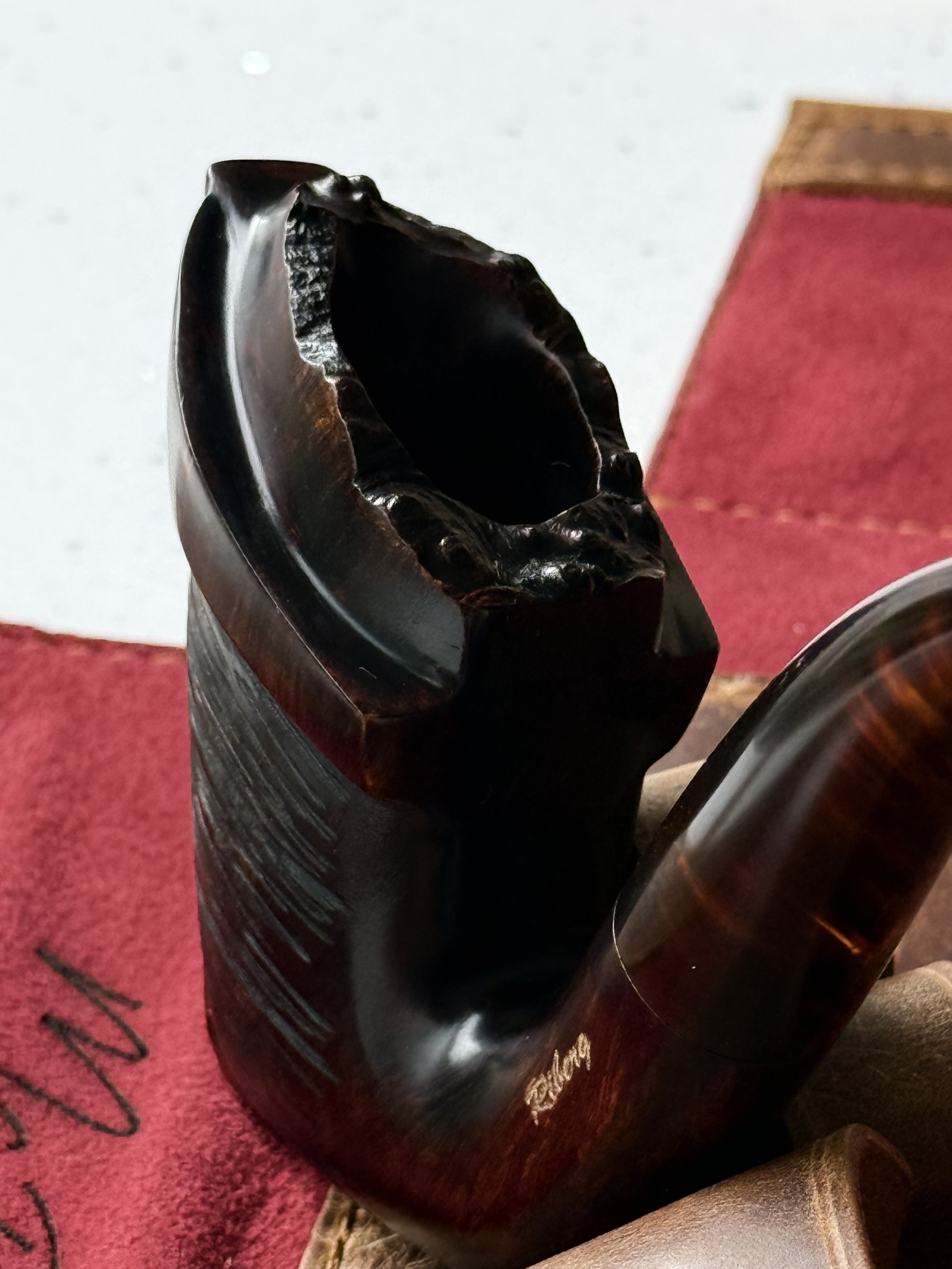
Finding the perfect gift for a captain or boat owner can be surprisingly difficult.
The Captain Series offers something different.
Instead of another accessory for the vessel, it becomes a personal companion.
Ideal for:
Yacht captains
Commercial ship captains
Sailors
Boat owners
Yacht owners
Maritime enthusiasts
Naval officers
Retired seafarers
Collectors of handmade pipes
A handmade pipe carries a level of thoughtfulness that mass-produced gifts rarely achieve.
Handmade One at a Time
Every Captain Series pipe begins as a carefully selected block of premium briar.
It is drilled, shaped, sanded, fitted, and finished entirely by hand.
The process cannot be rushed.
The result cannot be duplicated.
That individuality is precisely what makes handmade pipes so rewarding to own.
Frequently Asked Questions
Is every Captain Series pipe unique?
Yes. Every handmade briar block has its own grain pattern, ensuring no two pipes are ever identical.
Is the Captain Series designed for everyday smoking?
Absolutely. While each pipe is crafted as a collectible work of art, it is engineered first and foremost to provide an enjoyable smoking experience.
Can I commission a custom Captain Series pipe?
Yes. Custom commissions allow you to discuss preferred shapes, finishes, stem materials, and other details to create a pipe tailored to your preferences.
Why is it called the Captain Series?
The collection is inspired by maritime traditions and the enduring values of leadership, patience, craftsmanship, and life on the water.
More Than a Pipe

The Captain Series isn't simply about smoking.
It's about slowing down.
Taking a seat after a long day at sea.
Watching the horizon fade into evening.
Enjoying craftsmanship that asks for nothing except your time.
Like every memorable voyage, every handmade pipe begins with patience and ends with a story.
For those who navigate the sea—or simply admire its timeless spirit—the Captain Series is crafted to accompany the journey.
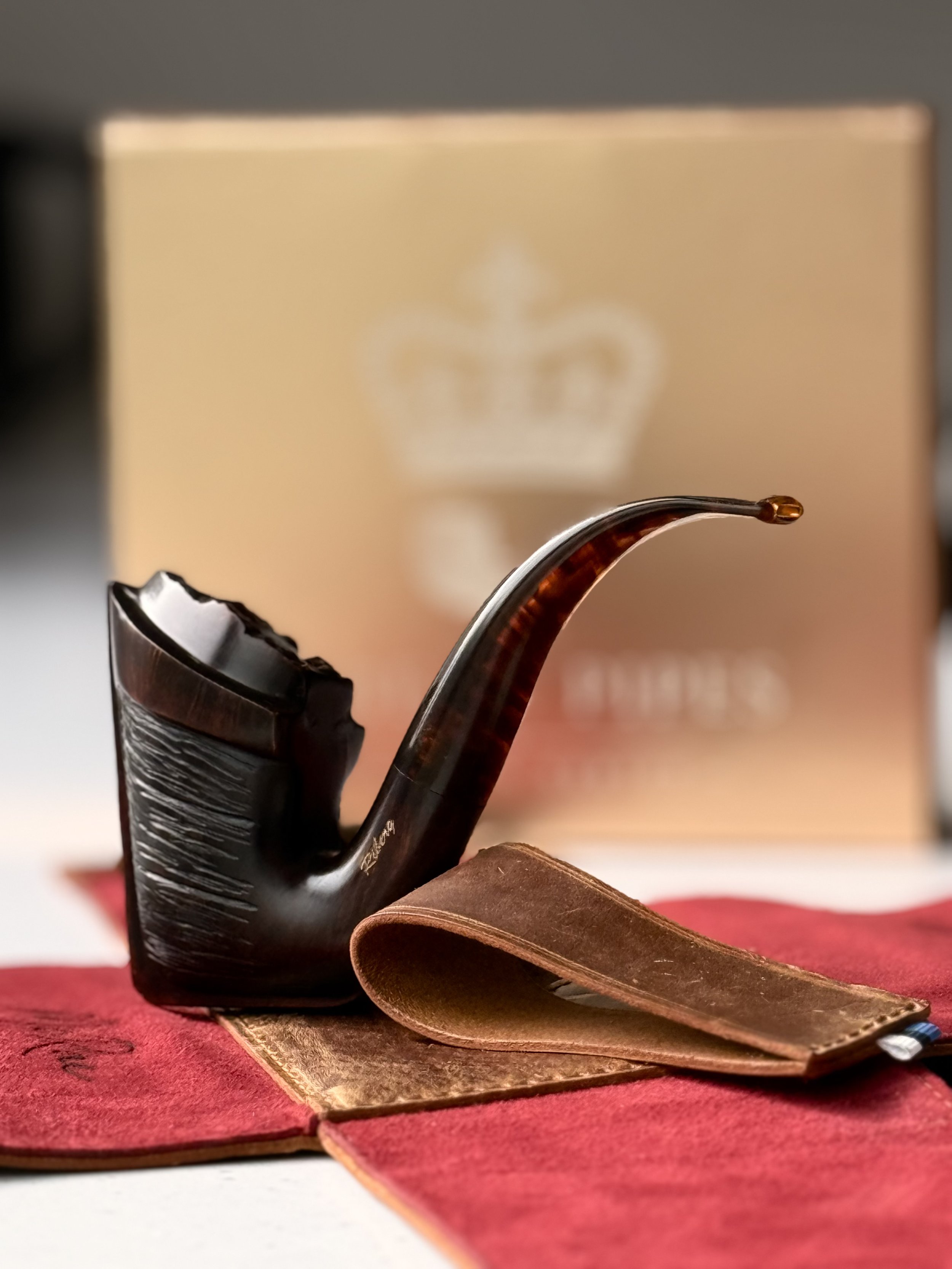
How Long Does It Take to Make a Handmade Tobacco Pipe?
Every handmade tobacco pipe takes many hours of careful shaping, engineering, sanding, and finishing.
One of the questions I'm asked most often is surprisingly simple:
"How long does it take to make a handmade tobacco pipe?"
The honest answer is...
It depends.
Not because the process is uncertain, but because no two pipes—and no two pieces of briar—are ever the same.
A handmade tobacco pipe isn't manufactured to meet a production schedule. It's carefully shaped, refined, and finished one step at a time. Every decision influences the next, and every block of briar presents its own opportunities and challenges.
While some pipes may require around 20 hours of work, others can take considerably longer. The time isn't determined by the shape alone—it's determined by the pursuit of getting every detail right.
It All Begins With the Briar
Long before the first cut is made, the briar must be selected.
Each block has a unique grain pattern, density, and natural imperfections. An experienced pipe maker studies the wood carefully before deciding how the pipe should be oriented.
Sometimes the grain encourages a completely different shape than originally planned.
Rather than forcing the wood to match a drawing, the artisan allows the briar to influence the final design.
That first decision can determine the success of the entire pipe.
Shaping Is More Than Removing Wood
At first glance, shaping might appear to be the quickest part of the process.
In reality, it's where countless small decisions are made.
Every curve affects the pipe's balance.
Every proportion changes how it feels in the hand.
The transition between bowl, shank, and stem must flow naturally.
A fraction of a millimetre can make the difference between a pipe that looks good and one that feels truly harmonious.
This isn't carving for speed.
It's sculpting with intention.
Precision Engineering Comes Before Beauty
Many people notice the grain first.
Experienced smokers notice the engineering.
Before a pipe can become beautiful, it must function flawlessly.
The tobacco chamber, draft hole, mortise, tenon, and airway all require precise alignment.
A smooth, unrestricted draw doesn't happen by accident.
It's the result of careful planning and accurate drilling long before the pipe is polished.
The finest finish cannot compensate for poor engineering.
Hand-Cut Stems Require Patience
The stem is one of the most time-consuming parts of a handmade pipe.
Comfort cannot be measured by appearance alone.
A well-shaped button should disappear between the teeth.
The stem should feel natural, balanced, and effortless during long smoking sessions.
Achieving that comfort often requires repeated adjustments, sanding, polishing, and testing.
Much of this work is measured in fractions of a millimetre.
It's slow because comfort matters.
Sanding Reveals What Machines Cannot
Many people imagine sanding as little more than smoothing rough surfaces.
In reality, it is one of the most revealing stages.
Each progressively finer grit uncovers more of the briar's character.
Small imperfections become visible.
Tiny scratches appear where none seemed to exist.
Every flaw must be corrected before moving forward.
This process may repeat several times before the surface is ready for finishing.
Patience is what transforms craftsmanship into refinement.
Finishing Is the Final Conversation With the Wood
The finish does far more than add colour.
It highlights the grain.
It protects the surface.
Most importantly, it respects the natural beauty already hidden inside the briar.
Some pipes reveal spectacular straight grain.
Others display remarkable birdseye.
Occasionally the wood surprises even the maker.
The goal is never to overpower the briar.
It's to let it speak for itself.
Why Handmade Pipes Cannot Be Mass Produced
Factory pipes are built around efficiency.
Handmade pipes are built around decisions.
An artisan may pause for an hour simply deciding how best to orient the grain.
They may reshape an entire shank because one line doesn't quite flow.
They may remake a stem that most people would consider perfect.
None of these decisions increase production speed.
Every one of them improves the final pipe.
That's the difference.
The Waiting Time Is Part of the Value
Customers sometimes ask why commissioning a handmade pipe takes weeks or even months.
The answer isn't simply that the pipe requires many hours of work.
It's that every artisan is also working on other commissions, sourcing exceptional briar, refining designs, and refusing to compromise quality simply to meet a deadline.
Unlike factory production, there is no assembly line.
Each pipe receives individual attention from start to finish.
Many collectors find the anticipation becomes part of the experience.
Knowing that your pipe is slowly taking shape inside a workshop makes the day it finally arrives even more meaningful.
More Than Hours
People naturally want to know how many hours are invested in a handmade pipe.
The better question is:
How much care goes into making one?
Hours can be counted.
Experience cannot.
Years spent learning proportions, engineering, finishing, and understanding briar are present in every decision made during those hours.
When you hold a handmade pipe, you're holding far more than the time it took to carve it.
You're holding the experience accumulated over hundreds of pipes made before it.
Frequently Asked Questions
How many hours does it take to make a handmade tobacco pipe?
Depending on the design and complexity, a handmade tobacco pipe may require around 20 hours of hands-on work or considerably more. This doesn't include waiting time between processes or an artisan's commission queue.
Why do handmade pipes take so long?
Every stage—from selecting the briar and drilling the airway to shaping, sanding, stem work, and finishing—is completed individually by hand. The focus is on precision rather than speed.
What takes the longest?
Details.
Stem fitting, sanding, refining proportions, and finishing often consume the most time because they require repeated adjustments and careful inspection.
Can the process be rushed?
Not without compromising quality. Many of the finest details are achieved through patience, repeated refinement, and experience.
Quality Is Measured in Details
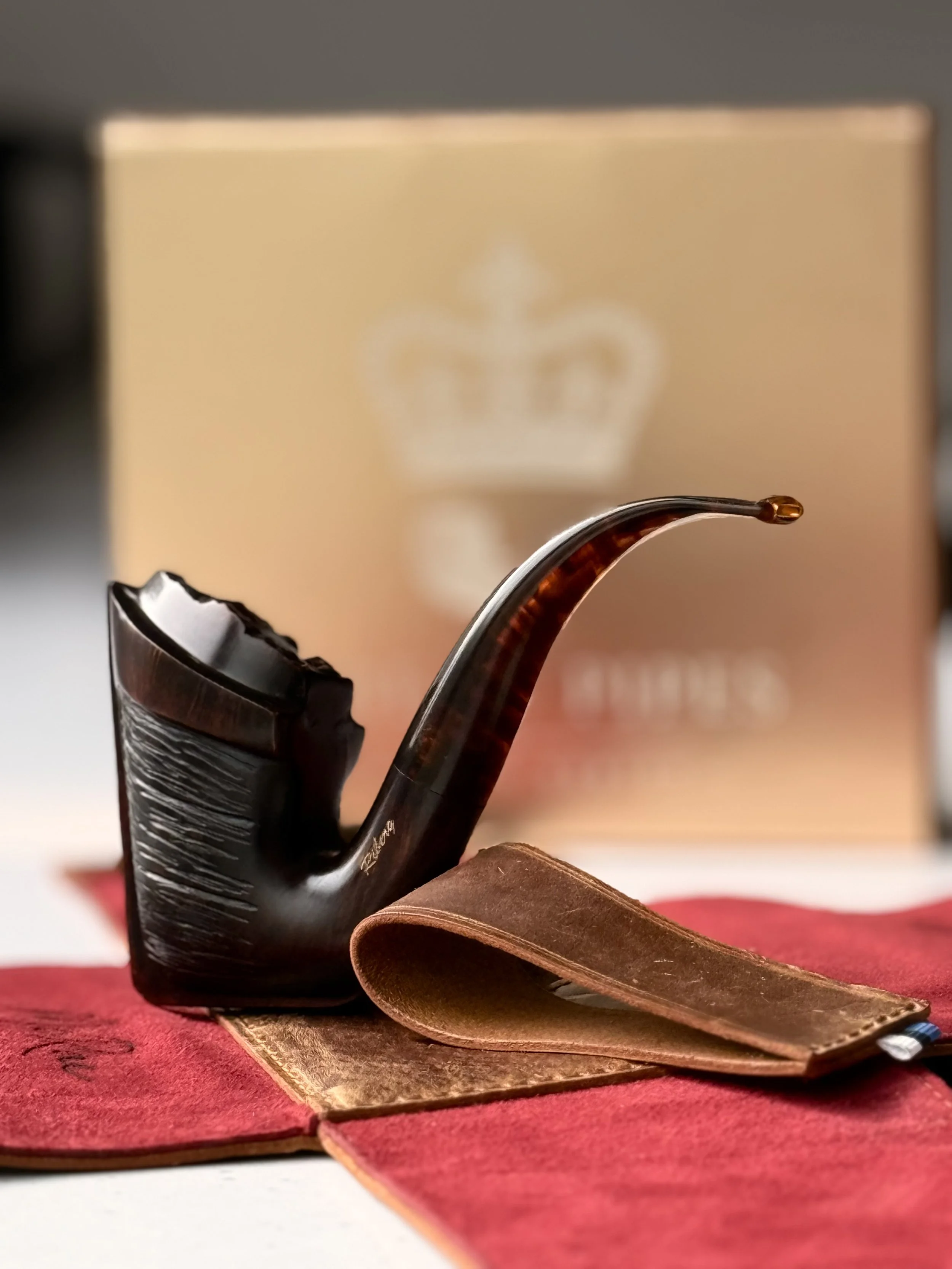
Finished “Captain Series” Tobacco Pipe
The difference between an average pipe and an exceptional one is rarely a dramatic change.
It's found in countless small decisions.
The smoothness of the draw.
The comfort of the stem.
The balance in the hand.
The way the grain follows the shape.
None of these happen by chance.
They happen because an artisan chose to spend the extra time.
That's why a handmade tobacco pipe isn't defined by how quickly it can be made.
It's defined by how carefully it is crafted.