
How Do You Smoke a Tobacco Pipe? A Complete Beginner's Guide
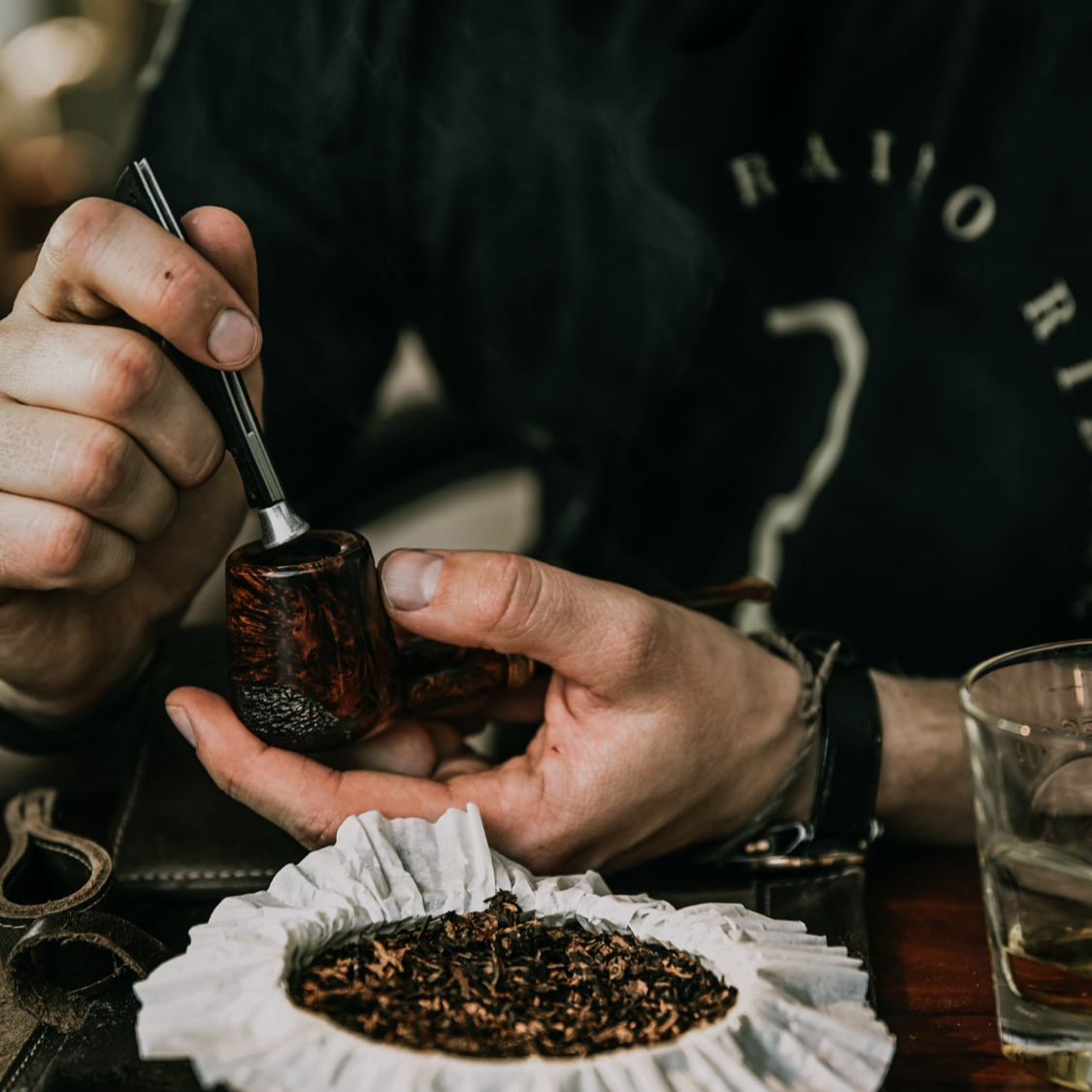
Enjoy your tobacco.
Learn how to smoke a tobacco pipe properly with this complete step-by-step guide from Riberg Pipes. Discover how to pack, light, smoke, and care for a handmade briar pipe for the coolest, most enjoyable smoking experience.
The Art of Smoking a Tobacco Pipe
Smoking a tobacco pipe is unlike smoking a cigarette or cigar.
It isn't about speed.
It isn't about nicotine.
It is about slowing down.
For centuries, gentlemen, writers, sailors, craftsmen, and collectors have enjoyed pipe smoking as a quiet ritual—a moment to think, reflect, and appreciate fine craftsmanship.
At Riberg Pipes, every handmade briar pipe is created with one purpose: to become part of someone's lifelong story. Knowing how to smoke a pipe correctly not only improves the flavor of your tobacco but also protects your handcrafted pipe for decades to come.
If you're new to pipe smoking, don't worry.
Anyone can learn.
Quick Answer
To smoke a tobacco pipe properly:
Choose quality pipe tobacco.
Fill the bowl loosely.
Tamp lightly.
Perform a charring light.
Relight for the true light.
Smoke slowly with gentle sips.
Never inhale the smoke.
Let the pipe cool naturally.
Clean it after every smoke.
Simple in theory.
Masterful in practice.
Step 1: Choose Good Pipe Tobacco
A quality smoking experience starts with quality tobacco.
The tobacco should feel slightly moist—not wet and not crispy dry.
If it feels overly wet, leave it out for 15–30 minutes before smoking.
Dry tobacco burns cooler, lights easier, and produces cleaner flavors.
Step 2: Pack the Pipe Properly
One of the biggest beginner mistakes is packing the tobacco too tightly.
Air must flow freely through the bowl.
A simple rule is:
First layer: very loose
Second layer: gently compressed
Final layer: slightly firmer
Before lighting, take a draw.
It should feel similar to sipping through a drinking straw.
If the draw feels difficult, empty the bowl and try again.
Good packing makes everything easier.
Step 3: Perform the Charring Light
The first light is called the charring light.
While gently puffing:
Move the flame around the surface
Light the entire top evenly
Allow the tobacco to expand
Let it go out naturally
Then gently tamp the ash flat.
This creates an even surface for the real light.
Step 4: Apply the True Light
Relight the tobacco.
Again, move the flame slowly across the surface while taking gentle puffs.
Now the pipe should begin burning evenly.
Don't worry if it goes out.
Even experienced pipe smokers relight their pipes several times during a smoke.
Relighting is completely normal.
Step 5: Smoke Slowly
This is the secret.
Smoke your pipe as though you're sipping a fine whisky—not drinking water after a marathon.
Gentle sips.
Long pauses.
Relaxed breathing.
Pipe smoking should never feel rushed.
If the bowl becomes too hot to comfortably hold, you're smoking too fast.
Simply stop for a minute.
The pipe will thank you.
Should You Inhale Pipe Smoke?
No.
Traditional pipe smoking is not inhaled.
Instead:
Draw smoke gently into your mouth
Taste the tobacco
Appreciate the aromas
Exhale slowly
Most of the enjoyment comes from flavor rather than inhalation.
Use a Pipe Tamper
Throughout the smoke, the tobacco naturally expands.
A pipe tamper helps:
keep the ember alive
create an even burn
reduce relights
improve airflow
Always tamp gently.
Too much pressure can extinguish the ember.
What If the Pipe Goes Out?
It happens to everyone.
Simply:
Tamp lightly
Relight
Continue smoking
A pipe going out occasionally is actually better than smoking too aggressively.
Slow smoking produces cooler smoke and richer flavor.
Avoid Tongue Bite
Tongue bite is the burning sensation beginners often experience.
The usual causes are:
Puffing too quickly
Wet tobacco
Excessive relighting
Overheated pipe
The cure is simple:
Slow down.
Pipe smoking rewards patience.
Let the Pipe Rest
After finishing:
Allow the pipe to cool completely.
Never remove the stem while the pipe is hot.
Empty the ash gently.
Run a pipe cleaner through the stem and shank.
A quality briar pipe should rest at least 24 hours before being smoked again.
This allows the wood to dry naturally and helps preserve excellent smoking characteristics for many years.
Breaking In a New Briar Pipe
Every handmade briar pipe develops its own character.
During the first several smokes:
Smoke slowly.
Avoid overheating.
Allow a thin carbon layer (cake) to build naturally.
Don't scrape the chamber aggressively.
This protective layer helps ensure a cool, dry smoke for years to come.
Common Beginner Mistakes
Packing Too Tight
A restricted draw causes constant relights.
Smoking Too Fast
Fast smoking overheats both tobacco and briar.
Using Wet Tobacco
Wet tobacco creates steam, moisture, and gurgling.
Chasing the Ember
Don't puff aggressively just to keep it lit.
It's perfectly acceptable to relight.
Neglecting Cleaning
A clean pipe always smokes better.
Why Briar Matters
Not every pipe smokes the same.
Premium Mediterranean briar has become the preferred material for artisan pipe makers because it combines heat resistance, durability, and natural beauty. Properly cured briar delivers a cool, dry smoke and can last for generations when cared for correctly.
At Riberg Pipes, every block of Mediterranean briar is individually selected and hand-shaped in Northern Europe.
No two pipes are identical.
Each one develops its own personality through years of use.
The more memories you create with it, the more meaningful it becomes.
Pipe Smoking Is a Ritual
The finest pipe smokers rarely rush.
They enjoy:
preparing the tobacco
lighting carefully
smoking slowly
reflecting quietly
A handmade pipe becomes more than a smoking instrument.
It becomes part of your daily ritual.
Something you reach for after completing a project.
After returning from a hunt.
After sailing home.
Or simply while watching the evening sun disappear beyond the horizon.
That is the philosophy behind every Riberg Pipe.
Crafted for generations.
Frequently Asked Questions
Is pipe smoking difficult?
Not at all. Like any craft, it becomes enjoyable with practice. Most beginners become comfortable after just a few bowls.
How long should a bowl last?
Most pipe smokers enjoy a bowl for approximately 30–90 minutes, depending on the pipe size, tobacco, and smoking cadence.
Why does my pipe keep going out?
Usually because:
the tobacco was packed too tightly,
it is too moist,
or you're smoking slowly enough that an occasional relight is simply part of the experience.
Can beginners use expensive handmade pipes?
Absolutely.
A well-made artisan pipe often provides better engineering, smoother airflow, and a more enjoyable smoking experience than many inexpensive factory-made pipes.
How often should I clean my pipe?
A pipe cleaner should be used after every smoke.
A deeper cleaning can be performed periodically depending on how often the pipe is used.
Final Thoughts
Learning how to smoke a tobacco pipe is not about mastering a complicated technique.
It is about learning patience.
Take your time.
Smoke gently.
Care for your pipe.
A handmade briar pipe is built to last for generations, and with every bowl it becomes a little more yours.
At Riberg Pipes, we believe the finest pipes are not simply smoked—they are lived with, remembered, and eventually passed on, carrying stories from one generation to the next.
