
Why Does My Tobacco Pipe Whistle? An Artisan Pipemaker Explains
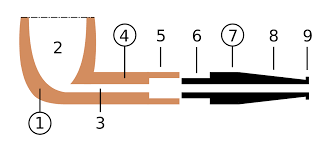
A tobacco pipe should produce the quiet sounds of a relaxing smoke—not the whistle of a kettle.
If you've noticed a high-pitched whistle every time you draw on your pipe, you're probably wondering whether something is wrong.
The good news is that a whistling pipe is usually not a sign of serious damage.
In most cases, the sound is caused by airflow moving through a restriction or an area of turbulence inside the pipe. The source may be as simple as a partially blocked airway, a small piece of tobacco, excess moisture, or the way air flows through the stem. Community discussions among experienced pipe smokers consistently identify restricted or turbulent airflow as the most common explanation for a whistling pipe.
At Riberg Pipes, every handmade tobacco pipe is individually crafted from premium Mediterranean briar with precision-drilled airways and hand-fitted stems. Smooth airflow is one of the foundations of an enjoyable smoking experience, and understanding why a pipe whistles helps you diagnose and solve the problem quickly.
This guide explains why pipes whistle, how to stop the noise, and when a whistle may indicate an engineering issue.
Quick Answer
A tobacco pipe whistles because air passes through a narrow restriction or turbulent section inside the airway.
The most common causes include:
A partially blocked airway
Tobacco covering the draft hole
Moisture inside the stem
A filter or adapter affecting airflow
A manufacturing defect or poorly aligned airway
Drawing too forcefully
Most whistling can be corrected with cleaning, slower smoking, or clearing the airway.
Why Does a Pipe Whistle?
A whistle is created whenever moving air passes through a restriction and begins to oscillate.
The same basic principle explains why a tea kettle whistles or why wind sometimes whistles through a narrow gap.
Inside a tobacco pipe, the sound usually develops when airflow becomes turbulent rather than smooth.
A properly engineered pipe encourages smooth airflow.
When something interrupts that airflow, noise may appear.
Cause #1: A Partially Blocked Airway
This is the most common cause.
Tiny pieces of tobacco, ash, or carbon residue can partially obstruct the draft channel.
Even a small obstruction can change the airflow enough to create a whistle.
Solution
Run a pipe cleaner through the stem and shank.
Check that the draft hole inside the bowl is unobstructed.
Remove any loose tobacco before relighting.
Often, the whistle disappears immediately after cleaning.
Cause #2: Moisture Inside the Stem
Condensation naturally develops during smoking.
If enough moisture accumulates, it changes the airflow inside the airway.
While moisture more commonly causes gurgling, it can sometimes contribute to a whistling sound as air passes through narrowed passages.
Solution
Insert a dry pipe cleaner through the stem while smoking.
It absorbs excess moisture and often restores quiet airflow.
Cause #3: Tobacco Blocking the Draft Hole
When packing the bowl, loose strands of tobacco can cover the airway entrance.
Instead of flowing smoothly into the draft hole, air squeezes around the obstruction.
This can create a faint whistle.
Solution
Before lighting:
Look into the bowl.
Ensure the draft hole remains visible.
Pack gently enough to preserve airflow.
Good packing improves both combustion and draw.
Cause #4: Drawing Too Hard
Pipe smoking rewards gentle, steady draws.
Pulling aggressively increases air velocity.
Higher airflow makes it easier for turbulence—and therefore whistling—to develop.
Experienced smokers often describe pipe smoking as "sipping" rather than "puffing."
A slower cadence usually produces:
Cooler smoke
Better flavor
Less moisture
Quieter airflow
Cause #5: Filters or Adapters
If your pipe uses a 9 mm filter, balsa filter, or adapter, it may alter the airflow.
Some smokers notice whistling only when a filter is installed or only when the adapter is fitted.
If the whistle appears suddenly after changing filters, try smoking the pipe with the alternative configuration recommended by the manufacturer to determine whether the filter system is contributing to the sound.
Cause #6: Airway Engineering
Occasionally, a whistle originates from the pipe itself.
If the internal airway contains:
Sharp transitions
Misaligned drilling
Rough machining
Abrupt changes in diameter
Airflow may become turbulent enough to produce an audible whistle.
This is uncommon in well-made artisan pipes but may occur in some factory-produced pipes. Experienced pipe makers note that a whistle during a normal draw can indicate airflow turbulence inside the airway.
How to Stop a Pipe from Whistling
If your pipe whistles while smoking:
1. Clean the Airway
Run a pipe cleaner through the stem.
Many whistles disappear immediately.
2. Slow Your Draw
Smoke gently.
Avoid pulling hard on the pipe.
3. Check the Bowl
Make sure tobacco is not covering the draft hole.
4. Inspect the Stem
Ensure the stem fits properly.
A loose or poorly seated stem can occasionally disturb airflow.
Always perform this check only after the pipe has cooled completely.
5. Test the Pipe Empty
Draw through the empty pipe.
If it whistles even without tobacco, the issue is more likely related to airflow or engineering than packing or moisture.
This simple test is commonly recommended by experienced pipe smokers when diagnosing whistles.
Is a Whistling Pipe Dangerous?
No.
A whistle is almost always an airflow issue rather than a structural failure.
However, if the whistle is accompanied by:
Extremely restricted draw
Persistent gurgling
Excessive heat
Visible cracks
Smoke escaping from the bowl walls
The pipe should be inspected before continued use.
Does a Handmade Pipe Whistle?
A properly engineered handmade pipe should provide smooth, quiet airflow.
At Riberg Pipes, every handmade tobacco pipe begins with carefully selected Mediterranean briar before being individually drilled, shaped, and hand-fitted in Northern Europe.
Each airway is designed to encourage:
Smooth airflow
Comfortable resistance
Balanced combustion
Reliable smoking performance
While any pipe can whistle if the airway becomes blocked or if it is smoked too aggressively, careful engineering significantly reduces the likelihood of turbulence-related problems.
Can Bent Pipes Whistle More Than Straight Pipes?
Not necessarily.
The shape of the pipe is rarely the deciding factor.
A well-engineered bent pipe should smoke just as quietly as a straight pipe.
Internal drilling and smooth airway transitions are far more important than external shape.
Common Mistakes to Avoid
Avoid these common habits:
Smoking with a dirty stem.
Packing tobacco over the draft hole.
Puffing too aggressively.
Ignoring moisture buildup.
Removing the stem while the pipe is still warm.
Simple maintenance usually solves the problem before it becomes frustrating.
Frequently Asked Questions
Why does my tobacco pipe whistle when I draw?
Usually because air is moving through a restricted or turbulent section of the airway. Cleaning the pipe and checking for obstructions often solves the problem.
Can moisture cause a pipe to whistle?
Yes.
Although moisture more commonly causes gurgling, it can also contribute to turbulent airflow inside the stem.
Will cleaning my pipe stop the whistle?
Often, yes.
A clean airway restores smoother airflow and frequently eliminates whistling.
Does a whistle mean my pipe is defective?
Not necessarily.
Most whistles are caused by temporary airflow restrictions.
If the pipe whistles consistently even when empty and perfectly clean, it may indicate an airflow or engineering issue.
Do handmade pipes whistle?
A well-made handmade pipe with precise engineering is generally less likely to whistle because its airway is designed for smooth, unrestricted airflow.
Final Thoughts
A whistling tobacco pipe can be surprising, but it is rarely a reason for concern.
In most cases, the sound simply tells you that the airflow has become disturbed.
A clean airway, properly prepared tobacco, gentle smoking cadence, and thoughtful pipe maintenance will solve the vast majority of whistling problems.
At Riberg Pipes, every handmade tobacco pipe is crafted from premium Mediterranean briar one pipe at a time in Northern Europe. Careful engineering, traditional craftsmanship, and attention to every detail create a pipe designed for smooth airflow, cool smoking, and years of quiet enjoyment.
The finest pipe is one you hardly notice.
It simply lets the tobacco—and the moment—speak for themselves.
