
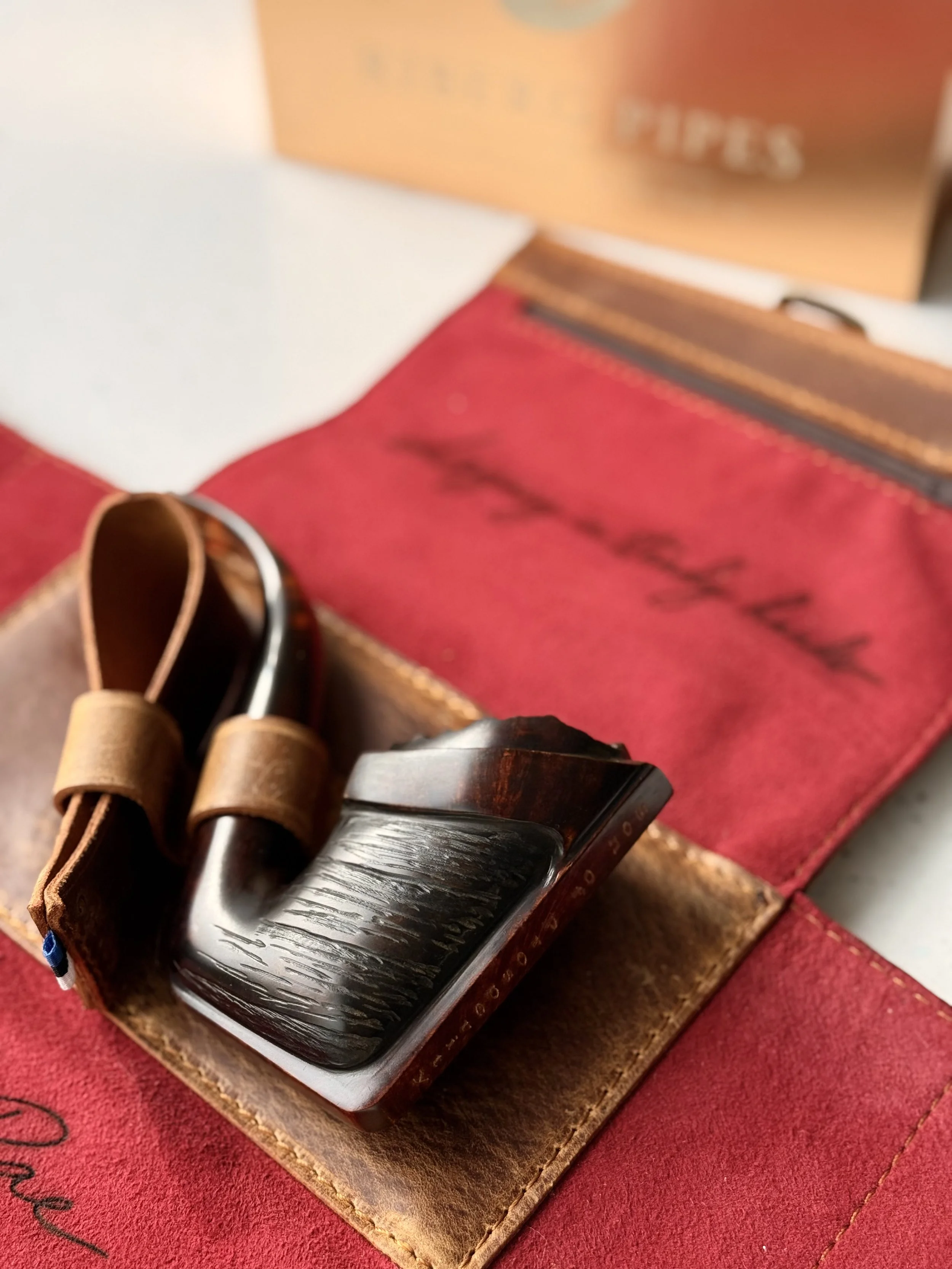
The Captain Series: A Handmade Tobacco Pipe Inspired by
Captain Series
Life at Sea
Some traditions never lose their appeal.
The quiet confidence of a seasoned captain. The polished wood of a well-kept yacht. The steady rhythm of waves against the hull. These moments remind us that craftsmanship, patience, and experience still matter.
The Captain Series by Riberg Pipes was created with that spirit in mind—a collection of handmade briar tobacco pipes inspired by those who find freedom on the water.
Whether you're a professional captain, sailor, yacht owner, or simply someone who appreciates the maritime way of life, the Captain Series celebrates timeless craftsmanship both on land and at sea.
Inspired by the Sea
The sea has always demanded respect.
It rewards preparation, skill, and patience. Every experienced captain understands that details matter. The smallest decision can influence the entire journey.
Building a handmade tobacco pipe follows much the same philosophy.
Every block of briar is carefully selected. Every line is refined. Every stem is shaped by hand to create a pipe that feels balanced, comfortable, and built to last.
Nothing is rushed.
Because true craftsmanship never is.
A Pipe Worth Taking Aboard
A captain values equipment they can trust.
From navigation instruments to the wheel beneath their hands, reliability becomes second nature.
The Captain Series is designed with the same mindset.
Each pipe combines thoughtful engineering with traditional handcrafting to deliver:
Comfortable balance in the hand
Smooth, unrestricted airflow
Premium Mediterranean briar
Hand-fitted stem
Individually finished details
A unique grain pattern in every pipe
No two pieces are identical.
Each carries the natural character of the briar from which it was created.
Why Sailors Have Always Appreciated the Pipe
For centuries, the tobacco pipe has been part of maritime culture.
Long voyages often included quiet moments on deck, where a pipe offered time to reflect while watching the horizon.
Although modern sailing has changed dramatically, the ritual remains familiar.
Lighting a pipe after a successful voyage, while anchored in a peaceful harbor or watching the sunset from the marina, continues a tradition shared across generations.
The Captain Series pays tribute to those moments.
Crafted for Owners, Not Collectors Alone

Beautiful craftsmanship should never remain locked inside a display cabinet.
The Captain Series is designed to be smoked, carried, and enjoyed.
Over time, the briar develops its own character.
The finish gains warmth.
The pipe begins telling the story of its owner.
Every voyage.
Every harbor.
Every memorable evening.
Like a trusted boat, it becomes better through use.
The Character of Briar
Much like timber used in fine yacht building, briar rewards careful selection.
Each block reveals its own grain, colour, and natural beauty.
Rather than forcing every pipe into identical proportions, the design is refined according to what the wood offers.
This allows every Captain Series pipe to remain truly individual while preserving the overall character of the collection.
The result is a pipe that feels alive rather than manufactured.
A Gift for Those Who Love the Sea
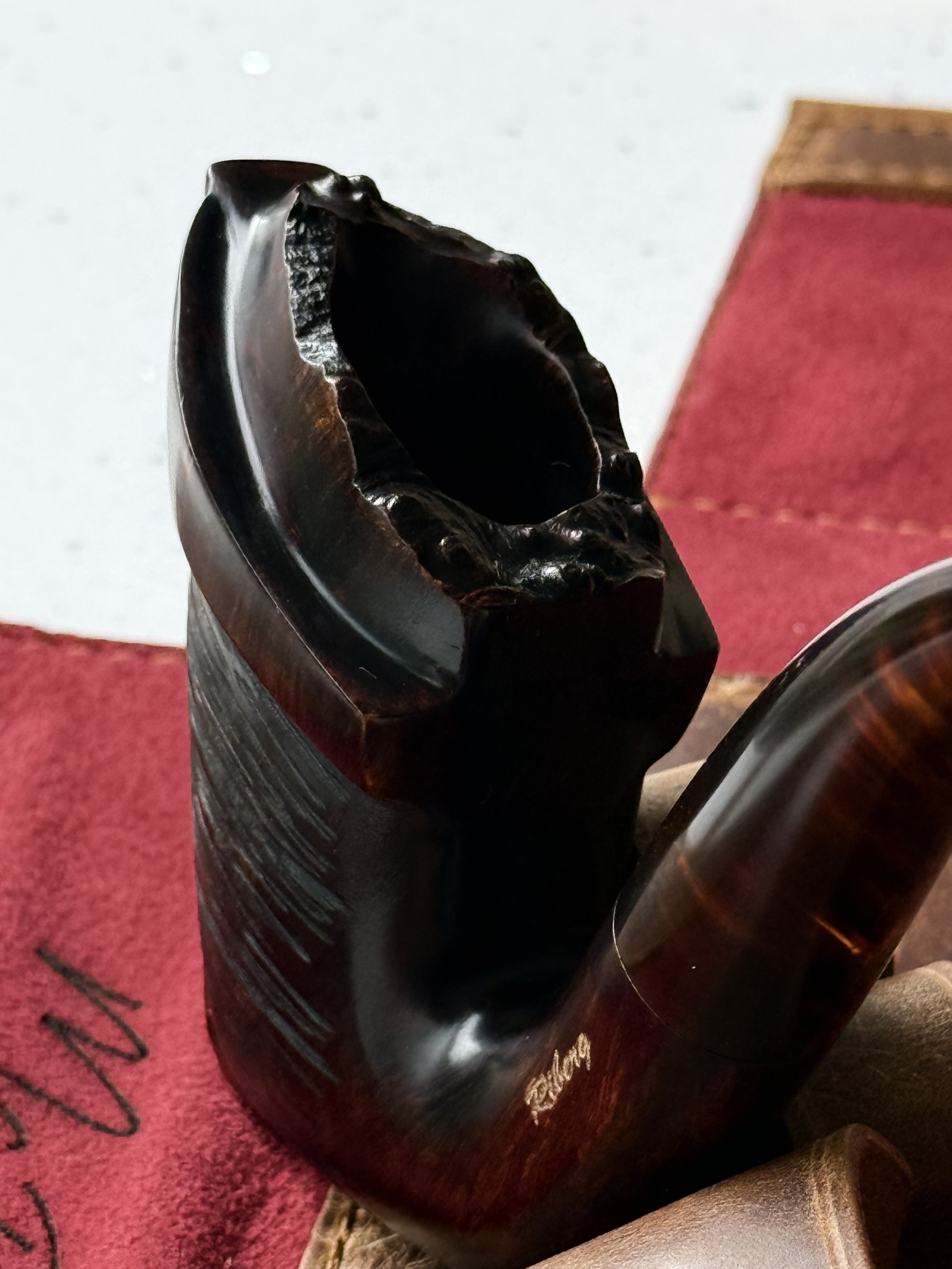
Finding the perfect gift for a captain or boat owner can be surprisingly difficult.
The Captain Series offers something different.
Instead of another accessory for the vessel, it becomes a personal companion.
Ideal for:
Yacht captains
Commercial ship captains
Sailors
Boat owners
Yacht owners
Maritime enthusiasts
Naval officers
Retired seafarers
Collectors of handmade pipes
A handmade pipe carries a level of thoughtfulness that mass-produced gifts rarely achieve.
Handmade One at a Time
Every Captain Series pipe begins as a carefully selected block of premium briar.
It is drilled, shaped, sanded, fitted, and finished entirely by hand.
The process cannot be rushed.
The result cannot be duplicated.
That individuality is precisely what makes handmade pipes so rewarding to own.
Frequently Asked Questions
Is every Captain Series pipe unique?
Yes. Every handmade briar block has its own grain pattern, ensuring no two pipes are ever identical.
Is the Captain Series designed for everyday smoking?
Absolutely. While each pipe is crafted as a collectible work of art, it is engineered first and foremost to provide an enjoyable smoking experience.
Can I commission a custom Captain Series pipe?
Yes. Custom commissions allow you to discuss preferred shapes, finishes, stem materials, and other details to create a pipe tailored to your preferences.
Why is it called the Captain Series?
The collection is inspired by maritime traditions and the enduring values of leadership, patience, craftsmanship, and life on the water.
More Than a Pipe

The Captain Series isn't simply about smoking.
It's about slowing down.
Taking a seat after a long day at sea.
Watching the horizon fade into evening.
Enjoying craftsmanship that asks for nothing except your time.
Like every memorable voyage, every handmade pipe begins with patience and ends with a story.
For those who navigate the sea—or simply admire its timeless spirit—the Captain Series is crafted to accompany the journey.
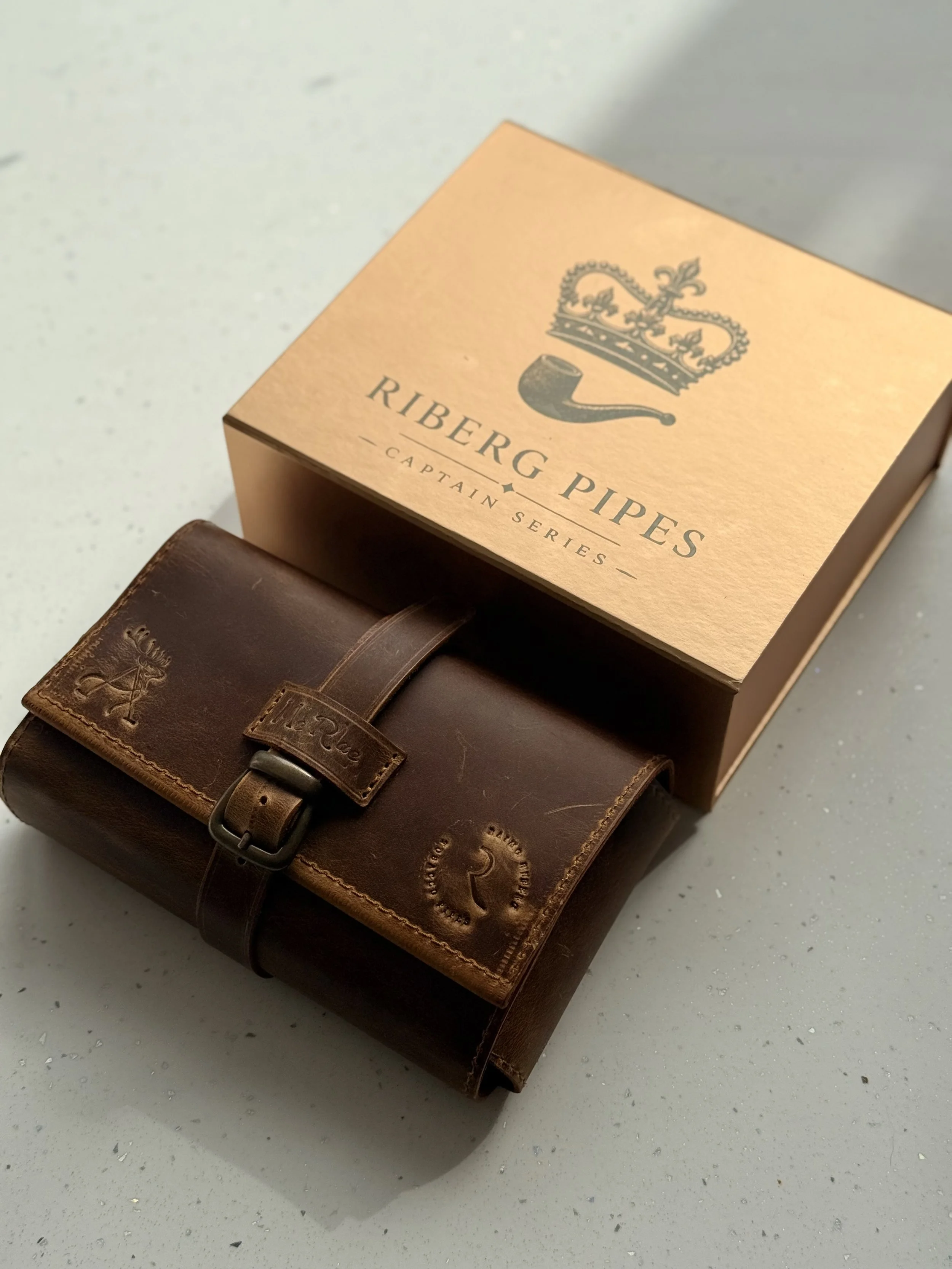
How Long Does It Take to Make a Handmade Tobacco Pipe?
Every handmade tobacco pipe takes many hours of careful shaping, engineering, sanding, and finishing.
One of the questions I'm asked most often is surprisingly simple:
"How long does it take to make a handmade tobacco pipe?"
The honest answer is...
It depends.
Not because the process is uncertain, but because no two pipes—and no two pieces of briar—are ever the same.
A handmade tobacco pipe isn't manufactured to meet a production schedule. It's carefully shaped, refined, and finished one step at a time. Every decision influences the next, and every block of briar presents its own opportunities and challenges.
While some pipes may require around 20 hours of work, others can take considerably longer. The time isn't determined by the shape alone—it's determined by the pursuit of getting every detail right.
It All Begins With the Briar
Long before the first cut is made, the briar must be selected.
Each block has a unique grain pattern, density, and natural imperfections. An experienced pipe maker studies the wood carefully before deciding how the pipe should be oriented.
Sometimes the grain encourages a completely different shape than originally planned.
Rather than forcing the wood to match a drawing, the artisan allows the briar to influence the final design.
That first decision can determine the success of the entire pipe.
Shaping Is More Than Removing Wood
At first glance, shaping might appear to be the quickest part of the process.
In reality, it's where countless small decisions are made.
Every curve affects the pipe's balance.
Every proportion changes how it feels in the hand.
The transition between bowl, shank, and stem must flow naturally.
A fraction of a millimetre can make the difference between a pipe that looks good and one that feels truly harmonious.
This isn't carving for speed.
It's sculpting with intention.
Precision Engineering Comes Before Beauty
Many people notice the grain first.
Experienced smokers notice the engineering.
Before a pipe can become beautiful, it must function flawlessly.
The tobacco chamber, draft hole, mortise, tenon, and airway all require precise alignment.
A smooth, unrestricted draw doesn't happen by accident.
It's the result of careful planning and accurate drilling long before the pipe is polished.
The finest finish cannot compensate for poor engineering.
Hand-Cut Stems Require Patience
The stem is one of the most time-consuming parts of a handmade pipe.
Comfort cannot be measured by appearance alone.
A well-shaped button should disappear between the teeth.
The stem should feel natural, balanced, and effortless during long smoking sessions.
Achieving that comfort often requires repeated adjustments, sanding, polishing, and testing.
Much of this work is measured in fractions of a millimetre.
It's slow because comfort matters.
Sanding Reveals What Machines Cannot
Many people imagine sanding as little more than smoothing rough surfaces.
In reality, it is one of the most revealing stages.
Each progressively finer grit uncovers more of the briar's character.
Small imperfections become visible.
Tiny scratches appear where none seemed to exist.
Every flaw must be corrected before moving forward.
This process may repeat several times before the surface is ready for finishing.
Patience is what transforms craftsmanship into refinement.
Finishing Is the Final Conversation With the Wood
The finish does far more than add colour.
It highlights the grain.
It protects the surface.
Most importantly, it respects the natural beauty already hidden inside the briar.
Some pipes reveal spectacular straight grain.
Others display remarkable birdseye.
Occasionally the wood surprises even the maker.
The goal is never to overpower the briar.
It's to let it speak for itself.
Why Handmade Pipes Cannot Be Mass Produced
Factory pipes are built around efficiency.
Handmade pipes are built around decisions.
An artisan may pause for an hour simply deciding how best to orient the grain.
They may reshape an entire shank because one line doesn't quite flow.
They may remake a stem that most people would consider perfect.
None of these decisions increase production speed.
Every one of them improves the final pipe.
That's the difference.
The Waiting Time Is Part of the Value
Customers sometimes ask why commissioning a handmade pipe takes weeks or even months.
The answer isn't simply that the pipe requires many hours of work.
It's that every artisan is also working on other commissions, sourcing exceptional briar, refining designs, and refusing to compromise quality simply to meet a deadline.
Unlike factory production, there is no assembly line.
Each pipe receives individual attention from start to finish.
Many collectors find the anticipation becomes part of the experience.
Knowing that your pipe is slowly taking shape inside a workshop makes the day it finally arrives even more meaningful.
More Than Hours
People naturally want to know how many hours are invested in a handmade pipe.
The better question is:
How much care goes into making one?
Hours can be counted.
Experience cannot.
Years spent learning proportions, engineering, finishing, and understanding briar are present in every decision made during those hours.
When you hold a handmade pipe, you're holding far more than the time it took to carve it.
You're holding the experience accumulated over hundreds of pipes made before it.
Frequently Asked Questions
How many hours does it take to make a handmade tobacco pipe?
Depending on the design and complexity, a handmade tobacco pipe may require around 20 hours of hands-on work or considerably more. This doesn't include waiting time between processes or an artisan's commission queue.
Why do handmade pipes take so long?
Every stage—from selecting the briar and drilling the airway to shaping, sanding, stem work, and finishing—is completed individually by hand. The focus is on precision rather than speed.
What takes the longest?
Details.
Stem fitting, sanding, refining proportions, and finishing often consume the most time because they require repeated adjustments and careful inspection.
Can the process be rushed?
Not without compromising quality. Many of the finest details are achieved through patience, repeated refinement, and experience.
Quality Is Measured in Details
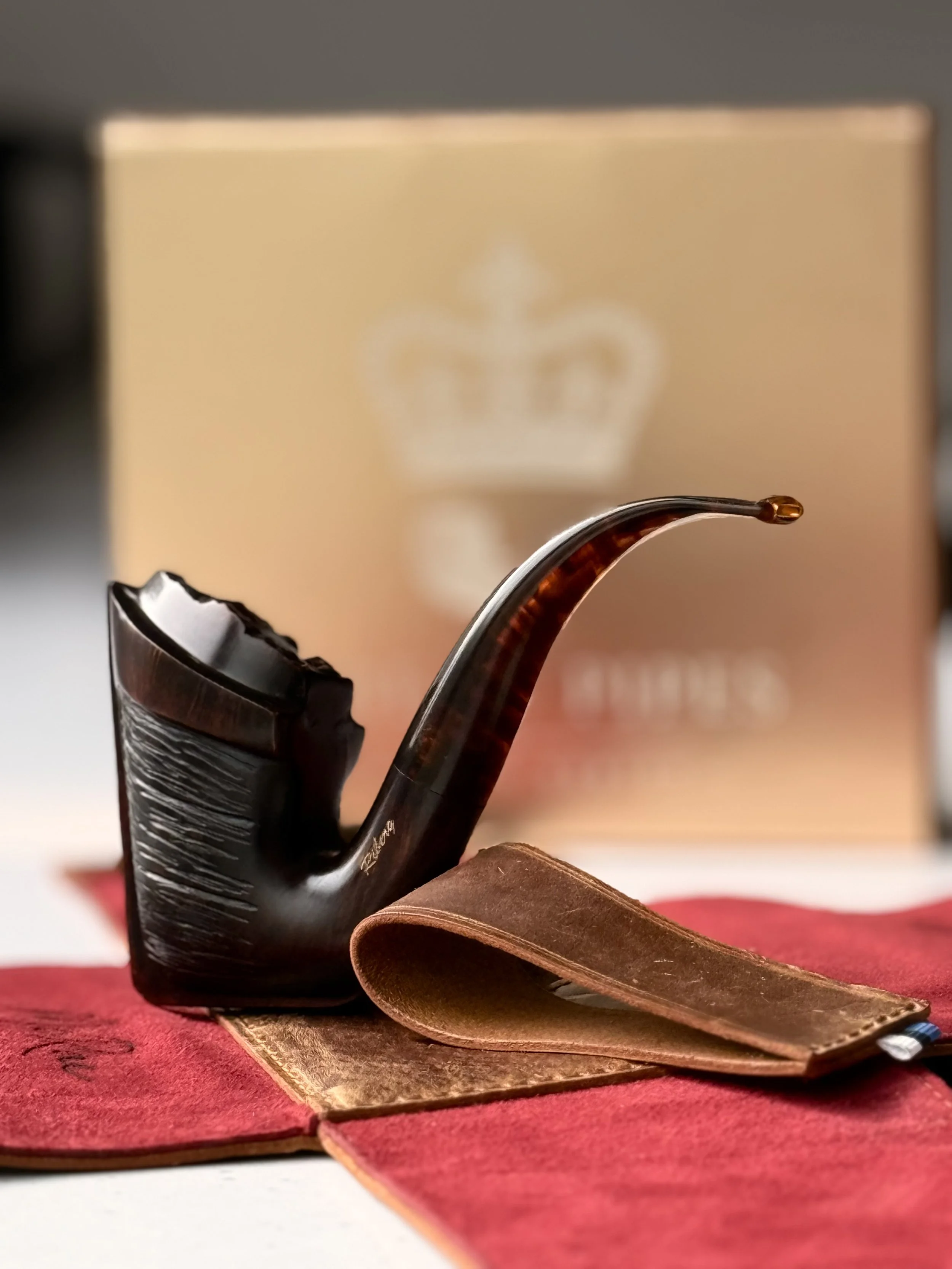
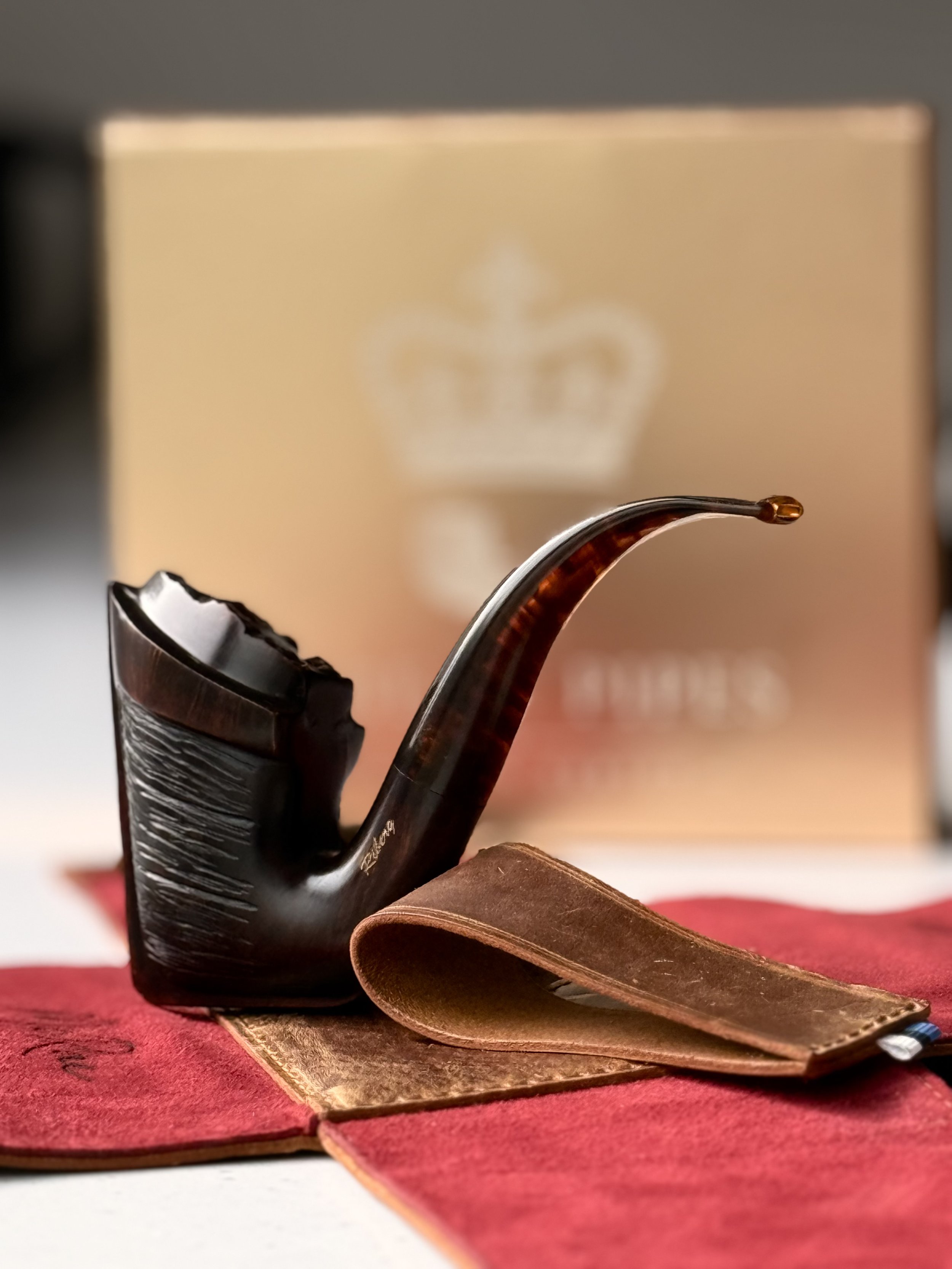
Finished “Captain Series” Tobacco Pipe
The difference between an average pipe and an exceptional one is rarely a dramatic change.
It's found in countless small decisions.
The smoothness of the draw.
The comfort of the stem.
The balance in the hand.
The way the grain follows the shape.
None of these happen by chance.
They happen because an artisan chose to spend the extra time.
That's why a handmade tobacco pipe isn't defined by how quickly it can be made.
It's defined by how carefully it is crafted.
How to Commission a Handmade Tobacco Pipe From an Artisan
Commissioning a handmade tobacco pipe is a collaborative process between the smoker and the artisan. This guide explains how custom pipe commissions work, from discussing your smoking preferences and selecting briar to shaping, finishing, and understanding realistic timelines. It also answers common questions about pricing, originality, materials, and what makes a handcrafted pipe unique.
Ordering a handmade tobacco pipe is unlike buying almost anything else.
You're not selecting an item from a warehouse shelf or clicking "Add to Cart." Instead, you're beginning a collaboration with an artisan—someone who will transform a piece of briar into a pipe made specifically for you.
Whether you're purchasing your first custom pipe or adding another piece to a growing collection, understanding the commission process helps ensure you receive a pipe you'll enjoy for decades.
Why Choose a Custom Handmade Pipe?
Every pipe smoker develops personal preferences over time.
Some prefer large chambers for long evening smokes, while others enjoy compact pipes for a quick break. Some like lightweight pipes they can comfortably clench, while others appreciate the substantial feel of a larger piece.
A custom commission allows every important detail to be considered, including:
Preferred pipe shape
Bowl size and tobacco chamber dimensions
Finish and colour
Decorative accents
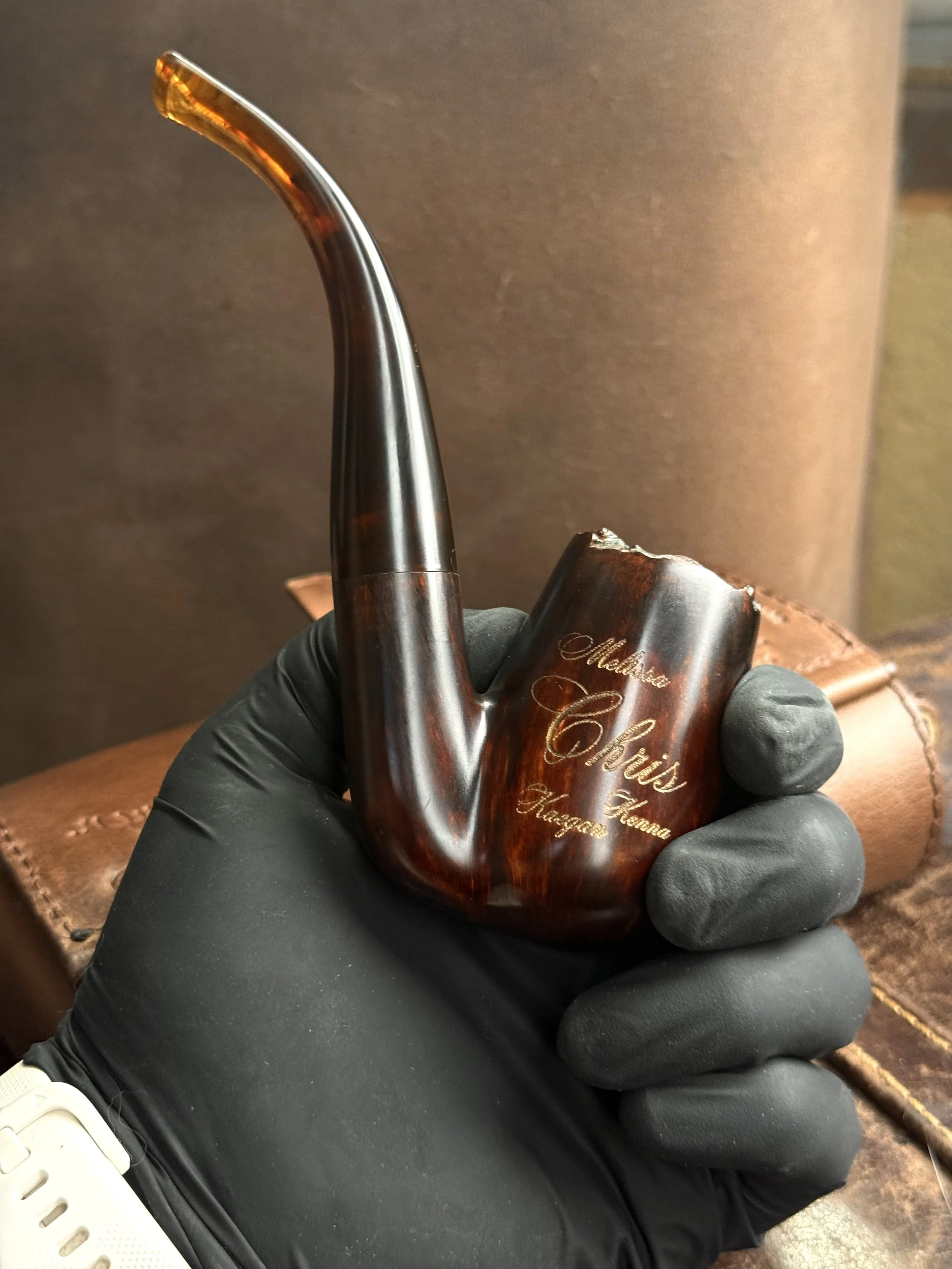
Personal engraving or meaningful details
The result is more than a beautiful object—it becomes a pipe designed around the person who will smoke it.
Step 1: Share Your Ideas
The process begins with a conversation.
Some clients arrive with sketches, reference photographs, or detailed measurements.
Others simply say:
"I'd like something elegant, lightweight, and comfortable to smoke every evening."
Both approaches are equally valuable.
An experienced artisan doesn't simply copy another pipe. Instead, they interpret your preferences while creating a design that fits both your vision and their own craftsmanship.
Useful information to share includes:
Pipes you currently enjoy
Shapes you admire
Whether you clench or hand-hold your pipe
Finish preferences
The more your pipe maker understands your smoking habits, the better they can design a pipe specifically for you.
Step 2: Selecting the Right Briar
Every handmade pipe begins with a block of briar.
Unlike manufactured products, no two blocks are identical.
Each has its own grain pattern, density, colour, and natural characteristics. An artisan studies the block carefully before deciding how the final pipe should emerge from it.
Sometimes the briar inspires a completely different design than originally planned.
Rather than forcing the wood into a predetermined shape, experienced pipe makers allow the grain to guide the finished piece whenever possible.
This is one reason every handmade pipe is unique.
Step 3: Refining the Design
Once the concept is clear, the design begins to take shape.
During this stage, decisions may include:
Straight or bent pipe
Classic or freehand styling
Smooth or textured finish
Contrast or natural stain
Decorative accents
The goal isn't to create the most elaborate pipe possible.
It's to create a pipe where every detail belongs.
Step 4: The Craftsmanship Begins
This is where patience replaces speed.
A handmade pipe isn't assembled—it is created.
The airway is drilled with precision.
The tobacco chamber is carefully aligned.
The stem is individually shaped for comfort.
The transition between stem and shank is refined by hand until every line flows naturally.
Hours of sanding gradually reveal the character hidden inside the briar.
Only when every surface feels correct does the finishing process begin.
Why Waiting Is Part of the Experience
One of the most common questions is:
"How long will my custom pipe take?"
The answer depends on the artisan's workload and the complexity of the commission.
Unlike factory production, each pipe receives individual attention from start to finish.
That time cannot be rushed without compromising quality.
For many collectors, the anticipation becomes part of the enjoyment.
Knowing that your pipe is being carefully crafted—not mass-produced—adds meaning to the finished piece.
Trust the Artisan
Many customers begin with a very specific vision.
Sometimes that vision evolves during the commission.
A requested bowl may become slightly taller because it improves balance.
A stem may become thinner for greater comfort.
A decorative accent may be simplified because it allows the grain to become the focal point.
These aren't compromises.
They're decisions made in pursuit of a better pipe.
One of the greatest advantages of commissioning an artisan is benefiting from years of experience.
Every Handmade Pipe Tells Its Own Story
No two pieces of briar are alike.
No two smokers are alike.
That's why no two commissions are ever truly the same.
Years after the first smoke, a handmade pipe develops its own character through use.
The finish gains warmth.
The briar darkens gently with time.
Small memories become attached to it—quiet evenings, celebrations, conversations, and moments of reflection.
Eventually, the pipe becomes more than something you own.
It becomes something that has accompanied part of your life.
Frequently Asked Questions
Can I commission a pipe if I don't know exactly what I want?
Absolutely. Many of the best commissions begin with only a general idea. An experienced artisan can help transform your preferences into a balanced, functional design.
Can you copy another pipe exactly?
No. Every artisan has their own style, and every block of briar is unique. While inspiration is welcome, each handmade pipe should remain an original piece.
How much input do I have during the process?
As much or as little as you prefer. Some clients enjoy discussing every detail, while others trust the artisan to make creative decisions based on their preferences.
Are handmade pipes worth the investment?
For many enthusiasts, yes. A well-made handmade pipe combines exceptional engineering, comfort, beauty, and individuality in a way that mass-produced pipes cannot.
Begin Your Commission
A custom pipe starts with a conversation—not a catalogue.
Whether you have a complete design in mind or only the beginning of an idea, the commission process is an opportunity to create something uniquely yours.
Years from now, your handmade pipe won't simply remind you of the day you bought it.
It will remind you of every memorable smoke that followed.