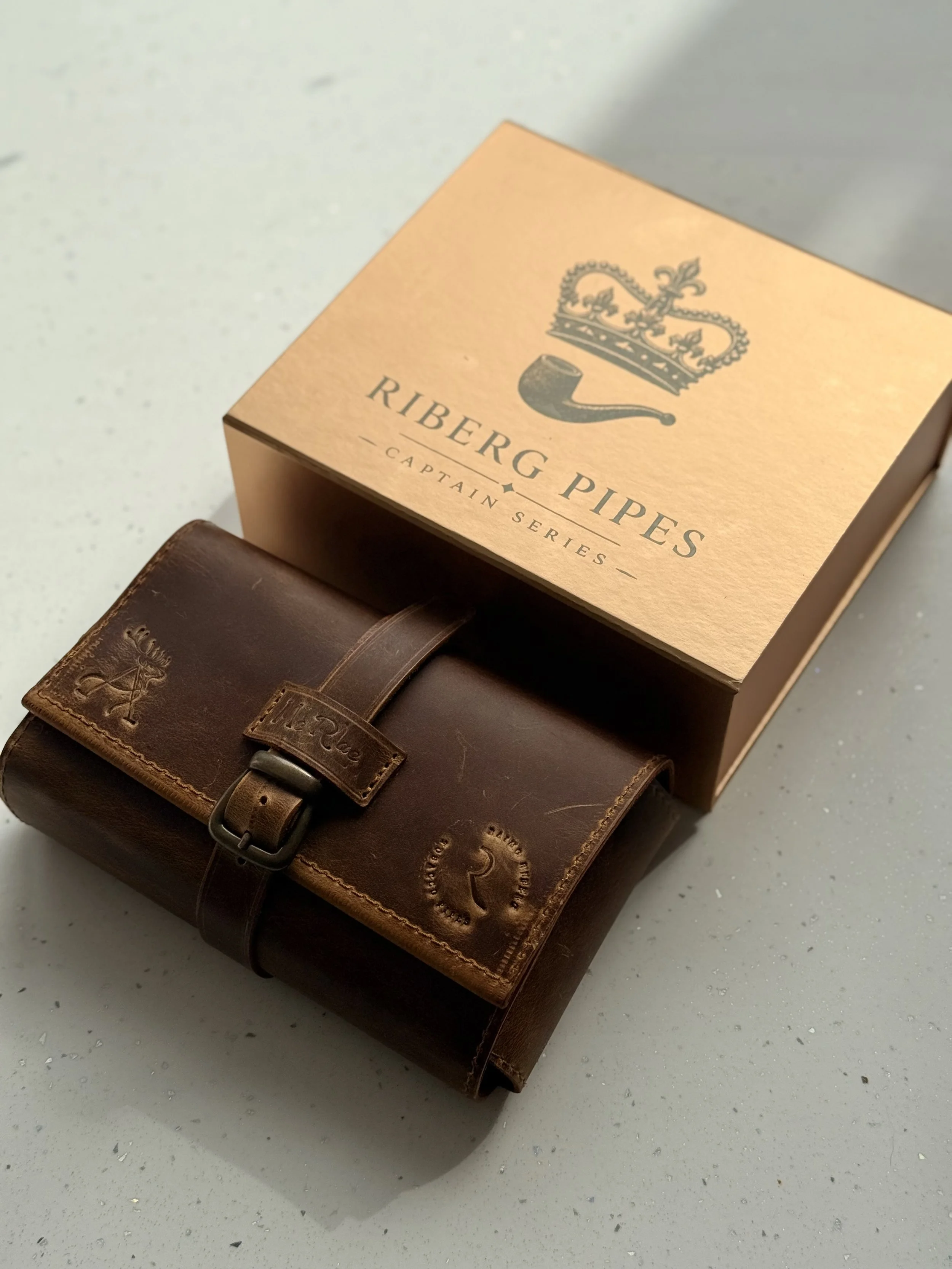
How Long Does It Take to Make a Handmade Tobacco Pipe?
One of the questions I'm asked most often is surprisingly simple:
"How long does it take to make a handmade tobacco pipe?"
The honest answer is...
It depends.
Not because the process is uncertain, but because no two pipes—and no two pieces of briar—are ever the same.
A handmade tobacco pipe isn't manufactured to meet a production schedule. It's carefully shaped, refined, and finished one step at a time. Every decision influences the next, and every block of briar presents its own opportunities and challenges.
While some pipes may require around 20 hours of work, others can take considerably longer. The time isn't determined by the shape alone—it's determined by the pursuit of getting every detail right.
It All Begins With the Briar
Long before the first cut is made, the briar must be selected.
Each block has a unique grain pattern, density, and natural imperfections. An experienced pipe maker studies the wood carefully before deciding how the pipe should be oriented.
Sometimes the grain encourages a completely different shape than originally planned.
Rather than forcing the wood to match a drawing, the artisan allows the briar to influence the final design.
That first decision can determine the success of the entire pipe.
Shaping Is More Than Removing Wood
At first glance, shaping might appear to be the quickest part of the process.
In reality, it's where countless small decisions are made.
Every curve affects the pipe's balance.
Every proportion changes how it feels in the hand.
The transition between bowl, shank, and stem must flow naturally.
A fraction of a millimetre can make the difference between a pipe that looks good and one that feels truly harmonious.
This isn't carving for speed.
It's sculpting with intention.
Precision Engineering Comes Before Beauty
Many people notice the grain first.
Experienced smokers notice the engineering.
Before a pipe can become beautiful, it must function flawlessly.
The tobacco chamber, draft hole, mortise, tenon, and airway all require precise alignment.
A smooth, unrestricted draw doesn't happen by accident.
It's the result of careful planning and accurate drilling long before the pipe is polished.
The finest finish cannot compensate for poor engineering.
Hand-Cut Stems Require Patience
The stem is one of the most time-consuming parts of a handmade pipe.
Comfort cannot be measured by appearance alone.
A well-shaped button should disappear between the teeth.
The stem should feel natural, balanced, and effortless during long smoking sessions.
Achieving that comfort often requires repeated adjustments, sanding, polishing, and testing.
Much of this work is measured in fractions of a millimetre.
It's slow because comfort matters.
Sanding Reveals What Machines Cannot
Many people imagine sanding as little more than smoothing rough surfaces.
In reality, it is one of the most revealing stages.
Each progressively finer grit uncovers more of the briar's character.
Small imperfections become visible.
Tiny scratches appear where none seemed to exist.
Every flaw must be corrected before moving forward.
This process may repeat several times before the surface is ready for finishing.
Patience is what transforms craftsmanship into refinement.
Finishing Is the Final Conversation With the Wood

The finish does far more than add colour.
It highlights the grain.
It protects the surface.
Most importantly, it respects the natural beauty already hidden inside the briar.
Some pipes reveal spectacular straight grain.
Others display remarkable birdseye.
Occasionally the wood surprises even the maker.
The goal is never to overpower the briar.
It's to let it speak for itself.
Why Handmade Pipes Cannot Be Mass Produced
Factory pipes are built around efficiency.
Handmade pipes are built around decisions.
An artisan may pause for an hour simply deciding how best to orient the grain.
They may reshape an entire shank because one line doesn't quite flow.
They may remake a stem that most people would consider perfect.
None of these decisions increase production speed.
Every one of them improves the final pipe.
That's the difference.
The Waiting Time Is Part of the Value
Customers sometimes ask why commissioning a handmade pipe takes weeks or even months.
The answer isn't simply that the pipe requires many hours of work.
It's that every artisan is also working on other commissions, sourcing exceptional briar, refining designs, and refusing to compromise quality simply to meet a deadline.
Unlike factory production, there is no assembly line.
Each pipe receives individual attention from start to finish.
Many collectors find the anticipation becomes part of the experience.
Knowing that your pipe is slowly taking shape inside a workshop makes the day it finally arrives even more meaningful.
More Than Hours
People naturally want to know how many hours are invested in a handmade pipe.
The better question is:
How much care goes into making one?
Hours can be counted.
Experience cannot.
Years spent learning proportions, engineering, finishing, and understanding briar are present in every decision made during those hours.
When you hold a handmade pipe, you're holding far more than the time it took to carve it.
You're holding the experience accumulated over hundreds of pipes made before it.
Frequently Asked Questions
How many hours does it take to make a handmade tobacco pipe?
Depending on the design and complexity, a handmade tobacco pipe may require around 20 hours of hands-on work or considerably more. This doesn't include waiting time between processes or an artisan's commission queue.
Why do handmade pipes take so long?
Every stage—from selecting the briar and drilling the airway to shaping, sanding, stem work, and finishing—is completed individually by hand. The focus is on precision rather than speed.
What takes the longest?

Details.
Stem fitting, sanding, refining proportions, and finishing often consume the most time because they require repeated adjustments and careful inspection.
Can the process be rushed?
Not without compromising quality. Many of the finest details are achieved through patience, repeated refinement, and experience.
Quality Is Measured in Details
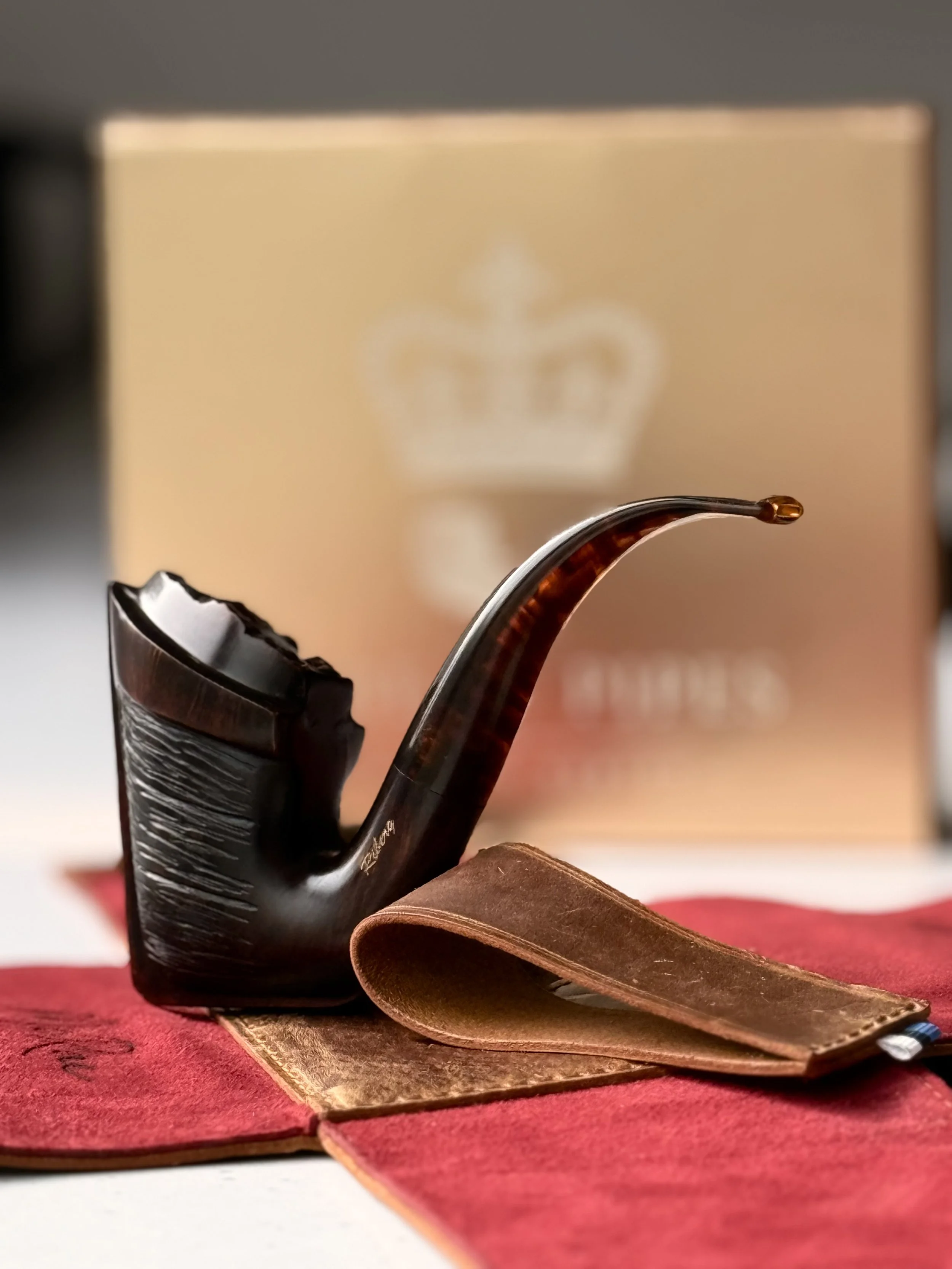
Finished “Captain Series” Tobacco Pipe
The difference between an average pipe and an exceptional one is rarely a dramatic change.
It's found in countless small decisions.
The smoothness of the draw.
The comfort of the stem.
The balance in the hand.
The way the grain follows the shape.
None of these happen by chance.
They happen because an artisan chose to spend the extra time.
That's why a handmade tobacco pipe isn't defined by how quickly it can be made.
It's defined by how carefully it is crafted.